 Save
Save I discovered this salad completely by accident when I had a pile of carrots that needed using and nothing else in the fridge but pantry staples. That first attempt—made at midnight on a Tuesday while standing over the kitchen counter—somehow became the dish I keep making when I want something that feels both bright and grounding. There's something about the way the dressing clings to each shred, the heat arriving just after the sweetness, that made me realize you don't need much to make something memorable.
The moment this salad really proved itself was at a potluck where I wasn't sure if anyone would eat it. A friend who claims she doesn't like carrots went back for seconds, then thirds, asking what was in the dressing like it was a secret code. That's when I knew the recipe had something worth holding onto.
Ingredients
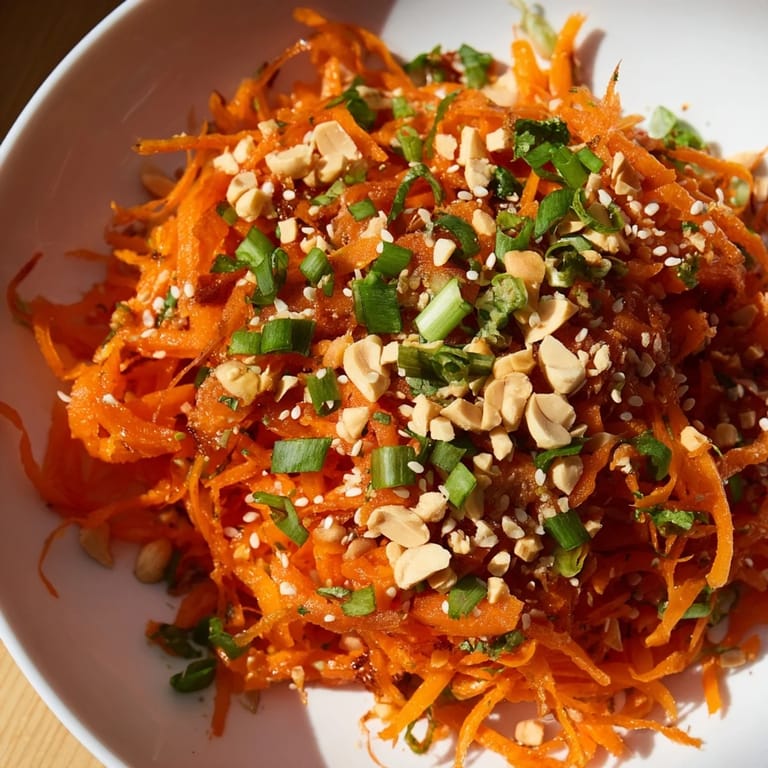
- 4 large carrots, peeled and shredded (about 3 cups): Fresh, firm carrots are non-negotiable here—they stay crisp and sweet. I learned to shred them just before dressing to prevent them from weeping.
- 2 spring onions, thinly sliced: The sharp bite cuts through the richness of sesame oil and keeps the salad from feeling one-note.
- 2 tablespoons fresh cilantro, chopped: Optional, but it adds an almost herbal brightness that makes people pause and ask what you did differently.
- 2 tablespoons soy sauce: Use tamari if you're cooking gluten-free—the umami is what makes this taste intentional rather than just vinegared carrots.
- 1 tablespoon toasted sesame oil: Don't skip this and don't use regular sesame oil. The toasted version has a deeper, almost nutty richness that's the backbone of everything.
- 2 teaspoons rice vinegar: Mild and clean, it brings acid without aggression, balancing the salt and heat.
- 1 teaspoon honey or maple syrup: A small amount of sweetness rounds out the dressing so no single flavor screams at you.
- 1–2 teaspoons chili garlic sauce or sriracha: Start at one teaspoon and taste as you go—this is where your heat preference takes over.
- 1 teaspoon fresh ginger, grated: Adds a warm, almost peppery note that makes the dressing taste more complex than its ingredient list suggests.
- 1 small garlic clove, minced: Just enough to register without overpowering, playing a supporting role to the ginger.
- 1 teaspoon sesame seeds: Goes into the dressing itself, giving it texture and toasted flavor.
- 2 tablespoons roasted peanuts or cashews, chopped: The garnish that turns side dish into something you actually want to eat on its own.
- Extra sesame seeds for sprinkling: A final touch that catches light and gives texture where it matters.
Tired of Takeout? 🥡
Get 10 meals you can make faster than delivery arrives. Seriously.
One email. No spam. Unsubscribe anytime.
Instructions
- Prep your vegetables:
- Shred the carrots into a large bowl using a box grater or the shredding disc on a food processor—you want thin, uniform strands that will drink in the dressing. Add the sliced spring onions and cilantro if you're using it, then set the bowl aside.
- Whisk the dressing:
- In a small bowl, whisk together soy sauce, sesame oil, rice vinegar, honey, chili garlic sauce, ginger, garlic, and those first sesame seeds. The mixture should look glossy and smell immediately like something you want to eat.
- Bring it together:
- Pour the dressing over the carrots and toss with a fork or your hands until everything is coated and glistening. Don't be shy—work the dressing in so the carrots absorb the flavor.
- Taste and adjust:
- Take a bite and ask yourself if you want more heat, more salt, or a touch more sweetness. This is the moment to trust your palate over the recipe.
- Serve or chill:
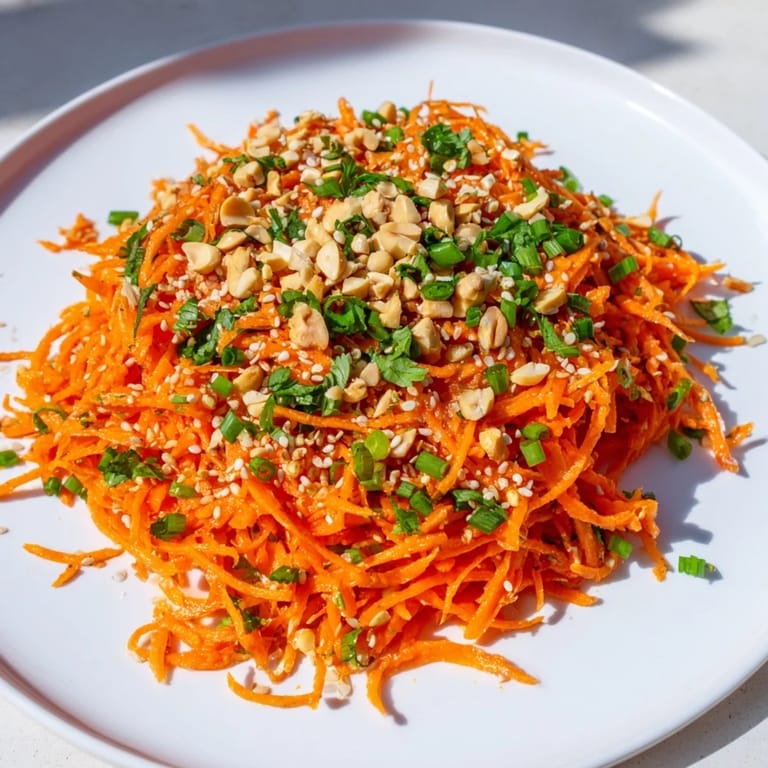
- Transfer to a serving dish and top with chopped nuts and a scatter of extra sesame seeds. Eat it right away for maximum crunch, or chill for 10–15 minutes if you prefer softer, more meld-flavored carrots.
 Save
Save There was a night when my partner said the salad tasted like it had been made with intention, which is funny because it was born from laziness and a half-empty vegetable drawer. That small comment reminded me that cooking is less about complexity and more about paying attention to what's in front of you.
Building Heat Without Overwhelm
The chili garlic sauce is the personality of this dish, but it works because the other elements are there to soften its edges. The honey, the sesame oil, the rice vinegar—they're all negotiating with that heat, keeping it interesting rather than painful. I learned this the hard way by dumping in too much sriracha my second time making it and having to doctor the whole batch with more carrots and oil.
Why Sesame Oil Changes Everything
Sesame oil is strange until you understand it. It's assertive and almost floral, with a nuttiness that somehow makes simple carrots feel luxurious. The first time I used toasted sesame oil instead of regular, I understood why it's worth keeping a small bottle in your pantry even though you'll never use much of it.
Occasions and Extensions
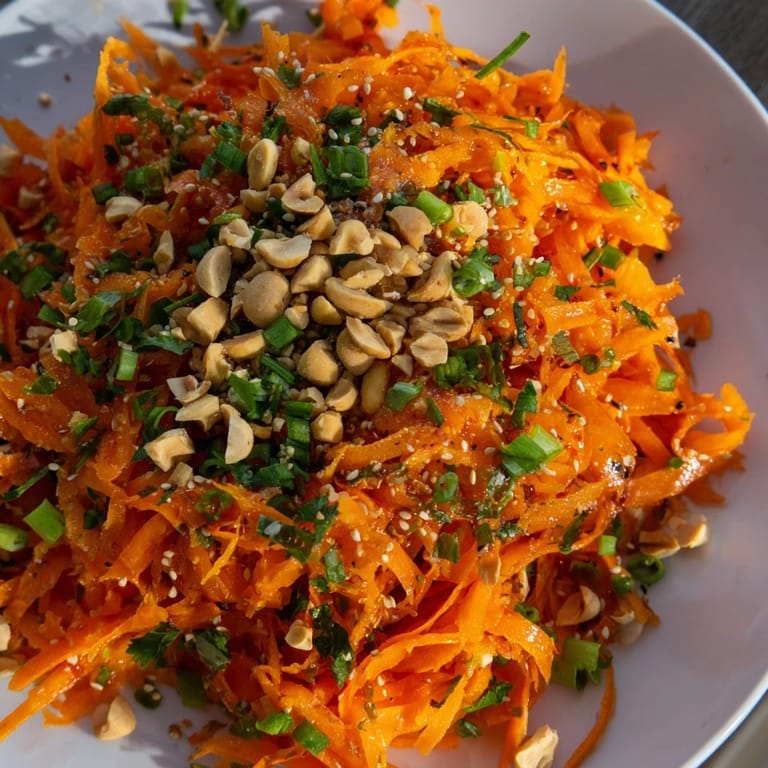
This salad works as a side to grilled chicken or fish, sits beautifully next to crispy tofu, and honestly just disappears when you set it out at gatherings. I've added sliced bell peppers for crunch, thin ribbons of cucumber on hot days, and even roasted chickpeas when I wanted to make it more substantial. The base is confident enough to play well with additions.
- Serve it cold straight from the fridge or at room temperature, depending on whether you want maximum crispness or maximum flavor absorption.
- Make the dressing ahead of time and store it separately—the salad itself stays fresher when dressed right before serving.
- If the salad sits too long and loses its snap, toss it with a bit more sesame oil and a squeeze of fresh lime juice to bring it back to life.
 Save
Save This salad has become the thing I reach for when I want to feel like I'm taking care of myself without exhaustion. It's proof that good food doesn't need a long ingredient list or complicated technique—just intention and a willingness to taste as you go.
Kitchen Guide
- → What gives this salad its spicy kick?
The heat comes from chili garlic sauce or sriracha, balanced by sesame oil and honey for depth and sweetness.
- → Can I make this salad gluten-free?
Yes, substitute tamari for soy sauce to keep it gluten-free without sacrificing flavor.
- → How should I prepare the carrots for best texture?
Use a vegetable peeler or box grater to shred the carrots finely, providing a crunchy yet tender texture.
- → What nuts work best as a garnish?
Roasted peanuts or cashews add a satisfying crunch and complement the dressing’s flavors well.
- → Can this salad be refrigerated?
Yes, it keeps well refrigerated for up to 24 hours, allowing the flavors to meld beautifully.