 Save
Save There's something about the sound of shrimp hitting a hot wok that signals dinner is about to happen fast. My neighbor knocked on the door one weeknight with shrimp she'd bought on impulse, and we threw together whatever vegetables we had sitting in the crisper drawer. That chaotic, unplanned meal turned into the easiest stir-fry I've ever made, and now it's my go-to when I need something vibrant on the table in under thirty minutes.
I made this for my sister on a Tuesday when she was visiting, and she asked for the recipe before she'd even finished eating. The best part was watching her taste the sauce and realize how simple it actually is—there's something satisfying about a dish that looks fancy but doesn't require any special techniques or hours of prep.
Ingredients
- Large shrimp, peeled and deveined: One pound feeds four people generously, and patting them dry before cooking is the secret to getting them to sear instead of steam.
- Red and yellow bell peppers: The colors matter here both for nutrition and because they look stunning in the final dish.
- Fresh broccoli crown: Cut florets small so they cook evenly and stay crisp, which takes about the same time as the shrimp.
- Carrot, julienned: Thin slices mean they'll soften just enough without turning mushy, and they add natural sweetness to balance the savory sauce.
- Sugar snap peas: These add a fresh crunch that keeps the whole dish from feeling heavy, and they're forgiving if you slightly overcook them.
- Green onions: Save some for garnish because a bright finish makes people think you spent hours on this.
- Low-sodium soy sauce: The foundation of your sauce, and keeping it lower sodium means you control the final salt level.
- Oyster sauce: Optional but worth having if you cook Asian food often—it adds a subtle depth that plain soy can't touch.
- Sesame oil: Just a teaspoon or two brings everything into focus with its toasted, nutty flavor.
- Honey or brown sugar: A touch of sweetness rounds out the salt and acid from the sauce, and honey dissolves faster in a hot pan.
- Rice vinegar: The bright note that keeps the dish from tasting one-dimensional, so don't skip it.
- Cornstarch and water slurry: This thickens the sauce so it clings to everything instead of pooling at the bottom of the pan.
- Vegetable oil: High heat cooking needs an oil with a high smoke point, so reach for canola or peanut, not olive oil.
- Fresh garlic and ginger: Mince the garlic fine and grate the ginger because whole pieces won't distribute evenly, and you want that flavor in every bite.
- Sesame seeds and cilantro: The optional garnish that transforms a quick weeknight meal into something you'd order at a restaurant.
Tired of Takeout? 🥡
Get 10 meals you can make faster than delivery arrives. Seriously.
One email. No spam. Unsubscribe anytime.
Instructions
- Make your sauce first:
- Whisk together soy sauce, oyster sauce, sesame oil, honey, rice vinegar, cornstarch, and water in a small bowl and set it aside. This step takes two minutes and means you won't be scrambling with a spoon while everything's already cooking.
- Prep and dry your shrimp:
- Pat them thoroughly with paper towels and season lightly with salt and pepper. Dry shrimp sear instead of steam, which is the difference between shrimp that's rubbery and shrimp that's actually delicious.
- Cook the shrimp fast:
- Heat one tablespoon of oil in your wok or large skillet over medium-high heat until it's shimmering, then add the shrimp and cook for two to three minutes, stirring constantly. They'll turn from gray to pink all at once, and that's when you know they're done.
- Build your aromatics:
- Add the remaining tablespoon of oil to the same pan, then add minced garlic and grated ginger and sauté for just thirty seconds. This brief moment is crucial—you want the fragrance but not brown garlic, which tastes bitter.
- Stir-fry your vegetables:
- Add bell peppers, broccoli, carrot, and sugar snap peas and keep the heat high and your spoon moving for three to five minutes. You're aiming for vegetables that are hot all the way through but still have a little resistance when you bite them.
- Reunite everything and sauce it:
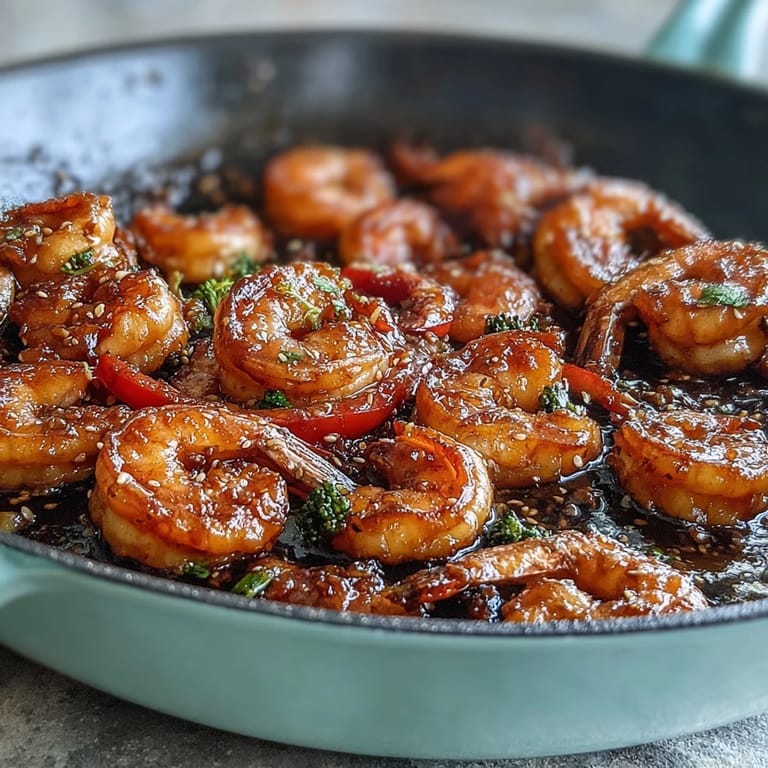
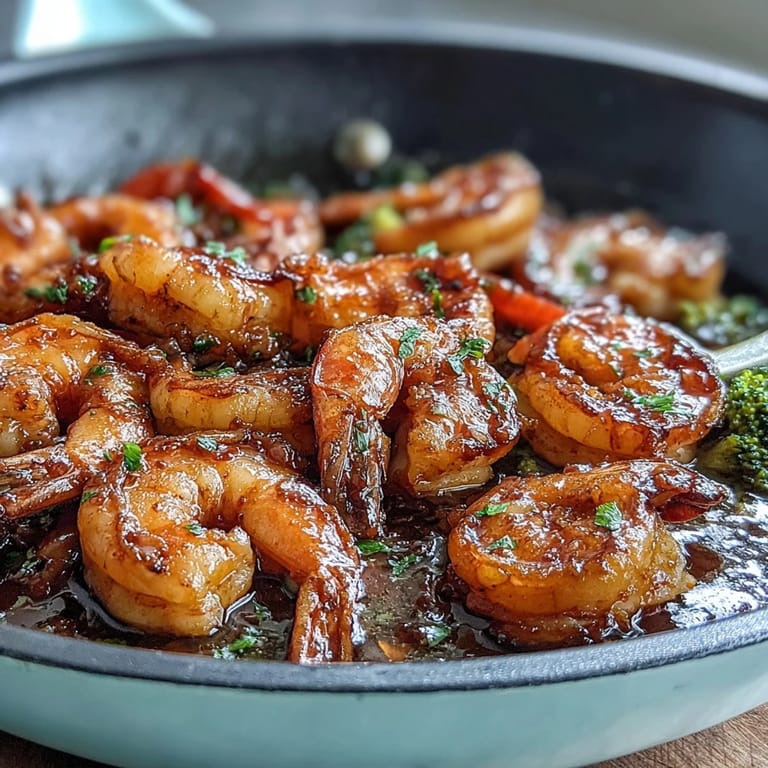
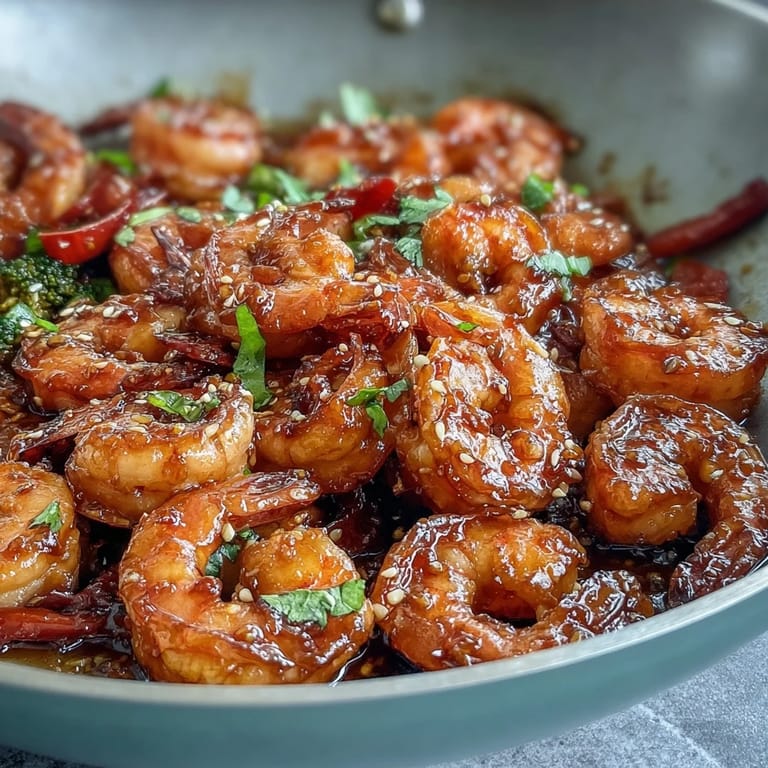
- Return the shrimp to the pan, add green onions, pour in your prepared sauce, and stir constantly for two to three minutes until the sauce thickens and everything is heated through. The cornstarch will transform the liquid into a silky glaze that clings to every vegetable and piece of shrimp.
- Finish with flair:
- Sprinkle sesame seeds and fresh cilantro or extra green onion on top and serve immediately over steamed rice or noodles. The garnish isn't just decoration—it adds texture and brightness that ties the whole dish together.
 Save
Save My dad tasted this once and said it reminded him of ordering takeout, which was exactly the compliment I wanted. Watching someone realize they can make restaurant-quality food in their own kitchen, with ingredients they probably already have on hand, is when cooking becomes less about the recipe and more about confidence.
The Magic of High Heat
Stir-frying isn't complicated, but it does demand that your heat stays high and steady. When I first tried this recipe, I kept turning the heat down because I was worried things would burn, but that just made the vegetables release water and everything got soggy. Once I committed to medium-high heat and kept my spoon moving, the vegetables started to develop color, the shrimp stayed tender, and the whole dish came alive with a slight char that you can't get any other way.
Prep Work Is Your Real Shortcut
The reason this dish comes together in twenty-five minutes isn't because stir-frying is fast—it's because you do almost everything before the heat even turns on. Slice your vegetables, peel your shrimp, mix your sauce, and measure everything out into little bowls or piles. Once that wok is hot, you're just moving ingredients around, and you can actually enjoy the process instead of panicking because you're still chopping garlic while your pan is screaming hot.
Ways to Make This Recipe Your Own
The beauty of stir-fry is that it adapts to whatever you have on hand and whatever you're craving that day. Sometimes I add cashews or peanuts for crunch, sometimes I throw in mushrooms or bok choy when bell peppers feel boring, and sometimes I drizzle a tiny bit of sriracha over the top for heat. You could swap the shrimp for chicken breast cut into bite-sized pieces, or use crispy tofu if you're feeding vegetarians, and the cooking time barely changes.
- For extra heat, add red pepper flakes or fresh chili slices when you cook the garlic and ginger.
- Use tamari instead of soy sauce if you need this to be gluten-free, and the flavor will be just as good.
- Leftovers keep in the refrigerator for two days, though they taste best when you reheat them gently in a hot pan instead of the microwave.
 Save
Save This stir-fry taught me that you don't need complicated recipes or rare ingredients to eat well on a weeknight. Once you nail this one, you've basically learned how every stir-fry works, and that's a skill that pays off forever.
Kitchen Guide
- → What vegetables work best with shrimp in stir-fries?
Crisp vegetables like bell peppers, broccoli, carrots, and snap peas add great texture and color to shrimp stir-fries.
- → How do I prevent shrimp from overcooking?
Cook shrimp over medium-high heat for just 2-3 minutes until they turn pink and opaque to keep them tender and juicy.
- → Can the sauce be adjusted for spiciness?
Yes, adding red pepper flakes or fresh chili slices can give the sauce a spicy kick without overpowering the other flavors.
- → What are good substitutes for oyster sauce?
Tamari or mushroom-based sauces provide similar depth and umami without shellfish ingredients.
- → How to thicken the sauce properly?
Use a cornstarch slurry mixed with water, added towards the end of cooking, to gently thicken the sauce without clumping.