 Save
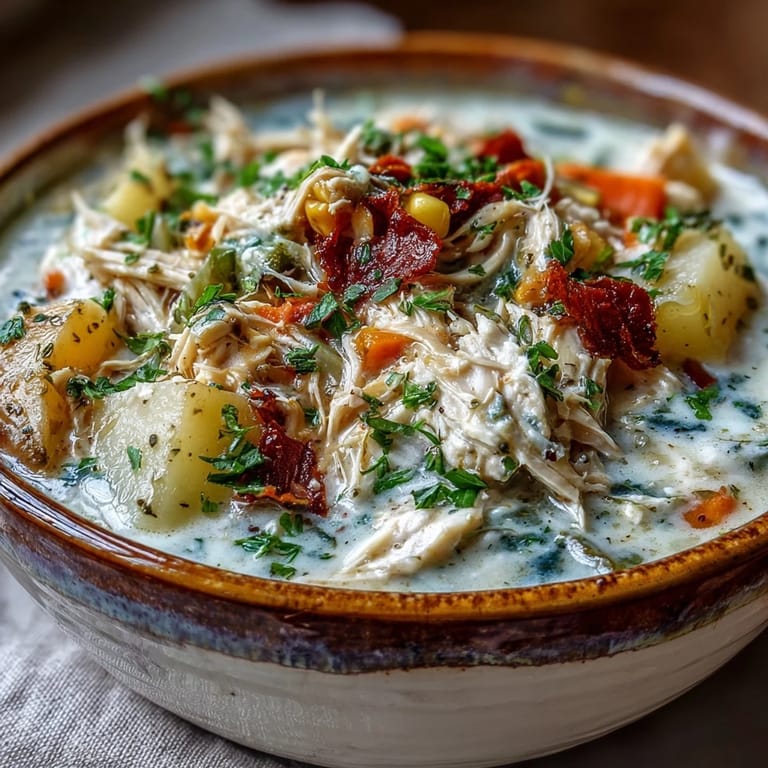
Save My neighbor knocked on the door one October afternoon with a container of homemade ranch seasoning and the kind of knowing smile that meant she'd tasted something I'd made before. She wanted to challenge me to turn it into a soup, something that'd warm the kitchen when the first real cold snap hit. That simple dare led to this—a bowl that tastes like comfort wrapped in creamy broth, with chicken so tender it barely needs your spoon.
I made this soup last winter for a book club meeting and watched four people eat their second bowl before even opening the wine—that's when I knew it was worth keeping around. My friend Sarah asked for the recipe, then texted me three days later saying she'd doubled it because her teenager had started making it as an after-school snack.
Ingredients
- Boneless, skinless chicken breasts: They roast beautifully and shred into tender strands that catch the creamy broth; cooking them separately keeps the soup base from becoming cloudy.
- Ranch seasoning mix: Whether you buy it or make your own, this is the flavor backbone—it seasons the chicken and subtly seasons the entire pot without needing a dozen jars of spices.
- Unsalted butter: It mellows the vegetables and builds the flavor base in a way oil simply can't match.
- Medium onion, carrots, celery: This is your holy trinity; take your time dicing them evenly so they cook at the same rate and create a sweet, savory foundation.
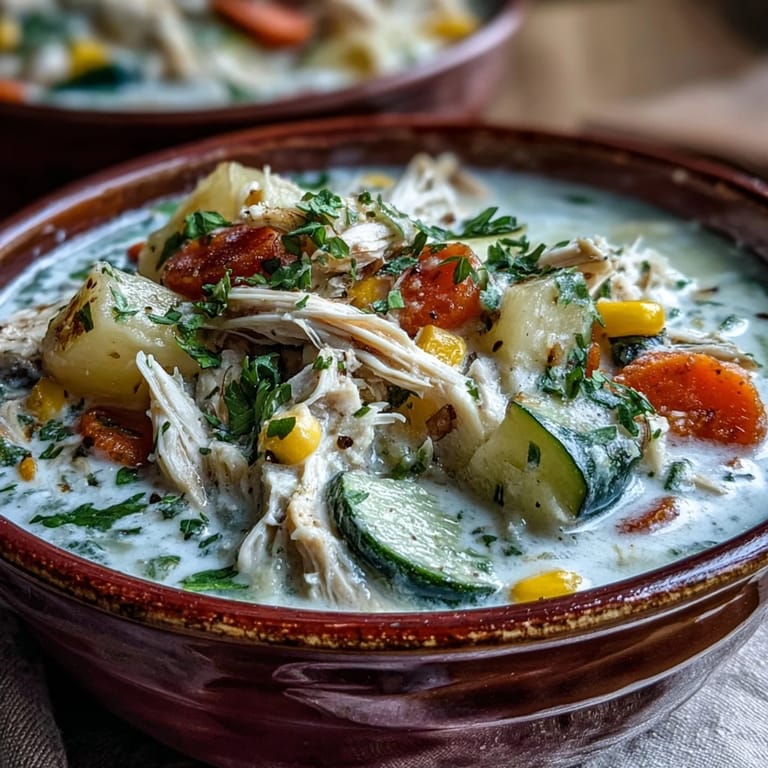
- Red bell pepper and zucchini: They add brightness and texture that keeps the soup from feeling heavy despite the cream.
- Yukon Gold potatoes: They hold their shape during the simmer and have a naturally buttery flavor that complements the ranch seasoning.
- Low-sodium chicken broth: Use quality broth you'd actually drink on its own; it makes a noticeable difference in the final taste.
- Half-and-half or whole milk: Half-and-half creates that signature creamy richness, but milk works if you prefer something lighter—don't use heavy cream unless you want something closer to a bisque.
- Dried thyme and smoked paprika: They add depth without overshadowing the ranch flavor; the paprika especially gives a subtle warmth.
- Fresh parsley and chives: These finish the soup with a brightness that cuts through the richness and reminds you this is still a vegetable soup.
Tired of Takeout? 🥡
Get 10 meals you can make faster than delivery arrives. Seriously.
One email. No spam. Unsubscribe anytime.
Instructions
- Season and roast the chicken:
- Pat your chicken breasts dry with paper towels—this helps them brown better. Coat them generously with olive oil, salt, pepper, and that ranch seasoning, then slide them onto a hot baking sheet. You'll smell that ranch seasoning toasting in about five minutes, and that's when you know the oven is doing its job.
- Soften your base vegetables:
- While the chicken roasts, melt butter in your largest pot over medium heat and add the onion, carrots, and celery. Don't rush this—let them become golden and tender in about five minutes, which builds sweetness into every spoonful.
- Add the garden vegetables:
- Once the initial vegetables are softened, stir in your garlic, bell pepper, and zucchini. The pot will smell alive and fresh within a minute or two; sauté just long enough to wake them up without cooking them through.
- Build the soup:
- Add your potatoes, corn, and broth, then the thyme and paprika. Bring it all to a boil—watch for the moment the surface gets restless with bubbles—then drop the heat to medium-low and let it simmer gently. The potatoes should be fork-tender in fifteen to twenty minutes, not mushy.
- Bring it all together:
- When the chicken has rested and shredded into tender pieces and the potatoes are creamy-soft, add both to the pot along with the half-and-half. Stir gently and simmer for just five more minutes so the cream can warm through without breaking.
- Taste and finish:
- This is your moment to adjust the seasoning—add salt and pepper until it tastes like the best version of itself. Stir in your fresh herbs, and the soup transforms from good to the kind you remember.
 Save
Save There's a moment when my teenage nephew comes into the kitchen unannounced and just starts eating straight from the pot with a spoon while I'm plating it, and that's when I know I've made something worth making. This soup does that—it stops people mid-conversation.
Make It Your Own
The vegetable lineup here is a guide, not a rulebook. I've made this with leeks instead of onions when I had them, added green beans in summer, and once threw in a handful of fresh spinach at the very end just to see what would happen. Each version felt just as right as the original. The structure stays the same—roasted chicken, sautéed vegetables, creamy broth—so you're free to build around what's in your fridge or what sounds good on any given day.
About That Ranch Seasoning
You can absolutely buy the packet, and there's no shame in that—it's convenient and consistent. But I've learned that making your own opens a door: you control the salt level, you can skip the additives if you care about that, and honestly, there's something satisfying about mixing a few dried herbs and knowing exactly what's going into your pot. The homemade version in the notes tastes fresher, though it doesn't keep quite as long—I make small batches and use them within a month.
The Shortcuts That Actually Work
If you're short on time, rotisserie chicken from the grocery store does exactly what you need—just shred it and skip the roasting step entirely, which saves you thirty minutes. For vegetable prep, a food processor makes quick work of the dicing, though I've noticed the texture changes slightly because the pieces release more liquid; if you go that route, add your broth a bit at a time so you don't end up with soup that's too thin. And if thicker soup is your preference, mash some of the cooked potatoes against the side of the pot before adding the cream—it breaks them down and naturally thickens everything without needing cornstarch or flour.
- Rotisserie chicken saves half your time: just shred it and add it in the last step.
- A food processor handles prep faster, but cook the vegetables slightly longer: they release more moisture when cut that way.
- For a thicker chowder, mash some potatoes against the pot's side: it creates natural body without extra ingredients.
 Save
Save This soup is the kind you make for people on cold days or when you want your kitchen to feel like a warm place they want to stay. It's simple enough that it doesn't ask much of you, but hearty enough to feel like you've really cooked something worthwhile.
Kitchen Guide
- → Can I use rotisserie chicken instead of raw chicken breasts?
Absolutely. Simply shred 2-3 cups of rotisserie chicken and add it during the last 5 minutes of simmering. This shortcut reduces total time to about 30 minutes.
- → How do I make this soup gluten-free?
Use certified gluten-free ranch seasoning mix. Most other ingredients are naturally gluten-free, but always check labels on packaged items like broth and seasoning blends.
- → Can I freeze this chowder?
The broth and vegetables freeze well, but dairy may separate when reheated. For best results, freeze without the half-and-half and add fresh dairy when reheating. Keeps frozen for up to 3 months.
- → How can I make the soup thicker?
Mash some of the tender potatoes against the pot's side before adding chicken. You can also create a slurry with 2 tablespoons cornstarch and cold water, then stir it in during the last few minutes.
- → What vegetables work best in this chowder?
The classic trio—carrots, celery, and onions—provides essential flavor base. Potatoes add heartiness while corn and bell pepper bring sweetness. Feel free to swap zucchini for green beans or add other sturdy vegetables.
- → Can I make homemade ranch seasoning?
Mix 1 teaspoon dried dill, 1 teaspoon dried parsley, ½ teaspoon dried chives, ½ teaspoon garlic powder, ½ teaspoon onion powder, ¼ teaspoon salt, and ¼ teaspoon black pepper. Store in an airtight container.