 Save
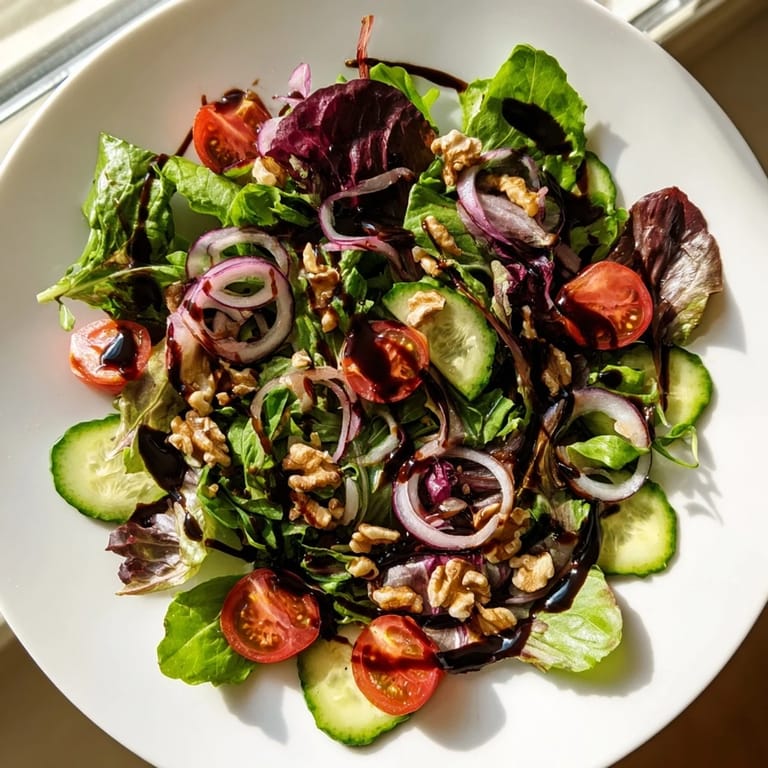
Save There's something about the moment when vinegar transforms in a pan that made me fall in love with this salad. I was rushing through dinner prep one evening, trying to use up a bottle of balsamic that had been sitting in my pantry, when I decided to heat it just to see what would happen. Within minutes, it deepened into this glossy, syrupy magic that smelled like caramelized berries and oak. I poured it over whatever greens were in my crisper drawer, and suddenly I had a salad that tasted like it came from somewhere far more intentional than my weeknight scramble. Now it's what I reach for when I want something that feels special but takes barely any time at all.
I made this for my sister after she mentioned offhand that she wanted to eat more salad but was bored with ranch dressing. I remember her expression when she took that first bite—surprised, almost delighted by how the sweetness of the reduced vinegar played against the peppery greens. She asked for the recipe immediately, and I realized then that sometimes the simplest meals are the ones people remember.
Ingredients
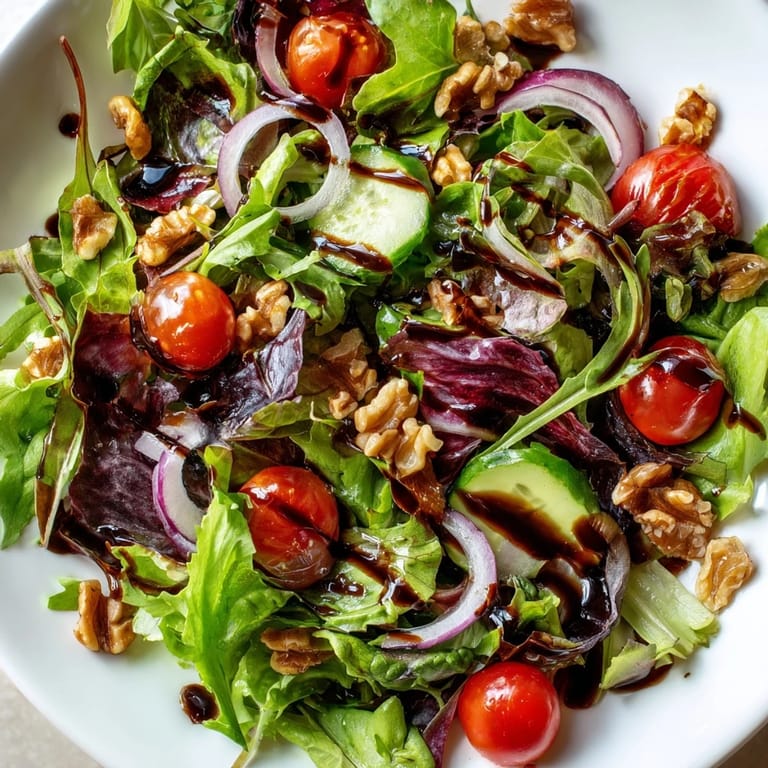
- Mixed salad greens: The variety matters here—arugula brings peppery heat, spinach adds earthiness, romaine gives you structure, and radicchio provides a gentle bitterness that the vinegar loves to play against.
- Cherry tomatoes: Halve them lengthwise rather than straight across, and you'll catch more of that sweet juice in the bowl.
- Red onion: Slice it thin enough to almost see through—this way it softens slightly with the dressing and becomes almost sweet rather than sharp.
- English cucumber: The thin skin is edible and pretty, so no need to peel, but do slice it on a slight angle for a more elegant presentation.
- Toasted walnuts: If you skip these, you lose a textural anchor, but they're optional if nuts aren't your thing—toasting them yourself makes a real difference in flavor.
- Balsamic vinegar: Don't reach for the cheap stuff here; a decent quality vinegar makes the entire difference, and this is where your money should go in this recipe.
- Extra-virgin olive oil: This is the other half of your dressing equation, so use something you'd actually enjoy tasting straight from the bottle.
- Dijon mustard: A small amount acts like a flavor amplifier and helps the dressing emulsify slightly, making it cling to the greens more beautifully.
- Sea salt and black pepper: Grind your pepper fresh if you can—it makes a subtle but real difference compared to pre-ground.
Tired of Takeout? 🥡
Get 10 meals you can make faster than delivery arrives. Seriously.
One email. No spam. Unsubscribe anytime.
Instructions
- Reduce the balsamic:
- Pour the vinegar into a small saucepan and set it to medium heat, letting it bubble gently rather than aggressively boil. Stir it occasionally as you watch it darken and thicken, which should take about 6 to 8 minutes—you'll know it's ready when it coats the back of a spoon and you can smell that deep, almost chocolate-like sweetness coming from the pan. Let it cool for a moment before moving on, because it'll keep thickening as it cools and you want to catch it at that perfect syrupy moment.
- Assemble your greens:
- Toss all your prepared vegetables into a large bowl—don't dress them yet, just let them mingle and get comfortable together. This is the moment to make sure everything is cut the way you want it and that you haven't missed anything.
- Build your dressing:
- In a separate small bowl, whisk the olive oil together with the mustard, salt, and pepper until they're combined and starting to feel silky. Now slowly drizzle in that cooled balsamic reduction while whisking, and watch as it transforms into something that looks almost creamy despite having no cream in it at all.
- Bring it all together:
- Pour that glossy dressing over your salad and toss everything gently but thoroughly, making sure each leaf gets its moment with the dressing. The goal is coating, not drowning—you want people to taste the greens, not just swim in vinegar.
- Serve right away:
- This salad is best eaten immediately while the greens are still crisp and the dressing is still warm enough to smell incredible. A small crack of extra black pepper on top adds a finishing touch that makes it feel less like dinner and more like something you planned.
 Save
Save I've discovered that salad can be a love language if you put intention into it. There's something about serving something that took you barely any time but looks and tastes like you actually cared that changes how people receive it. This one has made appearances at potlucks, weeknight dinners, and those moments when a friend stops by and you want to offer them something that says, yes, I can pull together something good right now.
The Balsamic Reduction Secret
The reduction is the entire point of this salad, and I learned this the hard way by initially just drizzling unreduced balsamic directly over greens and wondering why it didn't taste like anything special. When you heat balsamic, the water evaporates and the sugars concentrate, making it transform from a thin, sharp liquid into something with actual body and complexity. It's almost like cooking teaches you that patience and heat unlock potential in things you thought you already understood. Now I make extra reduction whenever I'm at the stove because it keeps in the fridge for ages and elevates literally any salad you throw it at.
Building Layers of Flavor
The beauty of this salad is that every ingredient has a role in a conversation, not just a plate. The mustard is there as a whisper, the red onion provides a gentle counterpoint, and the walnuts ground everything with their nutty depth. When you understand why each thing is there, you start feeling confident about making swaps or additions—adding crumbled feta if you want richness, tossing in chickpeas if you need protein, or throwing in some shaved Parmesan if you're feeling generous. The structure is loose enough to bend but thoughtful enough that you know when you've gone too far.
Timing and Serve
There's a window of perfection with this salad—the moment when everything is balanced and cold and the flavors are singing. Some of my best meals have been the ones where I didn't overthink it, just trusted my instincts about when something was ready. You can prep all your ingredients ahead of time, even make the dressing in advance, but the actual tossing and eating should happen within minutes of each other for the best result.
- If you're making this for a crowd, do the vinegar reduction first so it has time to cool while you're cutting vegetables.
- Keep your salad bowl in the fridge for a few minutes before serving if your kitchen is warm—cold greens stay crisp longer and taste fresher.
- Taste a dressed leaf before you call it done and add more salt or pepper if you need it, because seasoning is personal and your palate is the final judge.
 Save
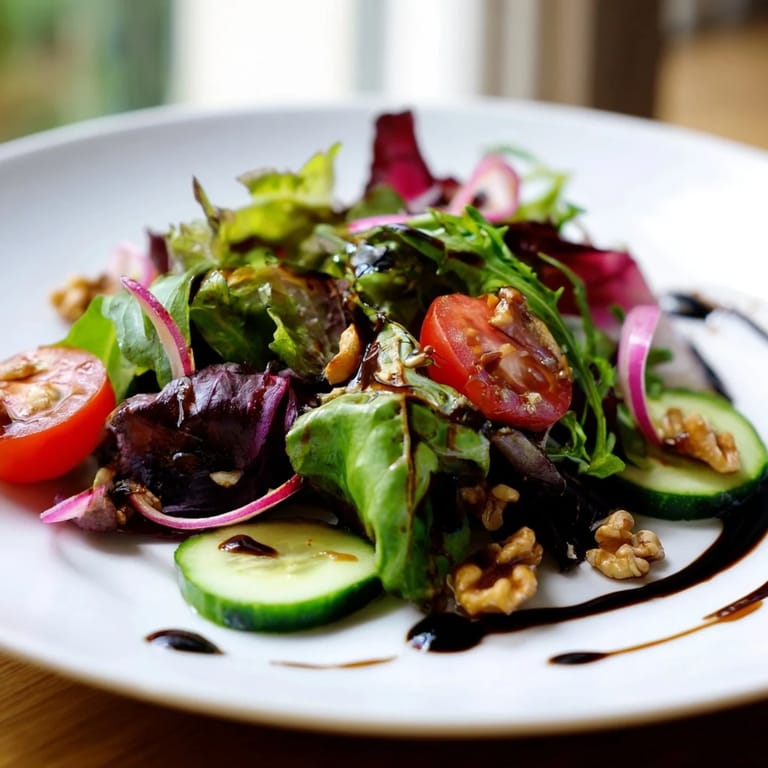
Save This salad has become my shorthand for saying, let me feed you something good without making it complicated. It's the kind of dish that reminds you that sometimes the best meals are the ones where the ingredients shine rather than hide behind a heavy hand.
Kitchen Guide
- → How do you make the balsamic reduction?
Simmer balsamic vinegar over medium heat for 6-8 minutes until reduced by half and slightly thickened, then let it cool before use.
- → Can I add protein to this dish?
Yes, grilled chicken or chickpeas can be added to enhance protein content without overpowering flavors.
- → Are toasted walnuts necessary?
Toasted walnuts are optional but add a pleasant crunch and depth to the fresh vegetables.
- → How should the salad be dressed?
Whisk extra-virgin olive oil with Dijon mustard, salt, and pepper, then drizzle over the balsamic reduction and toss gently with the greens.
- → Can this be prepared ahead of time?
The balsamic reduction can be made in advance and refrigerated for up to a week for convenience.