 Save
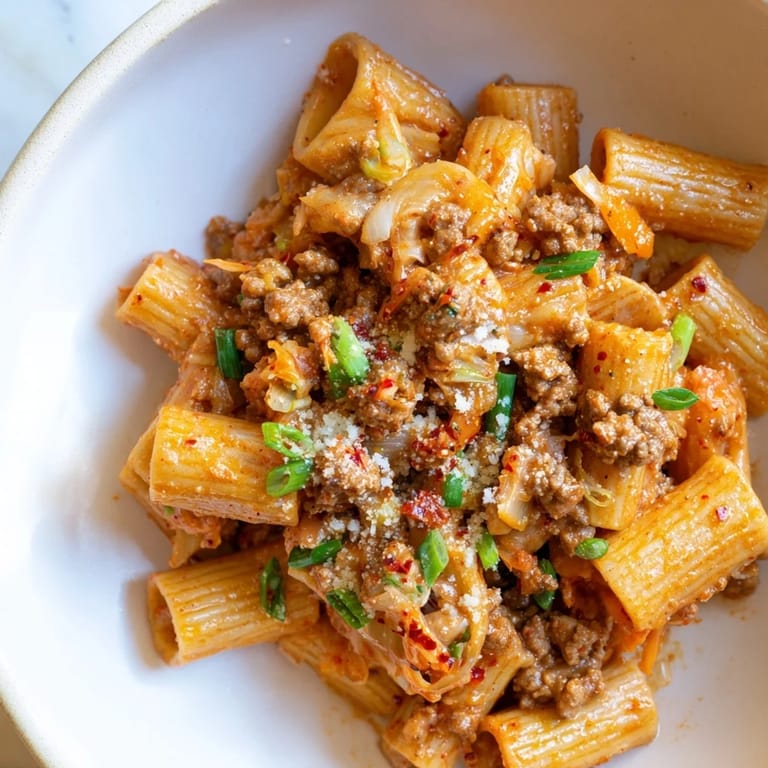
Save I stumbled onto this dish by accident one evening when I had leftover kimchi sitting in my fridge and a craving for something warm and creamy. Instead of tossing it, I decided to throw it into a ragu I was already making, and the moment that spicy, fermented kick hit the tomato sauce, something clicked. The kitchen smelled like the best fusion experiment had just been born. Now it's become the dish I make when I want to feel both adventurous and comforted at the same time.
The first time I served this to friends who were skeptical about mixing cuisines, I watched them go quiet after the first bite. Then someone asked for seconds before finishing their first plate, and I knew I'd created something special. That moment confirmed what I'd suspected all along: the best meals are the ones that break the rules a little.
Ingredients
- Ground pork (300 g): Pork has just the right amount of fat to carry flavor without being too heavy; beef works beautifully too, or go half-and-half for depth.
- Napa cabbage kimchi (200 g, chopped, plus 2 tbsp juice): This is your secret weapon—the fermented funk transforms the entire sauce, so use kimchi you actually enjoy eating.
- Crushed tomatoes (400 g can): San Marzano varieties are worth seeking out, but any good quality canned tomato will do the job.
- Heavy cream (120 ml): Use full-fat for the silkiest finish; coconut cream swaps in beautifully if you need dairy-free.
- Onion, garlic, carrot, celery: These form the aromatic base that catches all the flavor; don't skip the mincing step, it matters.
- Olive oil (2 tbsp): A good extra-virgin oil makes the sauté sing, especially when you're building this much flavor.
- Soy sauce (1 tbsp): This adds umami depth that makes people ask what your secret ingredient is.
- Gochugaru (1 tsp, optional): Korean chili flakes give you control over heat without overpowering the kimchi's complexity.
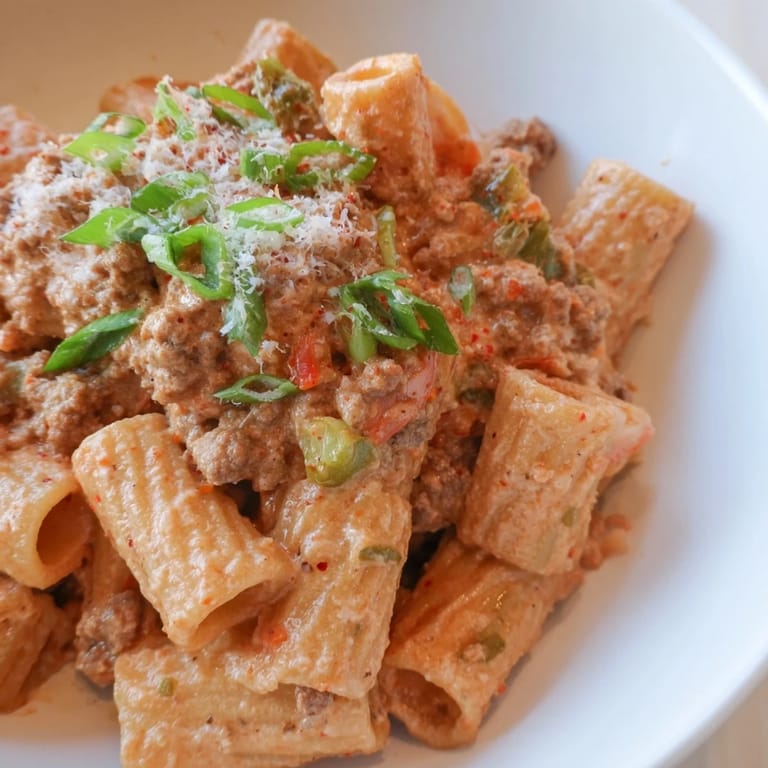
- Rigatoni or penne (350 g): Shapes with ridges and holes grab the sauce better than smooth pasta, making each bite count.
- Scallions and Parmesan: These finish the dish with brightness and a salty punctuation that ties everything together.
Tired of Takeout? 🥡
Get 10 meals you can make faster than delivery arrives. Seriously.
One email. No spam. Unsubscribe anytime.
Instructions
- Build your base:
- Heat olive oil in your largest skillet over medium-high heat, then add the chopped onion, carrot, and celery. Let them soften for about 5 minutes, stirring now and then so they caramelize just slightly at the edges.
- Wake it up with garlic:
- Add the minced garlic and cook for just about a minute until the kitchen smells incredible. Don't let it brown or it'll taste bitter.
- Brown the meat:
- Crumble in your ground pork and cook it for 6 to 7 minutes, breaking it up as you go, until there's no pink left and the meat is starting to stick slightly to the pan in places.
- Introduce the kimchi:
- Stir in the chopped kimchi and its juice, then let it cook for 3 to 4 minutes so it softens and releases its flavors into everything. You should see the color deepen.
- Build the sauce:
- Add the crushed tomatoes, soy sauce, gochugaru if you're using it, sugar, and a pinch of salt and pepper. Lower the heat a bit and let it simmer uncovered for 15 to 20 minutes, stirring every few minutes, until it darkens and thickens slightly.
- Cook the pasta:
- While the ragu simmers, bring a big pot of salted water to a rolling boil and cook your pasta until it's al dente—you want it to have just a tiny bite. Drain it, but save about 100 ml of that starchy pasta water before you pour it out.
- Make it creamy:
- Once the ragu has thickened, reduce the heat to low and stir in the heavy cream and half of that reserved pasta water. The sauce should look silky and cling to a spoon. Taste it and adjust salt and pepper as needed.
- Bring it together:
- Add the drained pasta to the ragu and toss everything to coat, adding more pasta water a splash at a time if it looks too thick. It should flow gently on the plate, not sit like concrete.
- Plate and finish:
- Serve it hot with a scatter of fresh scallions and grated Parmesan if you like, and watch people's faces light up when they taste it.
 Save
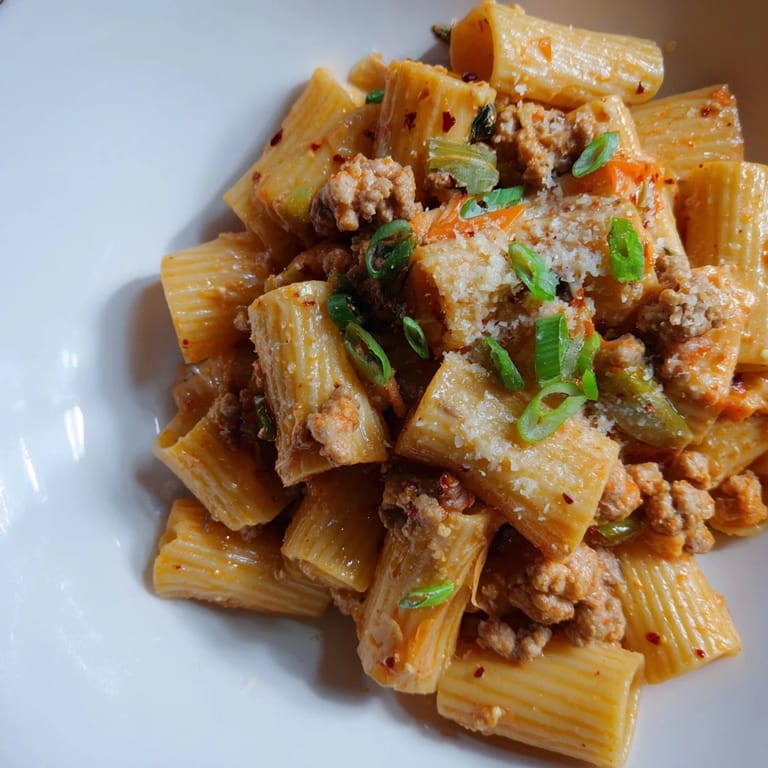
Save There's something almost meditative about watching this dish come together—the way the pink meat slowly browns, how the kimchi softens and spreads its color like watercolor through cream, how one pot becomes this whole universe of flavor. It's the kind of meal that reminds you why cooking matters.
The Magic of Fusion
What makes this dish work is respect for both traditions. The Italian ragu technique—slow cooking aromatics and meat into a deep, rich sauce—gives structure and comfort. The Korean kimchi brings funk, heat, and umami complexity that transforms it into something neither cuisine owns alone. This isn't about combining things randomly; it's about honoring where each element comes from while letting them elevate each other.
Heat and Creaminess
The interplay between the spice from the kimchi and gochugaru and the cool, soothing cream is what keeps you coming back for another bite instead of reaching for water. The heat builds slowly as you eat, and the cream wraps around it like a safety net. If you're sensitive to spice, start with half the gochugaru and add kimchi juice gradually; if you love heat, go bold and trust the cream to balance you out.
Making It Your Own
This recipe is flexible in all the ways that matter. Swap the pork for beef, use coconut cream if dairy isn't an option, dial the spice up or down depending on your mood, or even try it with a different kimchi variety if you find one you like better. The bones of the dish—the ragu technique, the kimchi as the flavor anchor, the cream to smooth it out—those stay solid no matter what you change.
- If you have leftovers, this dish actually tastes better the next day once all the flavors have settled and deepened together.
- A squeeze of fresh lime juice right before serving adds brightness if the dish feels too heavy on your palate.
- Double the recipe and freeze half; it reheats beautifully and gives you an easy dinner waiting in the freezer.
 Save
Save This dish lives in that beautiful space where comfort meets adventure, where tradition gets a playful nudge, and where a simple pasta becomes something you'll crave. Make it once and you'll understand why it earned its place in my regular rotation.
Kitchen Guide
- → What meats work best in this dish?
Ground pork or beef, or a blend of both, provide savory richness that complements the kimchi's spice and tang.
- → Can I make this dairy-free?
Yes, substitute heavy cream with unsweetened plant-based alternatives like coconut or almond cream for a smooth finish.
- → How spicy is the dish and can I adjust it?
The gochugaru chili flakes add mild heat; adjusting its amount or kimchi quantity controls the spice level.
- → What pasta shapes work best here?
Rigatoni or penne hold the creamy sauce well and provide a satisfying bite that pairs perfectly with the ragu.
- → Any tips for enhancing flavor depth?
Simmering the sauce uncovered allows flavors to concentrate; adding soy sauce balances umami and saltiness.
- → How can I adapt this for a vegetarian diet?
Use plant-based ground meat substitutes and opt for vegan cheese or omit Parmesan altogether.