 Save
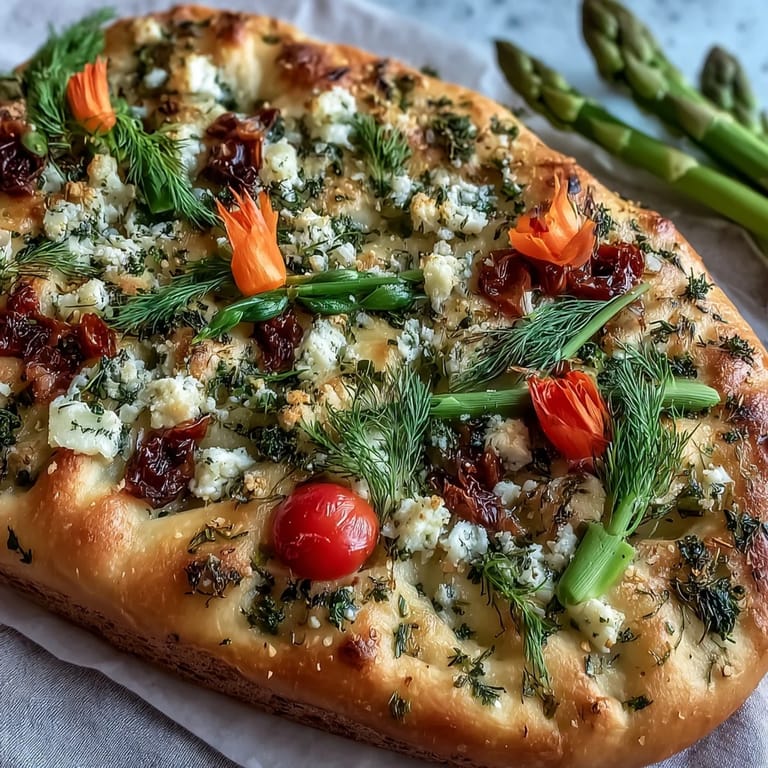
Save My sister called me in a panic two weeks before her baby shower, asking if I could bring something that looked as special as she felt. I found myself standing in the kitchen on a Saturday morning, thinking about how bread could be more than sustenance—how it could be a canvas. That's when this focaccia idea came to life, turning simple vegetables into a garden of edible flowers blooming across golden dough.
Watching my mother-in-law take a photo of this bread before cutting into it made me realize food can hold moments. Everyone gathered around the table, and suddenly it wasn't just a baby shower appetizer—it was proof that someone cared enough to make something beautiful. The herb-scented steam rising off the warm focaccia felt like a quiet celebration all on its own.
Ingredients
- Bread flour: The backbone here—it gives the focaccia that tender crumb while still holding enough structure for all your artistic vegetables.
- Instant yeast: Quick and reliable, though if you have active dry yeast on hand, it works just fine.
- Lukewarm water: Too hot and you'll kill the yeast; too cold and nothing rises, so use your inner wrist to test it.
- Extra-virgin olive oil: This isn't the time to skimp—it's what makes the focaccia sing with flavor and keeps it moist.
- Red and yellow bell peppers: Their natural sweetness and thin rings create perfect flower petals without any effort.
- Cherry tomatoes: Halved, they become flower centers, and they caramelize slightly in the oven for concentrated flavor.
- Zucchini and carrot ribbons: A mandoline slicer makes these impossibly thin and elegant, but a careful hand with a knife works beautifully too.
- Asparagus spears: They stay slightly al dente and make convincing flower stems without being fussy.
- Fresh herbs: Use whatever you have—rosemary branches become garden accents, dill adds feathery texture, basil leaves nestle between vegetables.
- Edible flowers: Completely optional, but pansies and nasturtiums add a touch of whimsy that makes people smile.
- Flaky sea salt: The finishing touch that reminds you this is food meant to be savored, not just admired.
Tired of Takeout? 🥡
Get 10 meals you can make faster than delivery arrives. Seriously.
One email. No spam. Unsubscribe anytime.
Instructions
- Mix your foundation:
- Combine flour, yeast, sugar, and salt in a large bowl, then create a well in the center. Pour in the water and olive oil, stirring until a shaggy, sticky dough comes together—it should look a bit rough right now, which is exactly right.
- Knead into silk:
- Transfer to a floured surface and knead for 8 to 10 minutes until the dough becomes smooth and elastic under your palms. You'll feel the transformation happen; it goes from slightly gritty to satiny. A stand mixer with a dough hook saves your arms and takes about 5 to 7 minutes.
- Let it breathe and rise:
- Oil a bowl lightly, nestle the dough inside, cover with a damp cloth, and find a warm spot in your kitchen. An hour to 2 hours later, you'll have dough that's roughly doubled—poke it gently and it should feel pillowy, not dense.
- Prepare your canvas:
- Preheat the oven to 220°C (425°F) and line a large baking sheet with parchment paper, drizzling it with olive oil. This prevents sticking and adds flavor from the very start.
- Shape and dimple:
- Punch down the dough gently, transfer it to the oiled sheet, and stretch it out to fit the pan, leaving a slight thickness all around. Use your fingertips to create dimples across the surface—this is where the focaccia gets its signature texture and where olive oil collects as it bakes.
- Oil generously:
- Brush the entire surface with more olive oil, using enough that it pools slightly in those dimples you just made. This is the secret to that golden, crispy exterior.
- Arrange your garden:
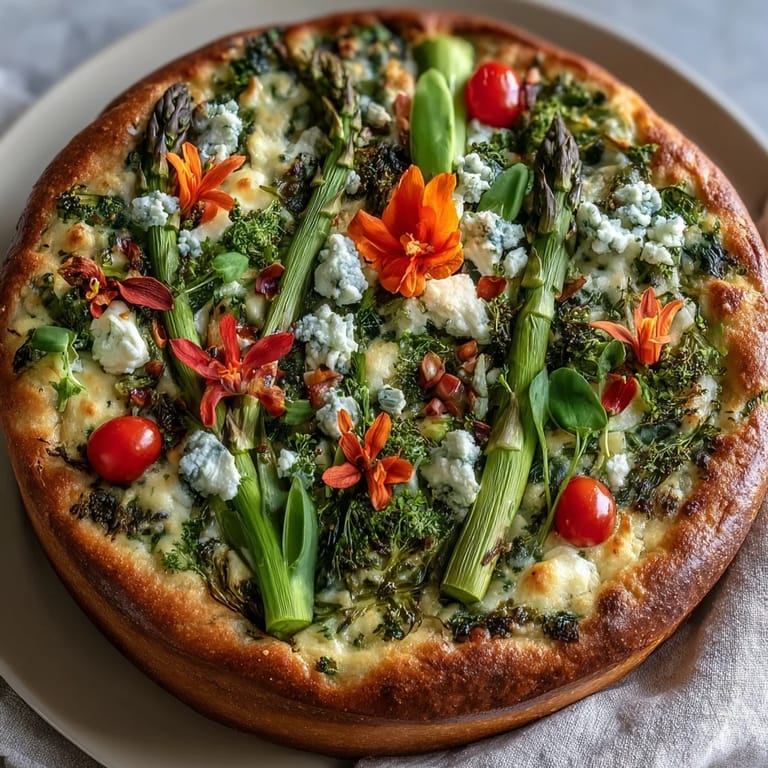
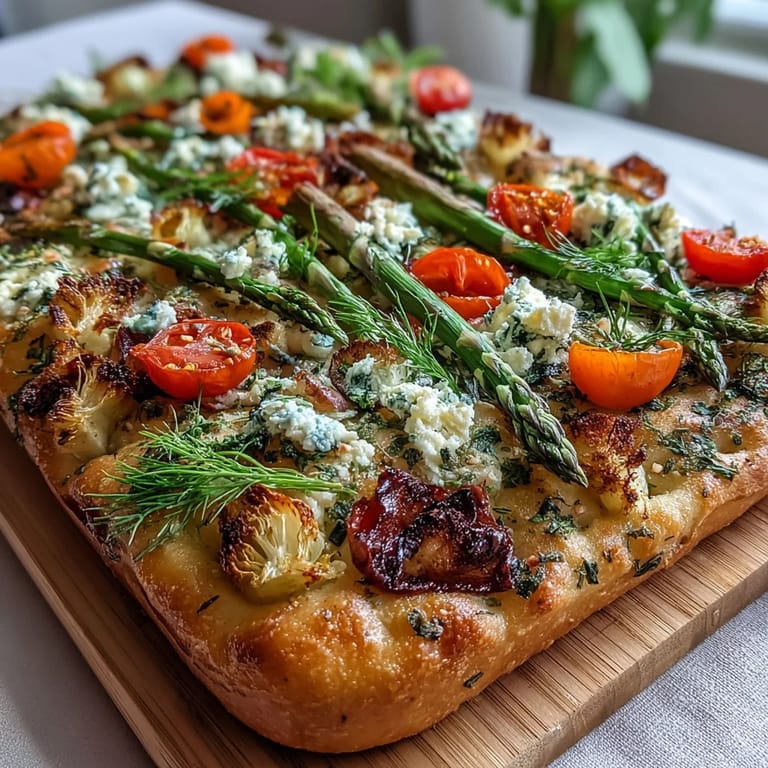
- Now the fun part—arrange peppers into flower shapes, halved tomatoes as centers, asparagus as stems, herb sprigs as leaves and accents. Think loose and organic, not rigid; gardens aren't perfect. If using edible flowers, place them last so they don't bruise.
- Season and rest:
- Sprinkle flaky sea salt and black pepper over everything, then let the decorated dough rest uncovered for 10 to 15 minutes. This brief pause lets the yeast wake up for one final push in the oven.
- Bake until golden:
- Slide into the oven for 22 to 25 minutes, rotating the pan halfway through so the bread browns evenly. You're looking for a deep golden color and a hollow sound when you tap the bottom.
- Cool and serve:
- Let it rest on a wire rack for 10 minutes—this firms it up just enough to slice cleanly. Serve while still warm, when the herbs are fragrant and the vegetables are tender but not soft.
 Save
Save The moment I pulled this from the oven and saw those vegetables glistening, bronzed at the edges but still bright underneath, I understood why my sister had asked. This wasn't just bread—it was edible hope, something that said we're celebrating new life with beauty and care. That's the gift of it.
Why Thin Slicing Matters
The first time I made this, I sliced the vegetables too thick and they stayed almost raw in the center while the edges burned. A mandoline changed everything, making thin, consistent slices that cook through evenly and stay vibrant. Now I always peel my carrots into ribbons first—they're more elegant than rounds, and they wilt just enough to curve naturally across the focaccia.
Making It Your Own
There's something wonderful about adapting this to what's in your garden or at the farmers market. Last summer I used purple cabbage, snap peas, and tiny radishes because they were what looked beautiful that morning. The herb combinations change too—sometimes it's all Mediterranean with oregano and basil, other times I lean into dill and chives for something fresher.
Storage and Serving Suggestions
This focaccia is absolutely best the day it's made, when the crust still has a slight crunch and the vegetables are at their peak. If you do have leftovers, wrap them loosely and reheat in a 180°C oven for 8 to 10 minutes to revive the crust. Serve it alongside sparkling lemonade on a warm afternoon, or with a crisp white wine if you're feeling festive.
- Infuse your olive oil with minced garlic or lemon zest before brushing for an extra layer of flavor.
- Prep all your vegetables the morning of and keep them in separate containers until you're ready to arrange them.
- If you're making this for a crowd, double the recipe and use two baking sheets, rotating them halfway through baking.
 Save
Save Make this focaccia when you want to remind someone they're worth the extra care, or when you just need to remember that yourself. It's proof that good things happen when you combine simple ingredients with a little creativity and time.
Kitchen Guide
- → How long should the dough rise for optimal texture?
Allow the dough to rise for 1 to 2 hours in a warm spot until it doubles in size, ensuring a light, airy crumb.
- → Which herbs work best for the focaccia topping?
Fresh rosemary, thyme, basil, parsley, chives, and dill provide a fragrant and flavorful herb combination enhancing the bread's aroma.
- → Can other vegetables be used for decoration?
Yes, feel free to use any colorful, thinly sliced seasonal vegetables to create your own floral designs.
- → What is the best way to bake this focaccia evenly?
Bake at 220°C (425°F) for 22–25 minutes, rotating the pan halfway to achieve uniform golden browning.
- → How can I enhance the olive oil brushing step?
Infuse olive oil with garlic or lemon zest before brushing to add extra depth of flavor to the crust.