 Save
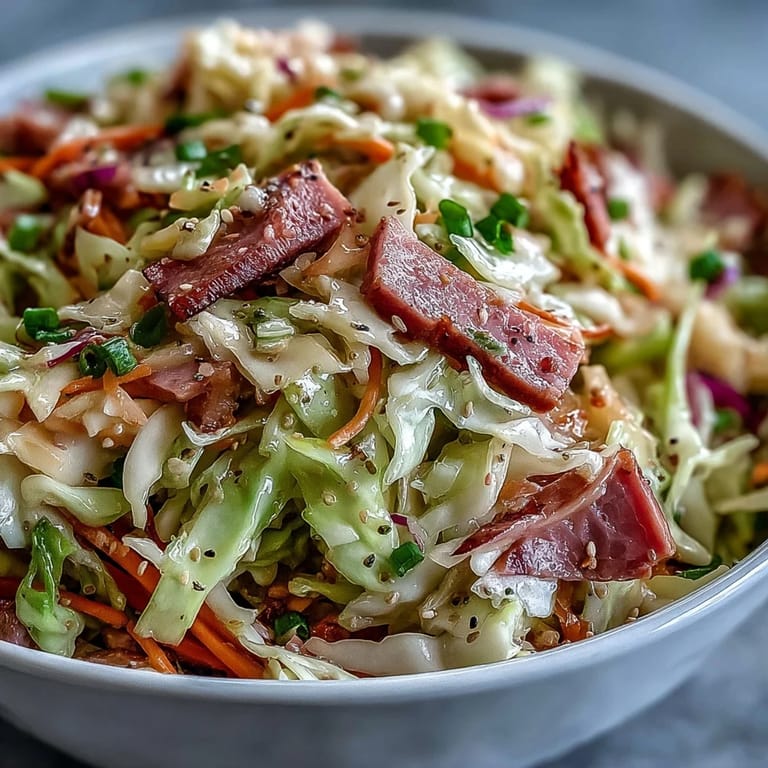
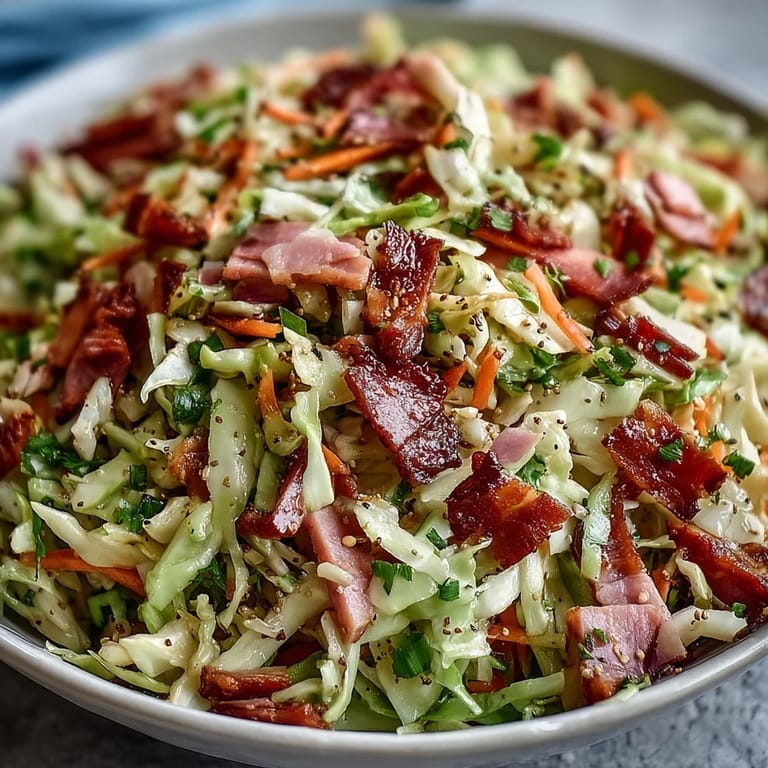
Save My neighbor Klaus handed me a jar of his homemade coleslaw one autumn afternoon, and I watched him explain it with the kind of pride that only comes from doing something the right way for decades. The cabbage was impossibly crisp, the ham smoky and substantial, and there was this bright tang that made everything sing. He never wrote down his recipe, just gestured vaguely at ingredients while I scrambled to remember proportions, but this version captures that same magic—the kind of slaw that tastes like a proper German kitchen, where nothing is rushed and every element earns its place on the plate.
I made this for a backyard gathering last spring when my brother brought his new partner over, and watching them both reach for thirds while still talking told me everything I needed to know about the recipe. The caraway seeds sparked a conversation about Klaus's kitchen, and suddenly we were all laughing about how the best dishes are the ones that come with stories attached.
Ingredients
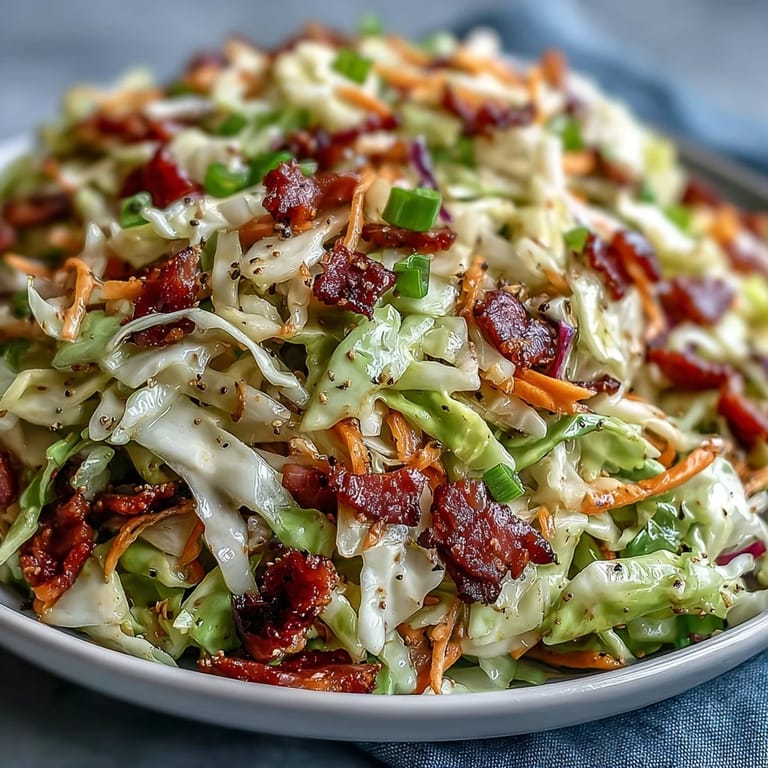
- Green cabbage, finely shredded (4 cups): This is your foundation—look for heads that feel dense and heavy for their size, and shred it thin enough that it softens slightly when the dressing hits it without becoming mushy.
- Red cabbage, finely shredded (1 cup): Red cabbage brings earthiness and a subtle sweetness that makes the other flavors pop; don't skip it just because you're trying to save a step.
- Carrot, grated (1 large): Fresh grated carrot adds natural sweetness and a delicate crunch that stands up beautifully against the tang of the vinegar.
- Red onion, thinly sliced (1 small): Slice it paper-thin and don't be shy—the sharpness mellows as it sits in the dressing, becoming mellow and sweet.
- Smoked ham, shredded (1 cup): This is what separates a side dish from something substantial; buy good quality ham from the deli counter if you can, as it makes an enormous difference in flavor.
- Apple cider vinegar (1/3 cup): The acid is what makes this sing, so don't be tempted to reduce it; the vinegar should be bold enough that you notice it immediately.
- Dijon mustard (2 tablespoons): This acts as an emulsifier and adds a subtle sharpness that balances the sweetness of the honey and natural sugars in the vegetables.
- Honey (1 tablespoon): Just enough to round out the vinegar's bite without making this taste like dessert, and it helps the dressing cling to the cabbage.
- Sunflower or neutral oil (1/3 cup): The oil carries the dressing deep into the vegetables, so use something light and neutral that won't compete with the other flavors.
- Caraway seeds, optional (1 teaspoon): These are the secret handshake of authentic German coleslaw—earthy and slightly licorice-like, they're the element that makes people ask what you did differently.
- Salt and freshly ground black pepper: Season to taste at the end, not at the beginning, because the flavors will intensify as the slaw sits.
- Fresh parsley, chopped (2 tablespoons): A last-minute garnish that adds brightness and makes the dish look intentional rather than thrown together.
Tired of Takeout? 🥡
Get 10 meals you can make faster than delivery arrives. Seriously.
One email. No spam. Unsubscribe anytime.
Instructions
- Prep your vegetables with intention:
- Shred the cabbages fine enough that they soften slightly but not so thin they become impossible to handle. Grate the carrot on the largest holes of your grater so it has texture, and slice the onion thin enough to bend without snapping.
- Build your base:
- Toss the cabbage, carrot, and onion together in a large bowl, then add the ham and gently mix so the smoky pieces are distributed throughout rather than clumped in one corner. The mixing now means you won't have to wrestle with everything later.
- Make the dressing with confidence:
- In a separate bowl, whisk the vinegar, mustard, and honey together first until they're smooth and emulsified, then slowly drizzle in the oil while whisking constantly. This is how you prevent the dressing from breaking and ensures it coats everything evenly.
- Bring it together:
- Pour the dressing over the cabbage mixture and toss thoroughly, making sure every strand of vegetable glistens with dressing. Don't be shy—coleslaw needs to be dressed generously or it will taste flat and sad.
- Let time do its work:
- Let the slaw sit for at least ten minutes before serving; this is when the magic happens, the vegetables soften just slightly, and the flavors marry into something greater than the sum of their parts. If you can wait thirty minutes, even better.
- Finish with freshness:
- Taste one final time, adjust the salt and pepper if needed, then scatter the parsley over the top right before serving.
 Save
Save My brother texted me months later asking for the recipe because his partner was craving it, and I realized that's when a recipe stops being just instructions and becomes something that lives in people's kitchens, showing up at their tables unbidden because someone they love made it once and it stayed with them. That's the goal with food, isn't it—to make something worth remembering.
When to Serve This Slaw
This coleslaw is at its best alongside grilled proteins—schnitzel, bratwurst, or any sausage that has a smoky char. It's equally at home at a casual picnic or a more formal dinner party because it looks thoughtful without being fussy, and it tastes substantial enough that no one will mistake it for rabbit food. The acidity cuts through richness beautifully, so consider it whenever you're serving something fatty or deeply flavored.
The Caraway Seed Question
I made this without caraway seeds the first time because I couldn't find them and told myself it wouldn't matter much. It mattered quite a bit, actually—the slaw was good but it tasted generic, like any vinegar-based coleslaw you might make without thinking. The caraway brings something earthy and distinctly German, a warmth that rounds out the sharpness and makes people pause mid-bite and wonder what that flavor is.
Variations and Adaptations
Once you understand the ratio of acid to oil to seasonings, you can play with this recipe confidently. A tart apple diced and tossed in at the last minute adds a sweet crunch that's lovely in fall, and some cooks add a handful of toasted sunflower seeds for extra texture. If you want it lighter, swap half the oil for plain yogurt or sour cream, which creates a creamier version that's still bright and tangy rather than heavy.
- For extra smokiness, seek out double-smoked ham or use smoked pork shoulder that you've shredded yourself.
- A splash of caraway-infused vinegar instead of plain apple cider vinegar deepens the authenticity if you can find it at a specialty grocer.
- Make it ahead and store it in the fridge for up to three days; it actually tastes better on day two or three as the flavors continue to meld and the vegetables soften further.
 Save
Save This slaw has become my answer whenever someone asks what to bring to a potluck where I actually want the dish to matter and be remembered. There's comfort in knowing that something so simple—just vegetables, ham, and a proper dressing—can taste this good and make people happy.
Kitchen Guide
- → Can I make this coleslaw ahead of time?
Yes, you can prepare it up to 24 hours in advance. Store covered in the refrigerator. The flavors will continue to develop, though the cabbage may soften slightly over time.
- → What can I substitute for smoked ham?
Try smoked turkey, smoked pork shoulder, or bacon bits for a similar smoky flavor. For a vegetarian version, omit the meat and add smoked paprika to the dressing.
- → Are caraway seeds necessary?
While optional, caraway seeds add an authentic German flavor profile. If you don't enjoy their taste, simply omit them or substitute with a pinch of celery seeds.
- → How do I prevent the coleslaw from becoming watery?
Ensure the cabbage is well-drained after shredding. You can also lightly salt it, let it sit for 10 minutes, then squeeze out excess moisture before adding the dressing.
- → What pairs well with this coleslaw?
It complements German dishes like schnitzel, bratwurst, sausages, and roasted pork. It also works wonderfully alongside grilled meats or as a topping for sandwiches.
- → Can I make this dairy-free?
Yes, this coleslaw is naturally dairy-free as written. Just avoid the optional yogurt substitution mentioned in the notes if you need to keep it completely dairy-free.