 Save
Save My neighbor brought over a jar of homemade lemon curd one spring morning, and I stood in my kitchen holding it like some kind of edible treasure, wondering what on earth to do with it. That afternoon, I layered it with Greek yogurt I had on hand, topped it with some toasted sourdough crumbs I'd been meaning to use up, and suddenly had something that felt both effortless and impossibly elegant. It's become my go-to when I need something that tastes like it took hours but actually takes barely half an hour.
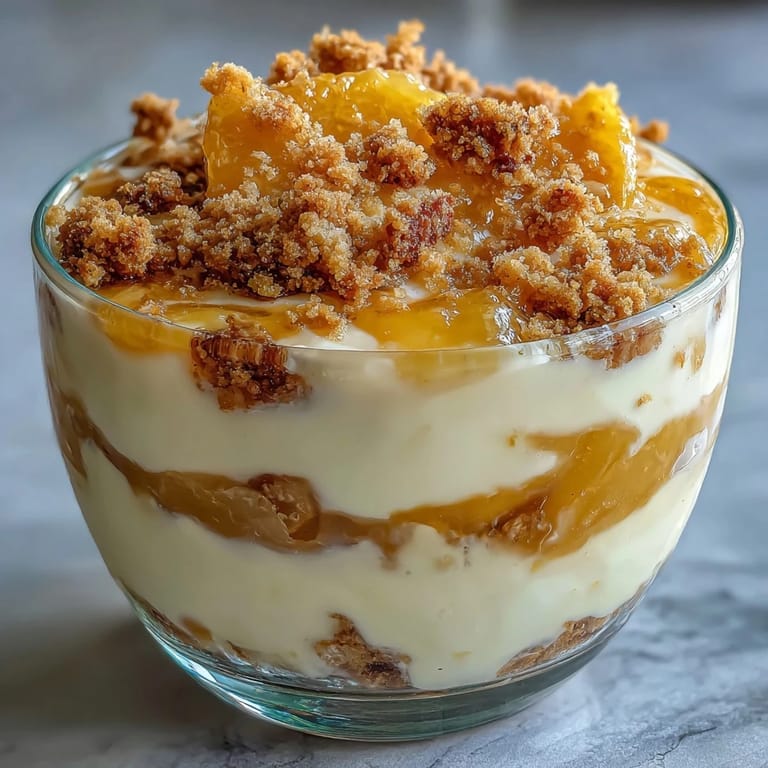
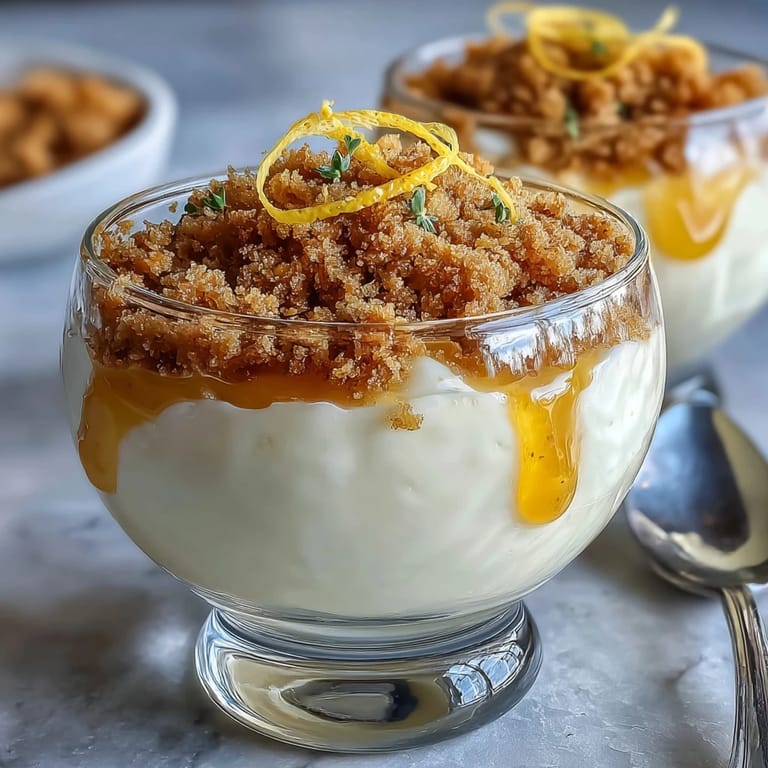
I served these to friends one evening, and someone asked if I'd made them at a bakery class—that comment stuck with me because it proved that simple, quality ingredients arranged thoughtfully can feel luxurious without pretense. The lemon curd gleaming between layers of white yogurt, those golden crumbs catching the light, the whole thing coming together in clear glasses so you could see every beautiful stripe.
Ingredients
- Greek yogurt (2 cups full-fat or 2%): Full-fat creates the silkiest mouthfeel, though 2% works beautifully if you prefer something lighter; the thickness matters more than the fat percentage here.
- Honey or maple syrup (2 tablespoons): These add just enough sweetness to balance the tang without making the yogurt cloying, and I've learned that honey dissolves more smoothly when whisked in.
- Vanilla extract (1 teaspoon): A small amount that deepens flavor without announcing itself; don't skip this quiet ingredient.
- Large eggs (2): Room temperature eggs whisk more smoothly into the curd base and create a silkier final texture.
- Granulated sugar (1/2 cup): This sweetens the curd and helps it thicken during cooking; don't reduce it or the consistency suffers.
- Fresh lemon juice (1/4 cup from about 2 lemons): Fresh juice makes an unmistakable difference; bottled juice tastes flat and thin by comparison.
- Lemon zest (1 tablespoon): The oils in zest give brightness that juice alone can't deliver, so grate it just before using.
- Unsalted butter (3 tablespoons for curd, 2 tablespoons for topping): Unsalted lets you control the salt level, and cold butter whisked into warm curd creates that luxurious, glossy finish.
- Sourdough bread (1 cup torn into small crumbs): Day-old or slightly stale bread works better than fresh; the slight dryness toasts up crispy instead of turning tough.
- Light brown sugar (2 tablespoons): Brown sugar melts into the crumbs and adds a subtle molasses depth that regular sugar doesn't provide.
- Sea salt (a pinch): Just enough to make the sweet and tangy flavors pop without tasting salty.
- Fresh berries, lemon zest, and mint (optional garnish): These aren't just decoration; they add brightness and textural contrast that makes each spoonful feel intentional.
Tired of Takeout? 🥡
Get 10 meals you can make faster than delivery arrives. Seriously.
One email. No spam. Unsubscribe anytime.
Instructions
- Make the lemon curd:
- Whisk eggs, sugar, lemon juice, and zest together in a heatproof bowl until combined. Set that bowl over a pot of gently simmering water, making sure the bowl doesn't touch the water, and stir constantly for 6 to 8 minutes until the mixture thickens enough to coat the back of a spoon. Remove from heat, whisk in the cubed butter until completely smooth, and let it cool to room temperature—this is the moment the curd goes from hot and liquid to silky and substantial.
- Toast the sourdough crumbs:
- Tear your sourdough into small, uneven pieces and melt butter in a skillet over medium heat, then toss in the crumbs with brown sugar and a pinch of salt. Keep stirring for about 5 minutes until they turn golden brown and smell like toasted bread, then spread them on a plate to cool and crisp up further.
- Prepare the yogurt base:
- Whisk Greek yogurt together with honey and vanilla until smooth and slightly lightened in color. This only takes a minute but makes the yogurt easier to layer and slightly less intensely tangy.
- Layer and assemble:
- Divide the yogurt mixture among four glasses or jars, then spoon a generous dollop of cooled lemon curd over the yogurt, followed by a handful of sourdough crumbs. Repeat the layers one more time if your glasses are tall, finishing with the crumbs on top so they stay crispy. The layering is where the visual appeal lives—let each layer be visible so the contrast shows.
- Garnish and serve:
- Top with fresh berries, a whisper of lemon zest, or a small mint leaf if you want to dress things up. Serve immediately while the crumbs are still crisp.
 Save
Save There's a moment when you take that first spoonful and all the elements hit at once—the cool, tangy yogurt, the bright lemon curd that's somehow both sharp and silky, the crispy crunch that breaks under your spoon. It reminds me why I love cooking, not because it's complicated, but because small, thoughtful details transform something simple into something that feels like a gift you're giving yourself.
Making Ahead and Storage
The beauty of this recipe is its forgiving nature when it comes to timing. The lemon curd keeps in the refrigerator for up to a week, which means you can make it on a quiet afternoon and have it ready whenever the craving strikes. The sourdough crumbs stay crispy in an airtight container for several days, though I've found they're best toasted within a day or two of serving. Only assemble the parfaits just before serving so the crumbs maintain that crucial crispy-crunchy texture that makes the whole dish sing.
Variations and Flavor Shifts
Once you understand the basic structure—creamy base, bright acid, crispy topping—you can riff on it endlessly. I've swapped lime or orange zest for lemon and found the dessert takes on a completely different personality. Some mornings I'll use labneh instead of Greek yogurt for something even tangier, or drizzle a touch of honey on top just before serving for extra sweetness. The sourdough crumbs could easily become graham cracker crumbs or even toasted nuts if that's what you have on hand, though the sourdough's subtle tang is part of the charm.
Serving Suggestions and Occasions
I've served this at dinner parties, brought it to potlucks in individual jars, and made it for quiet breakfasts when I wanted something that felt special without effort. It works for warm-weather entertaining because there's no last-minute baking stress, and it feels light enough after a rich meal yet substantial enough to satisfy. The visual appeal means it photographs beautifully if you're that person, and honestly, it looks so polished that guests assume you've spent hours perfecting it.
- Assemble the parfaits while the crumbs are still slightly warm so they stay as crispy as possible.
- If making for a crowd, keep components separate and let guests layer their own for a fun interactive element.
- A small glass of dessert wine or sparkling water alongside makes this feel even more intentional and complete.
 Save
Save This parfait has become my answer to the question of what to make when I want something that tastes like care without demanding hours in the kitchen. Every time I assemble one, I'm grateful for that neighbor and her jar of lemon curd that started it all.
Kitchen Guide
- → How is the lemon curd prepared?
The lemon curd is made by whisking eggs, sugar, fresh lemon juice, and zest, then cooking over simmering water until thickened. Butter is added off the heat for smoothness.
- → What gives the crumb topping its crunch?
The sourdough bread crumbs are toasted with butter, brown sugar, and a pinch of salt until golden and crisp, creating a rich and crunchy topping.
- → Can the yogurt layer be customized?
Yes, use full-fat or 2% Greek yogurt mixed with honey and vanilla for sweetness and flavor. For a lighter option, low-fat yogurt works well.
- → How to assemble the parfait layers?
Alternate spoonfuls of the yogurt mixture, lemon curd, and sourdough crumbs in glasses, repeating layers and finishing with crumb topping.
- → Are there suitable substitutions for dietary preferences?
Gluten-free bread can replace sourdough crumbs for gluten-free needs; plant-based yogurt and vegan butter make it suitable for dairy-free diets.