 Save
Save The first time I made cold sesame noodles was on a sweltering afternoon when my air conditioning decided to quit, and I needed something that wouldn't heat up the kitchen further. I grabbed whatever noodles I had, mixed up a quick sesame sauce from pantry staples, and tossed it all with some vegetables I'd been meaning to use. What came together was so silky, so satisfying, and honestly so much better than I expected that it became my go-to lunch for the rest of that summer.
I remember making a big batch for a picnic and watching everyone go quiet when they took that first slurp, which is the highest compliment cold noodles can receive. My friend Sarah went back for thirds and asked for the recipe right there on the grass, which is how I knew this was a keeper.
Ingredients
- Wheat noodles or spaghetti (350 g): The sturdy texture holds the sauce beautifully without turning mushy, and I've learned that rinsing them thoroughly in cold water is non-negotiable for the right texture.
- Sesame oil (1 tbsp for noodles): This prevents clumping and adds a subtle fragrance that makes people wonder what's in the dish.
- Tahini or sesame paste (4 tbsp): This is where the magic lives, creating that silky base that makes the dish feel indulgent without any cream.
- Peanut butter (2 tbsp): It softens the intensity of the sesame and adds body that makes the sauce cling perfectly to every strand.
- Soy sauce (3 tbsp): Use the low-sodium kind or you'll end up with an overly salty dish, which I learned the hard way.
- Rice vinegar (2 tbsp): This brightens everything and keeps the dish from feeling heavy, especially important in warm weather.
- Honey (1 tbsp): A touch of sweetness balances the savory and salty notes without making it dessert-like.
- Toasted sesame oil (1 tbsp): This is different from the regular sesame oil and tastes nutty and concentrated; it's worth seeking out.
- Garlic and ginger (2 cloves and 1 tbsp): Fresh and finely grated, these add warmth and personality that make the dish feel alive.
- Chili oil (1-2 tsp optional): The optional heat that can shift the whole mood depending on who's eating.
- Cold water (3-5 tbsp): Added gradually to reach that perfect pourable consistency, like adjusting music volume by ear.
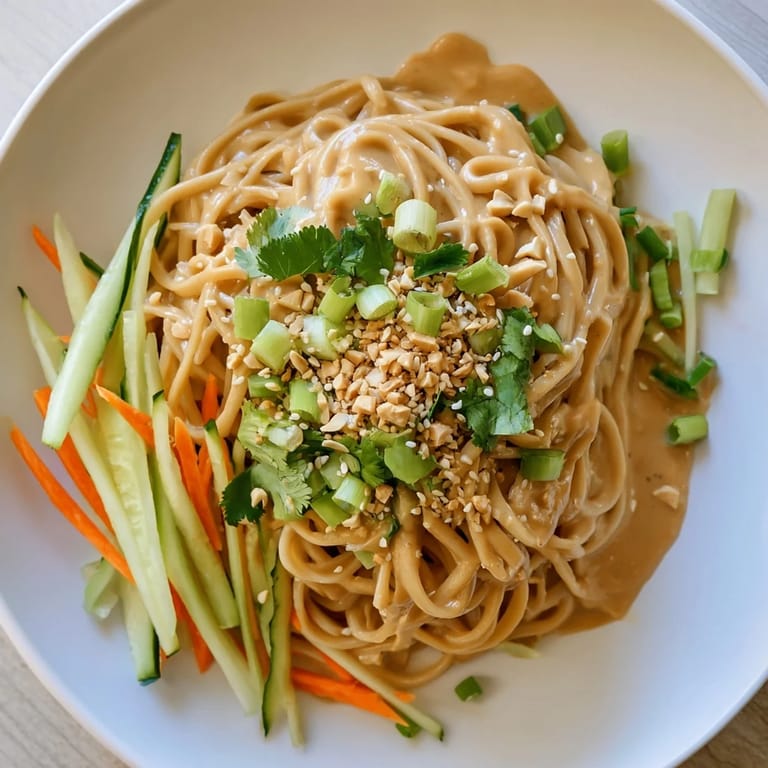
- Cucumber (1 medium): Julienned thin, it stays crisp and cool and provides a textural contrast that makes eating this dish feel refreshing.
- Carrots (2 medium): They add natural sweetness and that satisfying crunch that keeps each bite interesting.
- Spring onions (2): A whisper of allium flavor that ties everything together without overwhelming the palate.
- Toasted sesame seeds (2 tbsp): Scattered on top for visual appeal and a toasty depth that makes people ask what the secret ingredient is.
- Fresh cilantro (1 handful): Some people love it, some don't, but it adds an herbal brightness I can't live without.
- Roasted peanuts (optional): Crushed on top for extra crunch and richness if your guests aren't avoiding nuts.
Tired of Takeout? 🥡
Get 10 meals you can make faster than delivery arrives. Seriously.
One email. No spam. Unsubscribe anytime.
Instructions
- Bring the noodles to life:
- Cook according to package directions until tender but not soft, then drain and rinse under cold running water until they're completely cool to the touch. Toss with sesame oil while they're still slightly damp so the oil coats each strand evenly.
- Build the sauce:
- In a bowl, whisk tahini, peanut butter, soy sauce, rice vinegar, honey, toasted sesame oil, garlic, and ginger together, watching as it transforms from thick to creamy. Add cold water a tablespoon at a time, whisking between each addition, until you reach that perfect pourable consistency that still clings to the noodles.
- Marry the noodles and sauce:
- Pour the sauce over the cooled noodles in a large bowl and toss thoroughly, using a fork or tongs to lift and coat every strand. You'll feel the noodles shift from dry to glossy, which is the moment you know it's working.
- Create the presentation:
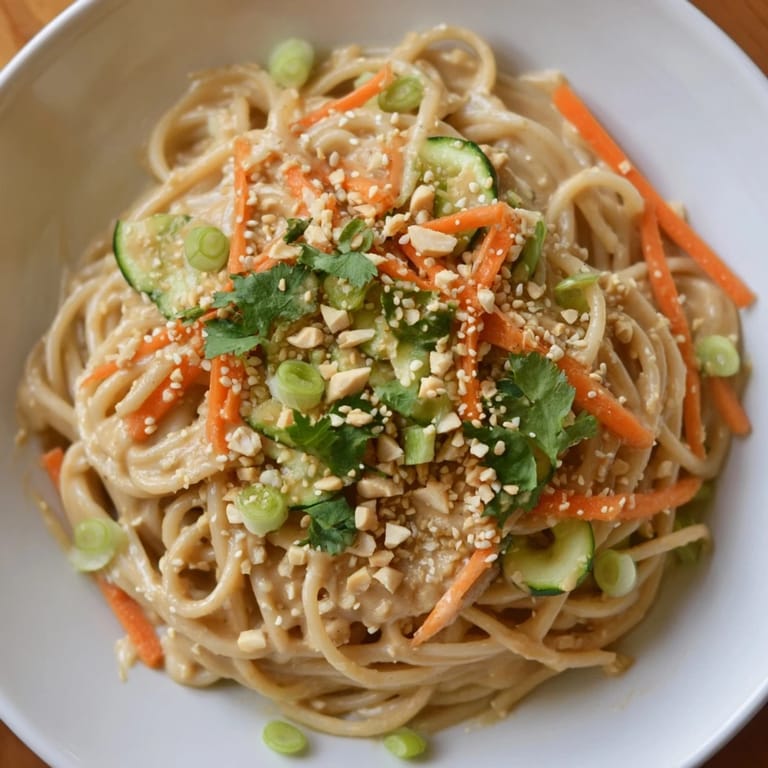
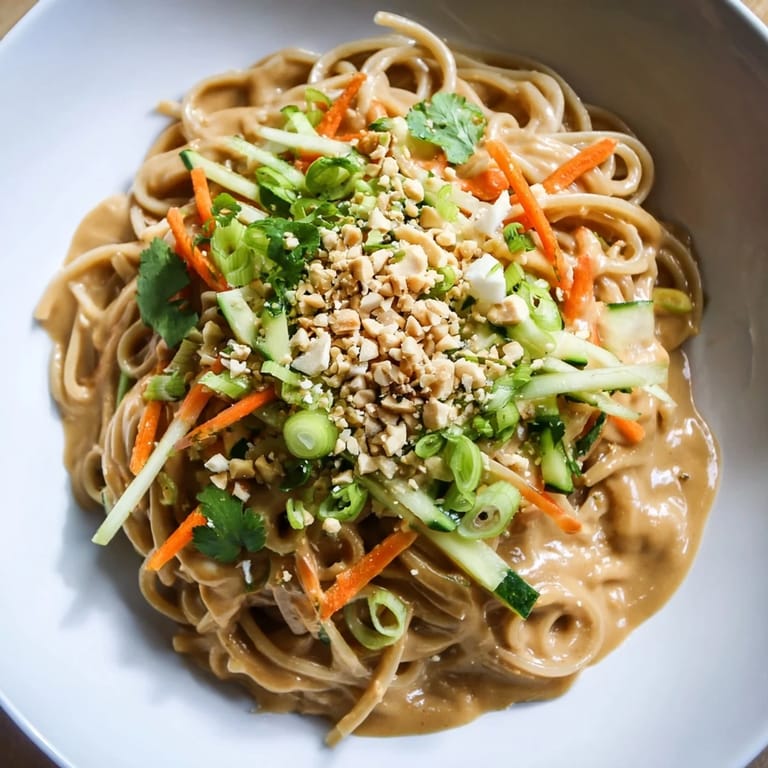
- Divide noodles among bowls and top each portion with cucumber, carrots, spring onions, sesame seeds, cilantro, and peanuts if using. Arrange everything like you're plating something special, because even casual food deserves care.
- Let it rest:
- Chill for 10 to 15 minutes so the flavors settle and become more rounded, though honestly eating it immediately is also entirely valid if hunger calls.
 Save
Save There's something about this dish that transforms a meal from functional to memorable, like the difference between eating at your desk and actually sitting down to a plate that makes you smile. It's become one of those recipes I make when I want to feel like I'm taking care of myself, which is maybe the most honest reason to cook anything.
The Magic of Sesame
Sesame has this quiet power in Asian cuisine that took me years to understand, the way it creates richness without heaviness. Using both tahini and toasted sesame oil means you get the creamy body from one and the nutty fragrance from the other, and together they're exponentially better than either alone.
Playing with Toppings
The beauty of this dish is how customizable it becomes once the base is set, and I've discovered that any crisp vegetable works if you're missing something. I've used shredded daikon, thinly sliced radishes, even raw broccoli florets when I was experimenting, and every version taught me something about texture and balance.
Make It Your Own
Cold sesame noodles live in that sweet spot where they're structured enough to follow but flexible enough to bend to whatever you have on hand or whatever you're craving that day. I've added shredded rotisserie chicken when I needed protein, tossed in cubed tofu for vegetarian guests, and even crumbled in some cooked shrimp for a dinner party that turned out to be surprisingly easy.
- If you can't find toasted sesame oil, regular sesame oil will work but use half the amount since it's more delicate than assertive.
- Prep all your vegetables ahead if you're serving this at a gathering, so assembly becomes just a matter of arranging and pouring.
- Taste the sauce before adding the noodles because that's when you still have complete control to adjust salt, heat, or sweetness.
 Save
Save This recipe has become my answer to hot afternoons and lazy lunches, the kind of food that makes you feel looked after without requiring any real effort. Once you make it once, you'll find yourself reaching for it again and again.
Kitchen Guide
- → What type of noodles work best?
Use wheat noodles or spaghetti for ideal texture. For gluten-free options, substitute with gluten-free noodles.
- → How can I make the sauce creamier?
Gradually add cold water to the sesame and peanut butter mixture until smooth and pourable for a creamy consistency.
- → Can I adjust the heat level?
Yes, add chili oil to taste or omit it for a milder flavor.
- → What toppings enhance texture and taste?
Julienned cucumber, carrots, spring onions, sesame seeds, cilantro, and crushed peanuts add refreshing crunch and aroma.
- → Is this dish suitable for make-ahead meals?
Absolutely, chilling for 10-15 minutes or longer enhances flavors and makes it convenient for meal prep.