 Save
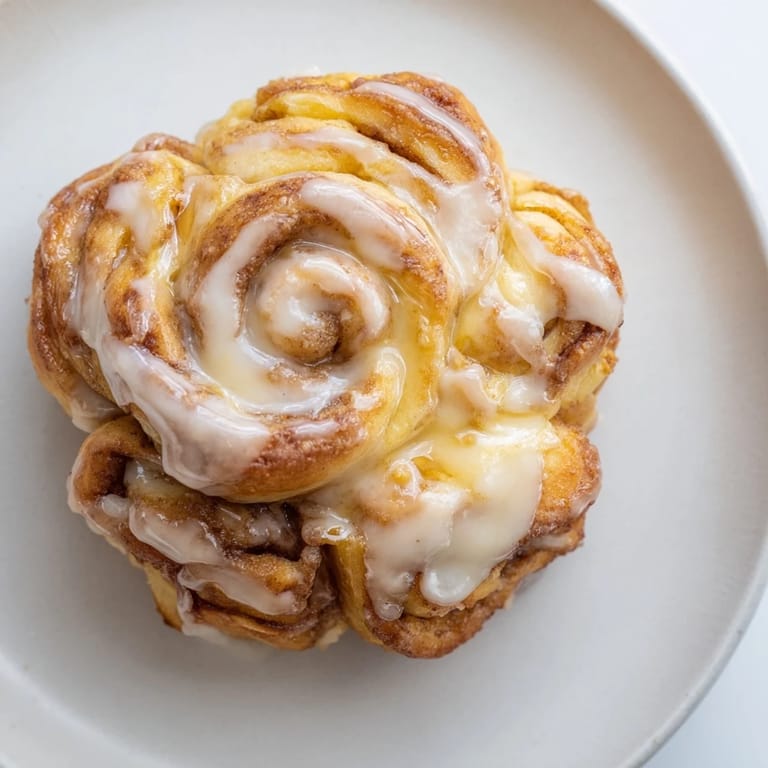
Save There's something magical about pulling apart warm cinnamon rolls straight from the oven, but one December morning I decided to make the experience even more shareable. I shaped the dough into a snowflake and watched my kids' faces light up as they each grabbed a twisted point—it became the centerpiece of our breakfast table instead of just another treat. That morning taught me that the best recipes are the ones that bring people together, and this one does it beautifully.
I'll never forget my neighbor peeking over the fence as the aroma drifted across the yard—she followed her nose to our kitchen and ended up staying for coffee. We pulled the snowflake apart piece by piece, and she kept saying it was too pretty to eat, but of course she did anyway. That's when I realized this recipe wasn't just about the flavor; it was about creating a moment worth remembering.
Ingredients
- All-purpose flour (3 1/4 cups): The foundation of your dough; measure by spooning into the cup and leveling off rather than scooping directly from the bag, which compacts it and throws off the ratio.
- Granulated sugar (1/4 cup): Feeds the yeast and adds subtle sweetness to the dough itself.
- Active dry yeast (2 1/4 tsp): Bring it to room temperature before mixing or it won't activate properly; cold yeast wakes up slowly.
- Salt (1/2 tsp): Balances the sweetness and controls fermentation speed.
- Warm milk (3/4 cup at 110°F): The liquid that brings everything together; too hot and you'll kill the yeast, too cold and nothing rises.
- Unsalted butter, melted (1/4 cup): Creates a tender crumb and adds richness without competing flavors.
- Egg (1 large, room temperature): Binds the dough and gives it a slight golden sheen as it bakes.
- Packed light brown sugar (1/2 cup): The soul of the filling—use your fingers to really pack it down so you get the full measure.
- Ground cinnamon (2 tsp): Don't skimp here; this is what makes people close their eyes after the first bite.
- Softened unsalted butter for filling (1/4 cup): Spreads easily without tearing the dough, and the softness matters more than you'd think.
- Powdered sugar (1 cup): Sifted if it's been sitting, so your icing drizzles smoothly.
- Milk for icing (2-3 tbsp): Adjust gradually until you reach that perfect drizzle consistency—thicker than water, thinner than frosting.
- Pure vanilla extract (1/2 tsp): The finishing touch that ties everything together with warmth.
Tired of Takeout? 🥡
Get 10 meals you can make faster than delivery arrives. Seriously.
One email. No spam. Unsubscribe anytime.
Instructions
- Activate your yeast:
- Combine warm milk, sugar, and yeast in a large bowl and let it sit for 5-10 minutes until foamy. You'll see tiny bubbles forming on the surface—that's the yeast waking up and getting ready to do its job.
- Build the dough:
- Stir in the melted butter, egg, and salt, then gradually add flour while mixing until a shaggy dough comes together. Don't rush this; letting it come together slowly prevents lumps.
- Knead until smooth:
- Work the dough on a lightly floured surface for 5-7 minutes, pushing it away from you with the heel of your hand and folding it back. You'll feel it transform from rough to silky, and that's your signal you're done.
- First rise:
- Place the dough in a greased bowl, cover it with a clean towel, and let it sit somewhere warm for an hour until it's doubled. A turned-off oven with the light on works perfectly, or a sunny windowsill on a cold day.
- Prep your workspace:
- Preheat your oven to 350°F and line a baking sheet with parchment paper so the snowflake won't stick to anything.
- Divide and roll:
- Punch down the risen dough to release the air, then divide it into 3 equal pieces. Roll each piece into a 12-inch circle on a lightly floured surface, working gently so you don't deflate all your rise work.
- Layer the first ring:
- Place one dough circle on the prepared baking sheet, spread half the softened butter over it using a pastry brush or the back of a spoon, then sprinkle half the cinnamon-sugar mixture. Press gently so it sticks.
- Add the second ring:
- Top with the second dough circle, spread the remaining butter, and sprinkle the rest of the cinnamon sugar. This creates those beautiful visible swirls you'll see in the final bake.
- Crown it:
- Place the third dough circle on top to complete your three-layer cake.
- Create the snowflake shape:
- Set a small glass in the very center of the stacked circles (don't press down hard), then use a sharp knife to cut from the glass outward in 16 equal strips, like you're drawing spokes on a wheel. The glass protects the center from getting shredded.
- Twist each point:
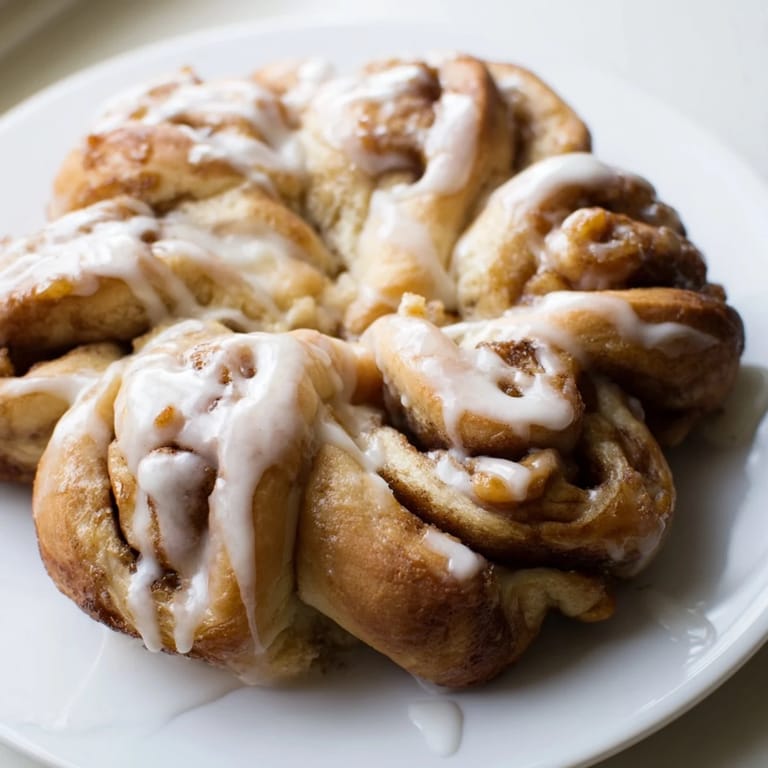
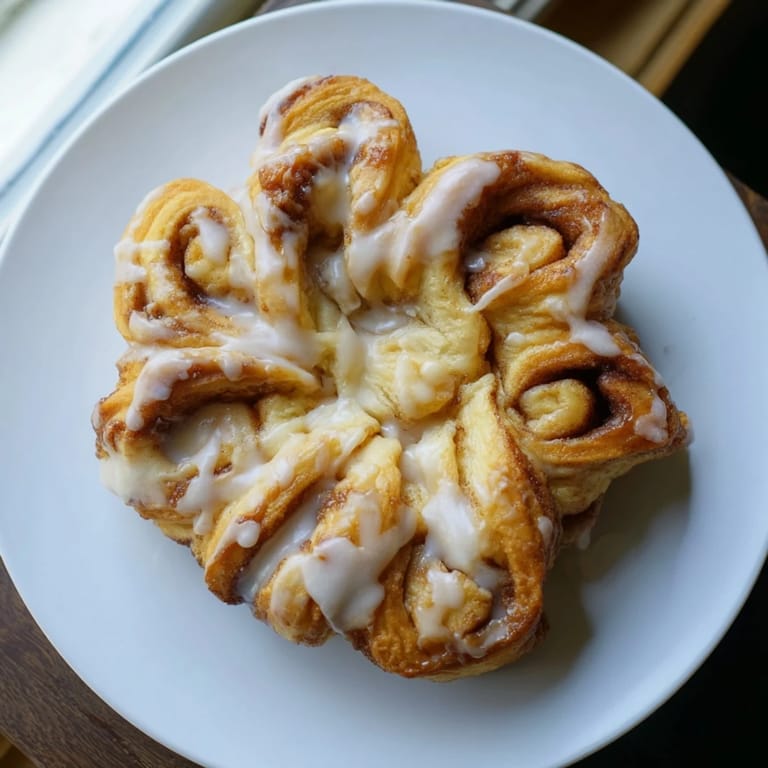
- Working with two adjacent strips at a time, twist them away from each other twice so they spiral, then pinch the ends together to seal. Repeat all the way around until you have a snowflake shape.
- Second rise and bake:
- Remove the glass, cover loosely with a towel, and let it rise for just 15 minutes. Bake for 22-25 minutes until golden brown—the edges will darken first, which is perfect.
- Cool and glaze:
- Let it cool for 10 minutes so the icing sets properly. Whisk together the powdered sugar, milk, and vanilla, then drizzle generously over the warm snowflake so it pools in the crevices.
 Save
Save The best part came when my daughter, usually skeptical about anything 'fancy' in the kitchen, asked if she could help make the snowflake herself the next time. Watching her twist the points with such focus, tongue slightly poking out in concentration, made me realize that this recipe had become our thing—our tradition—in just one morning.
The Magic of Yeast Dough
Working with yeast can feel intimidating if you've never done it before, but it's really just about understanding that you're nurturing tiny living organisms. I learned this the hard way when I first started baking, thinking yeast was just another ingredient to dump in. Now I respect the rise time, I warm my milk carefully, and I've come to love that window of patience between mixing and shaping. The reward is dough that has real structure and flavor, not the dense, compact results you get from quick breads.
Why Cinnamon Sugar Is Its Own Character
There's a reason so many bakeries get the cinnamon-sugar ratio right and guard it like a secret recipe. The brown sugar adds molasses depth and moisture that regular granulated sugar can't match, while cinnamon's warmth lingers on your tongue. I've tried cutting back on the cinnamon to save money, and every time I've regretted it by the second bite. This filling deserves generosity.
Shaping Techniques and Troubleshooting
The snowflake shape is forgiving in a way that precise braids or knots aren't—even if your twists aren't perfect or your strips are uneven, it still looks intentional and beautiful. The key is not overthinking it; you're creating visual interest, not precision engineering. If a strip tears while you're twisting, just pinch it back together and keep going.
- If your dough feels too sticky to work with, dust it with flour as you go rather than adding flour all at once to the bowl.
- A bench scraper or dough cutter makes dividing and handling the dough easier, but a sharp knife works just fine.
- Don't skip the final 15-minute rise before baking—it ensures the oven spring is gentle and the snowflake bakes through evenly.
 Save
Save Serve this snowflake warm with hot chocolate or coffee, and watch it disappear piece by piece as everyone gathers around. It's the kind of recipe that makes a morning feel special without requiring you to wake up at dawn to make it happen.
Kitchen Guide
- → How do I form the snowflake shape?
After stacking the cinnamon sugar layered dough circles, cut them into strips around a central glass. Twist adjacent strips twice and pinch the ends to create the snowflake points.
- → Can I add nuts or dried fruit?
Yes, chopped toasted pecans or raisins can be added to the filling for extra texture and flavor.
- → What is the ideal oven temperature and baking time?
Bake at 350°F (175°C) for about 22–25 minutes until the dough turns golden brown.
- → How long should the dough rise?
Allow the dough to rise for 1 hour until doubled, then after shaping, let it rest for 15 minutes before baking.
- → Can I substitute ingredients for a richer dough?
Substitute half of the milk with heavy cream to create a richer, softer dough.