 Save
Save Last summer, I was tired of making the same lunch salads and craved something that felt both satisfying and exciting. A friend mentioned Buddha bowls, and I became obsessed with the idea of layering vibrant vegetables over creamy hummus. When I roasted my first batch of red peppers and blended them into hummus, the kitchen filled with this warm, slightly smoky aroma that made me realize I'd been missing something special. Now these bowls show up on my table constantly, and honestly, they've become my answer to "what should I eat today?"
I served these bowls to my sister when she was visiting, and watching her eyes light up as she took the first bite made me feel like I'd discovered something revolutionary. She asked for the recipe immediately, and now she makes them with her kids on Sunday afternoons. That's when I knew this dish had that rare quality of being both restaurant-worthy and genuinely easy enough for anyone to make.
Ingredients
- Chickpeas: The foundation of your hummus and what makes it creamy and protein-packed, so don't skip draining and rinsing them thoroughly.
- Roasted red bell pepper: Roast your own for the deepest flavor, or grab jarred ones when you're short on time—both work beautifully.
- Tahini: This sesame paste gives hummus its signature silky texture and nutty depth, but a little goes a long way.
- Fresh lemon juice: Never use bottled; the brightness of fresh juice transforms the entire hummus and brightens every bite.
- Garlic: One minced clove is enough—too much overpowers the delicate pepper flavor you've worked to build.
- Extra virgin olive oil: Use good quality here since it's tasted directly in both the hummus and the dressing.
- Ground cumin and smoked paprika: These spices add warmth and a hint of smokiness that makes people ask what your secret ingredient is.
- Quinoa or brown rice: Pick whichever grain speaks to you; quinoa adds a slight nuttiness while brown rice feels more grounding.
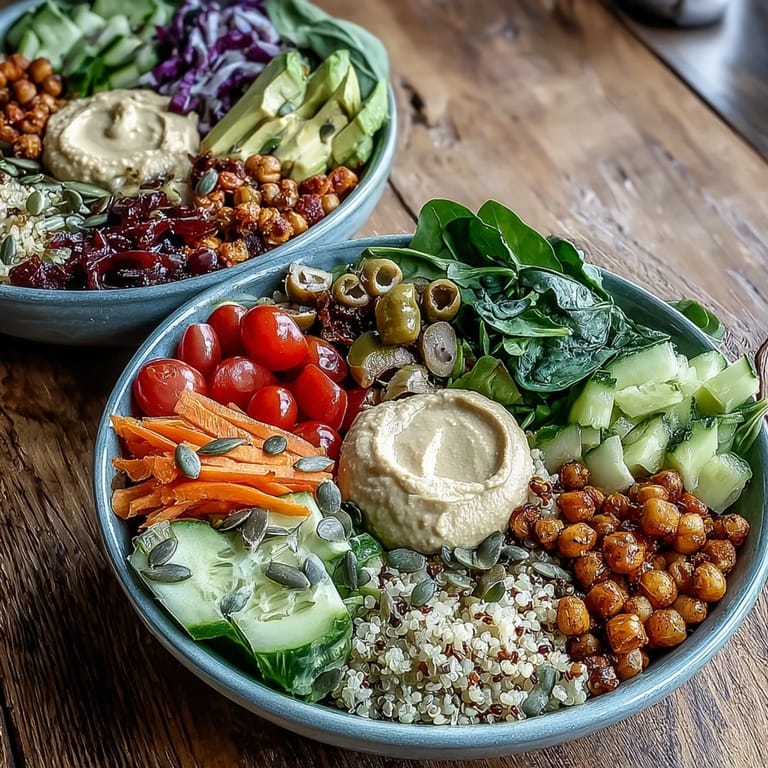
- Fresh vegetables: Cherry tomatoes, cucumber, purple cabbage, and spinach form the colorful backbone of the bowl and should be as fresh as possible.
- Avocado: Add this just before serving so it doesn't brown, and slice it with a gentle hand to keep those beautiful ribbons intact.
- Toasted pumpkin seeds: These add a surprising crunch and are loaded with minerals, plus they toast your nuts faster than you'd expect so watch them carefully.
Tired of Takeout? 🥡
Get 10 meals you can make faster than delivery arrives. Seriously.
One email. No spam. Unsubscribe anytime.
Instructions
- Roast and process your hummus:
- Combine your drained chickpeas, roasted pepper, tahini, lemon juice, minced garlic, olive oil, cumin, paprika, and salt in the food processor. Blend until the mixture comes together, then add cold water one tablespoon at a time while pulsing until you reach that perfect creamy consistency—like thick Greek yogurt with a slight sheen.
- Taste and adjust fearlessly:
- This is where hummus becomes yours; add more lemon if it needs brightness, a pinch more salt if it tastes flat, or a touch more tahini if you want it even creamier. Trust your palate because you're the one eating it.
- Cook your grain base:
- If using quinoa, toast it lightly in a dry pan for a minute before adding water (this step is optional but deepens the flavor). Cook according to package directions, then let it cool slightly so it doesn't wilt the greens.
- Prep your vegetables with intention:
- Cut everything to roughly the same size so each spoonful feels balanced and intentional. I like halving cherry tomatoes, dicing cucumber into half-inch pieces, and shredding cabbage thin enough to see light through it.
- Layer your bowl like you're creating art:
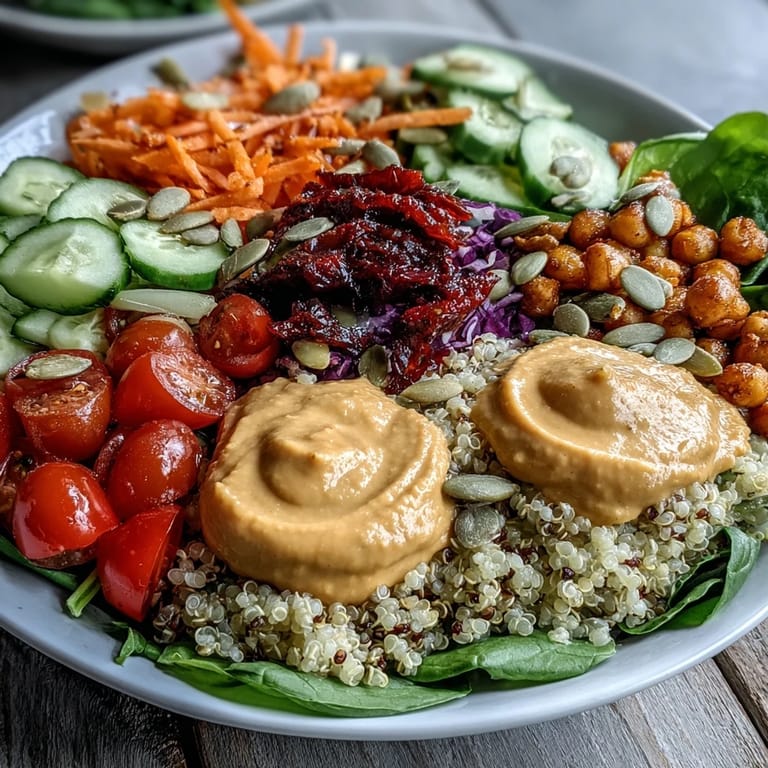
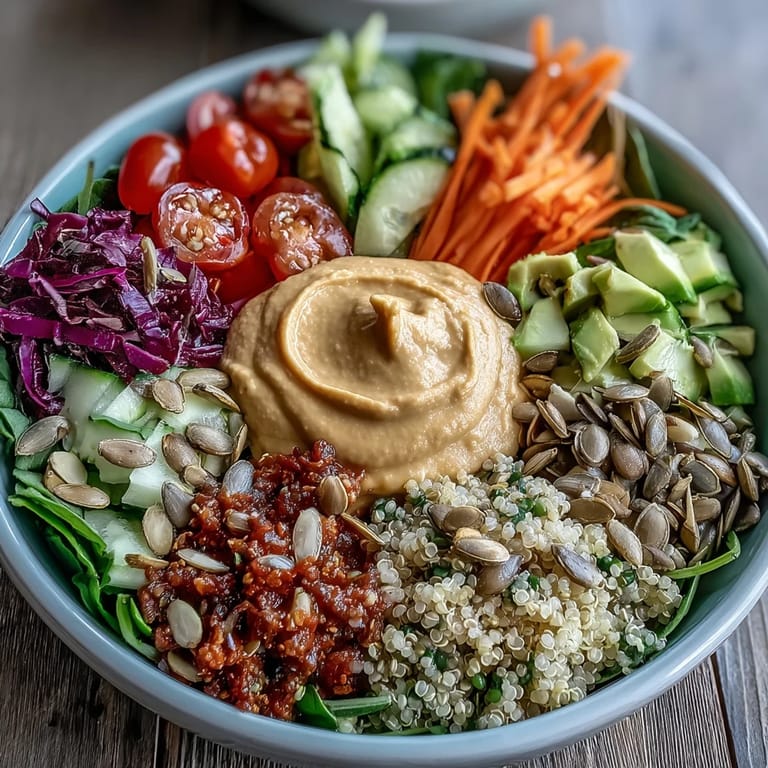
- Start with your quinoa as the base, then arrange vegetables in sections around the bowl—tomatoes here, cucumber there, spinach filling gaps. This isn't just for presentation; it ensures every bite includes multiple textures and flavors.
- Add hummus and dress with care:
- Spoon a generous dollop of hummus into the center or off to one side, then drizzle your lemon dressing (just whisk lemon juice, olive oil, salt, and pepper together) lightly over everything. Finish with fresh herbs and serve immediately while vegetables are still crisp.
 Save
Save There's something grounding about assembling these bowls right in front of whoever's about to eat them. It feels less like "here's your lunch" and more like "I made something beautiful just for you." That small act of care changes how the food tastes.
Building the Perfect Buddha Bowl
The secret to a bowl that actually works is balance—balance of colors, textures, temperatures, and flavors all on one plate. Your grain is warm and filling, your vegetables are cool and crisp, your hummus is creamy and rich, and everything together creates this wonderful harmony. I learned this by accident the first time I rushed assembly and threw everything in a pile. The next day, when I took time to arrange things thoughtfully, I understood why people slow down around food. Suddenly it wasn't just fuel; it was an experience.
The Magic of Roasted Red Pepper Hummus
Standard hummus is wonderful, but roasted red pepper hummus has this subtle sweetness and depth that makes people pause. The roasting process concentrates the pepper's natural sugars and adds a gentle char that plays beautifully against the earthiness of chickpeas. My first batch sat in my refrigerator for three days because I kept using it on everything—crackers, toast, as a sandwich spread, even spooned straight into my mouth at midnight. Once you taste this hummus, you'll understand why it deserves to be the star of your bowl rather than just an accompaniment.
Customizing Without Losing Your Way
One of the greatest gifts this recipe gives you is flexibility without chaos. You can swap grains endlessly, trade vegetables based on seasons, even add roasted chickpeas or baked tofu if you want extra protein. The real key is understanding that your bowl only works when you respect the hummus as its anchor. Everything else orbits around that creamy, flavorful center. Here's what keeps your customizations on track:
- Always include at least three raw vegetables for crunch and freshness that contrasts with the hummus.
- Don't skip the acid (lemon juice) because it wakes up flavors and prevents the bowl from feeling heavy.
- Add something toasted or crunchy at the end—seeds, nuts, or toasted chickpeas—because texture is what makes you actually enjoy eating.
 Save
Save These bowls have become my version of comfort food, even though they're light and fresh. There's something nourishing about eating this well, and even better when you know it took less time than ordering takeout.
Kitchen Guide
- → Can I make the hummus ahead of time?
Absolutely. The roasted red pepper hummus stores beautifully in an airtight container for up to 5 days. In fact, the flavors meld and intensify after a day or two in the refrigerator. Make a double batch to enjoy throughout the week with crackers, vegetables, or as a sandwich spread.
- → What grains work best in these bowls?
Quinoa provides excellent protein and a fluffy texture, but brown rice, millet, farro, or bulgur all work wonderfully. Even cauliflower rice creates a lighter, low-carb version. Choose whatever grain fits your dietary needs and preferences.
- → How can I add more protein?
Roasted chickpeas, crispy tofu cubes, or tempeh make excellent protein additions. Simply season with olive oil and spices, then roast until crispy. Hemp seeds, chopped walnuts, or a dollop of Greek yogurt also boost protein content if your diet allows.
- → Are these bowls freezer-friendly?
Prepare individual components separately for best results. The hummus freezes well for up to 3 months, and cooked grains last several months in the freezer. Assemble fresh vegetables and toppings when serving to maintain optimal texture and flavor.
- → Can I use store-bought hummus?
Certainly. Quality store-bought roasted red pepper hummus works perfectly in a pinch. Look for brands with simple ingredients and minimal additives. For the best flavor, add a pinch of smoked paprika and a squeeze of fresh lemon to brighten the prepared hummus.
- → What vegetables can I substitute?
Feel free to use whatever fresh produce you have available. Roasted eggplant, grilled zucchini, shredded beets, radishes, bell peppers, roasted sweet potatoes, or steamed broccoli all complement the creamy hummus beautifully. Seasonal vegetables keep these bowls exciting year-round.