 Save
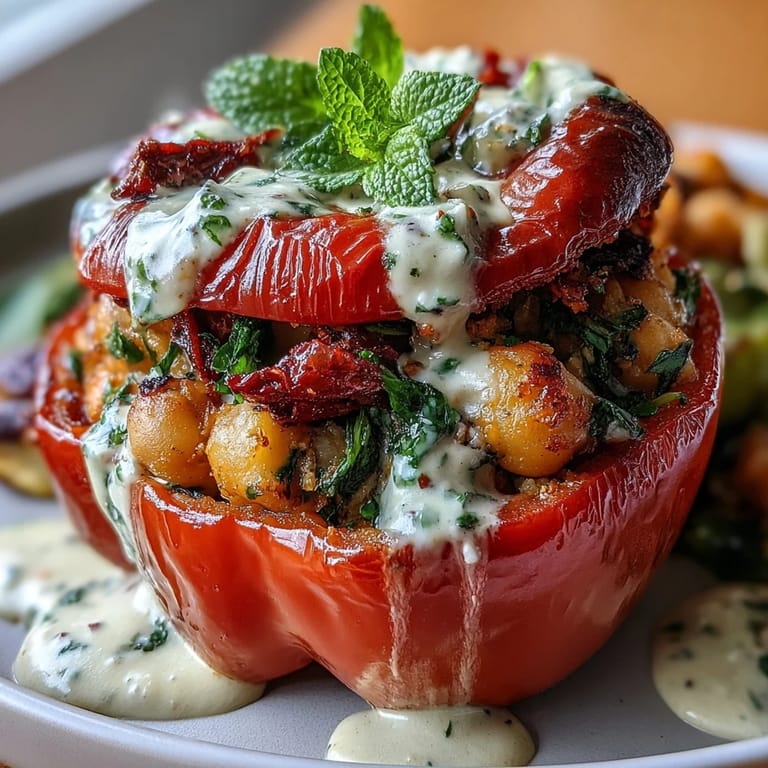
Save There was a moment last summer when my farmer's market haul of oversized bell peppers sat on my counter, and I realized I had no idea what to do with four of them. A friend texted asking what I was making for dinner, and somehow between scrolling through my phone and chopping vegetables, this dish came together—a meditation on Mediterranean flavors wrapped in roasted pepper skin. It's become the dish I make when I want to feel like I'm cooking something both comforting and a little bit special.
I made this for my partner on a rainy Tuesday, and halfway through dinner they asked if I'd learned to cook like this secretly. The peppers had softened to the point where they released their sweetness, the filling held its texture, and when that creamy sauce hit the plate, something just clicked. It's become one of those dishes that tastes like you've spent all day cooking when really you've just been smart about timing.
Ingredients
- Large bell peppers (red, yellow, or orange): Pick ones that are roughly the same size so they cook evenly, and make sure they're sturdy enough to stand upright without wobbling in the baking dish.
- Olive oil: Good quality matters here since it's one of the few ingredients not hidden under herbs and spices.
- Red onion: Diced small so it softens into the filling without competing for attention.
- Garlic: Fresh and minced, not pre-jarred, which makes a real difference in the brightness of the filling.
- Zucchini: Cut into small dice so it cooks quickly and distributes evenly throughout.
- Cherry tomatoes: Quartered rather than whole, so they release their juice into the filling as it cooks.
- Cooked chickpeas: Canned is fine if you rinse them well, but the starchy liquid can cloud the filling if you don't.
- Cooked quinoa or rice: Acts as a binder and adds substance without heaviness.
- Kalamata olives: Pitted is easier, and chopping them yourself rather than buying pre-chopped prevents them from becoming mushy.
- Sun-dried tomatoes: The concentrated flavor is worth the small effort of chopping.
- Dried oregano, cumin, and smoked paprika: These three are the backbone of the Mediterranean flavor profile.
- Fresh parsley and mint: Mint is optional, but it adds a brightness that feels unexpected and right.
- Lemon juice: Fresh squeezed, always.
- Tahini: Creamy and nutty, and the base of a sauce that tastes far more complicated than it actually is.
Tired of Takeout? 🥡
Get 10 meals you can make faster than delivery arrives. Seriously.
One email. No spam. Unsubscribe anytime.
Instructions
- Prepare your workspace and heat the oven:
- Preheat to 375°F and lightly oil a baking dish that will hold all four peppers standing upright. This is the moment to set yourself up for success—you don't want to be hunting for a dish mid-cooking.
- Build the flavor base:
- Heat olive oil and sauté diced red onion until it turns translucent and soft, then add minced garlic and let it bloom for just a minute. The smell alone will tell you you're on the right track.
- Add the vegetables and let them soften:
- Stir in diced zucchini and give it a few minutes to tender up, then add the quartered cherry tomatoes. You'll watch the kitchen fill with the smell of summer vegetables coming together.
- Bring in the heartiness:
- Add the chickpeas, cooked quinoa, olives, sun-dried tomatoes, and all the spices—oregano, cumin, smoked paprika, salt, and black pepper. Stir and let everything warm through for a few minutes, tasting as you go to make sure the seasoning feels right.
- Finish with brightness:
- Pull the skillet from heat and stir in the fresh parsley, mint if you're using it, and a squeeze of lemon juice. This is where the filling goes from tasty to memorable.
- Stuff and position:
- Pack the filling gently into each pepper—you want it snug but not compressed—and stand them upright in your prepared baking dish. There's something satisfying about watching them all line up together.
- The first bake:
- Cover with foil and bake for 25 minutes, which gives the peppers time to start softening without collapsing. Remove the foil and bake uncovered for another 10 minutes until they're tender but still holding their shape.
- Make the sauce while peppers bake:
- Whisk together tahini, fresh lemon juice, water, grated garlic, and salt until it's smooth and creamy. Add more water a little at a time if it's too thick—you want it to drizzle, not glob.
- Serve with generosity:
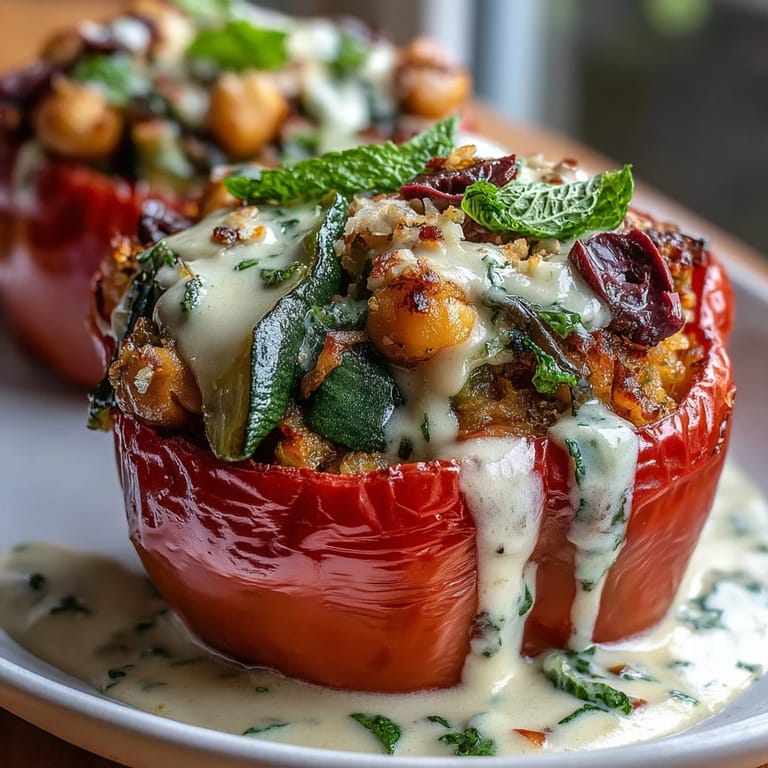
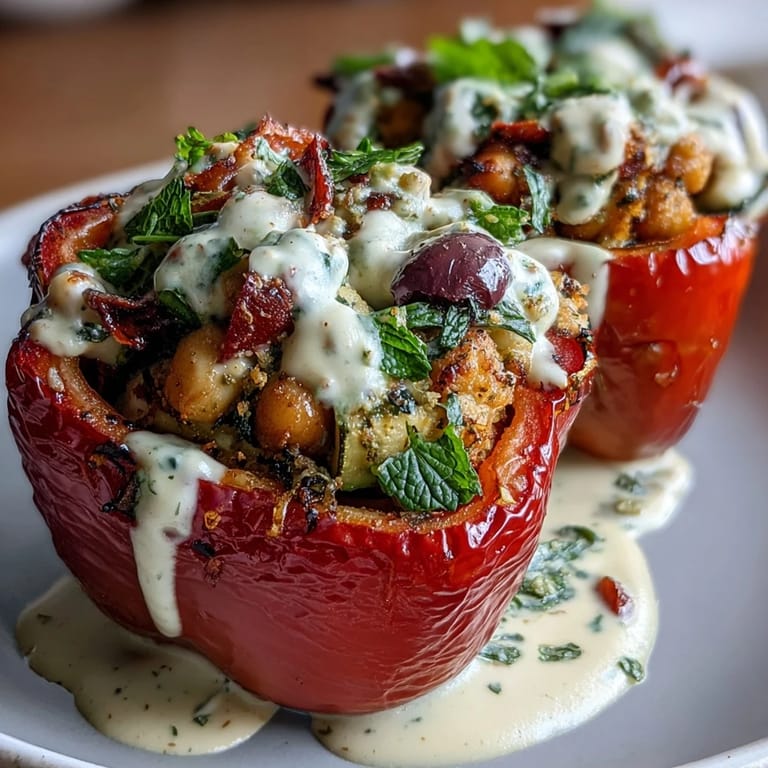
- Plate each pepper and drizzle the lemon tahini sauce over the top, letting it pool around the base. This is the moment everything comes together.
 Save
Save I've started making extra filling whenever I prepare this dish, spooning the leftover into containers for quick lunches throughout the week. There's something quietly satisfying about a meal that tastes like celebration but doesn't demand an enormous time commitment.
Why This Works as a Main Course
The combination of chickpeas and quinoa creates enough protein that you don't miss meat, and the vegetables add texture and volume without making the plate feel heavy. The roasted pepper becomes soft enough to cut with a fork but holds up structurally, which is harder to achieve than it sounds. What seals it is the tahini sauce—it brings richness and creaminess that makes the whole plate feel indulgent despite being entirely plant-based.
Building Flavor Without Heaviness
Mediterranean cooking is about letting individual ingredients shine rather than piling everything on at once. The onion and garlic create the foundation, the vegetables add brightness, the spices add warmth, and the fresh herbs at the end add lift. I learned this the hard way by making the opposite approach first—throwing everything in at once and wondering why the filling tasted muddy.
Make It Your Own
This recipe is sturdy enough to accommodate what you have on hand or what you're craving that day. The core structure stays the same, but the details can shift based on your pantry, your mood, or what looked good at the market. Some days I add a pinch of chili flakes for heat, other days I top it with toasted pine nuts for crunch.
- Swap the quinoa for farro or bulgur if you want something with more texture, or use rice if you prefer something lighter.
- Add fresh dill or additional mint if you want an even brighter finish.
- If you have roasted red peppers in a jar, you can use those instead of fresh, though the fresh ones have better structure and won't fall apart.
 Save
Save This dish sits at the intersection of practical and celebratory, which is where the best home cooking lives. Make it for yourself on a quiet weeknight, or make it for people you want to impress—it works either way.
Kitchen Guide
- → Can I use different grains instead of quinoa or rice?
Yes, cooked farro, bulgur, or couscous can be used as alternatives, though gluten content will vary depending on the choice.
- → How do I make the tahini sauce thinner?
Add water gradually while whisking until the sauce reaches your desired drizzling consistency.
- → What type of peppers work best for stuffing?
Large bell peppers in red, yellow, or orange provide a sweet flavor and sturdy structure ideal for stuffing.
- → Can I prepare the filling in advance?
Yes, the chickpea filling can be made ahead and refrigerated, making assembly quicker before baking.
- → What herbs enhance the flavor of the stuffing?
Fresh parsley and mint add brightness, while dried oregano complements the Mediterranean profile perfectly.