 Save
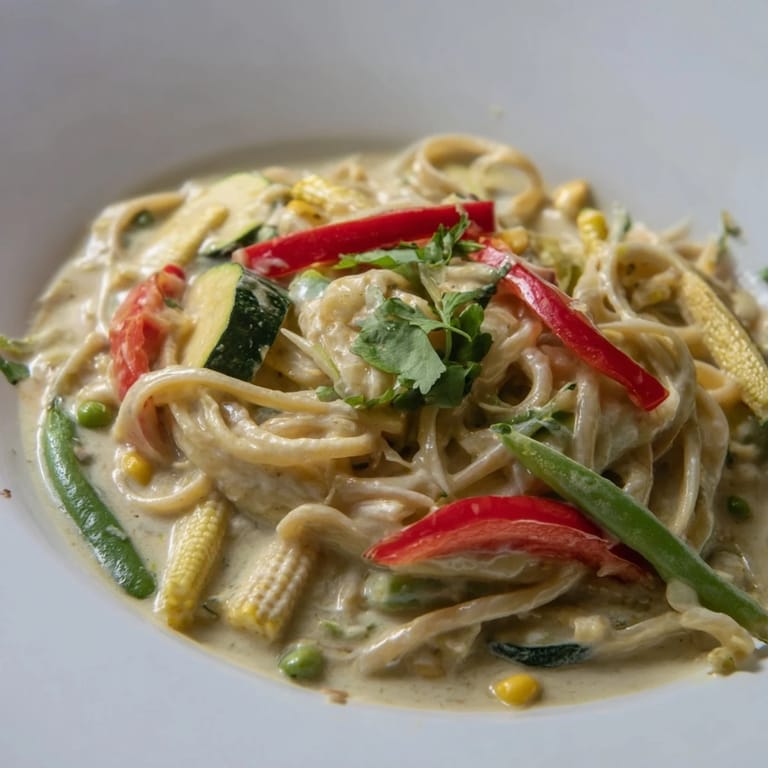
Save I discovered this dish by accident one weeknight when I had leftover curry paste and a box of linguine staring at me from the pantry. Instead of making the traditional curry with rice, I wondered what would happen if I tossed it all together—and suddenly, there it was, a creamy, aromatic tangle of pasta that felt like both a comfort meal and an adventure. That first bite, with the coconut milk clinging to the noodles and the vegetables still snapping between my teeth, made me realize I'd stumbled onto something special.
I made this for my neighbor who'd mentioned being tired of the same old dinner rotation, and watching her face light up when she twirled that first forkful told me everything. She came back three days later asking for the recipe, and I realized that sometimes the best meals are the ones that surprise people you care about.
Ingredients
- Linguine or spaghetti, 350 g: Choose a pasta shape that can hold onto the curry sauce—thinner strands like linguine let the sauce cling beautifully.
- Vegetable oil, 2 tbsp: A neutral oil that won't compete with the bold spices and lets the curry paste bloom properly.
- Thai green curry paste, 3 tbsp: This is the backbone of your sauce; buy a quality brand or make your own if you have time, as it makes a noticeable difference.
- Coconut milk, 400 ml full fat: Don't skip the full fat version—the richness is what makes this dish sing, though light coconut milk works if that's what you have.
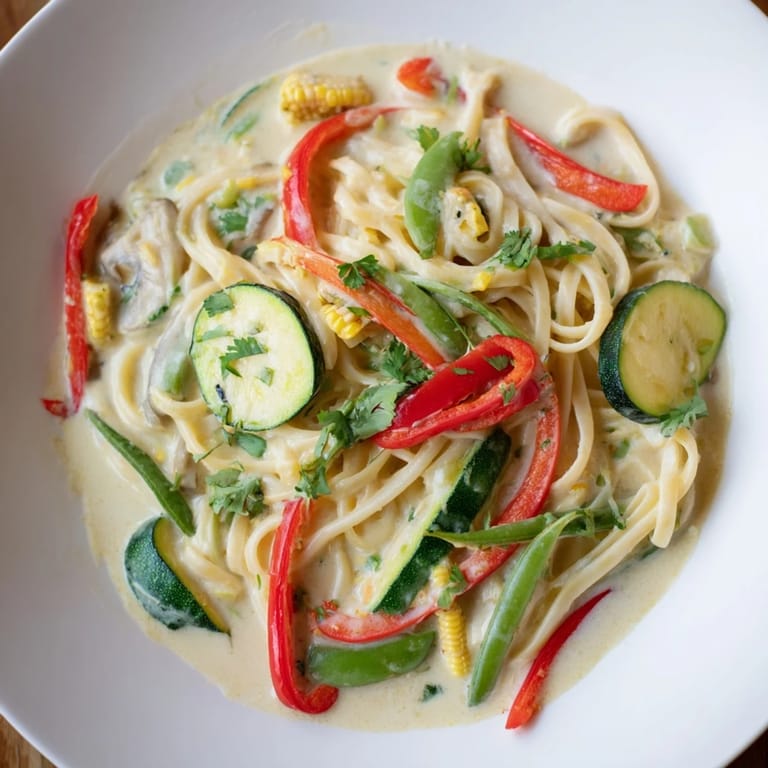
- Red bell pepper, 1 thinly sliced: The sweetness balances the curry's intensity and adds a pop of color that makes the dish feel alive.
- Zucchini, 1 halved and sliced: It softens slightly but keeps its structure, absorbing all those incredible flavors.
- Snap peas and baby corn, 100 g each: These vegetables are the secret to keeping everything light and crisp—they're why this doesn't feel heavy.
- Soy sauce, 1 tbsp: A small amount adds savory depth without overpowering the coconut.
- Brown sugar, 1 tbsp: Just enough to round out the sauce and soften the heat from the curry.
- Fresh ginger, 1 tsp grated: Freshly grated ginger is non-negotiable here; it adds a brightness that ground ginger simply can't match.
- Lime juice, from 1 lime: Squeeze it fresh right before serving to keep that zing alive.
- Spring onions and fresh cilantro: These finishing touches are what take the dish from good to 'how did you make this'—don't leave them out.
Tired of Takeout? 🥡
Get 10 meals you can make faster than delivery arrives. Seriously.
One email. No spam. Unsubscribe anytime.
Instructions
- Salt your water and get the pasta going:
- Fill a large pot with water, add a generous pinch of salt (it should taste like the sea), and bring it to a rolling boil. Cook the pasta until it's al dente—tender but with a slight resistance when you bite it—then drain it, making sure to reserve that starchy pasta water as liquid gold.
- Build your sauce foundation:
- Heat oil in your skillet over medium heat, then add the curry paste and ginger, letting them sizzle for a minute or two until your kitchen fills with that intoxicating aroma that tells you you're on the right track. You'll notice the paste deepening in color slightly—that's when you know it's ready to accept the coconut milk.
- Create the creamy base:
- Pour in the coconut milk along with soy sauce and brown sugar, stirring gently until everything is smoothly combined. Let it bubble softly for a few minutes, stirring occasionally so nothing sticks to the bottom, which mellows the raw curry taste.
- Add your vegetables and let them soften:
- Toss in the bell pepper, zucchini, snap peas, and baby corn, giving everything a good stir so each piece gets coated in that creamy sauce. Watch them transform from raw to tender in about five to six minutes—they should still have some snap when you press them with your spoon.
- Bring it all together:
- Add the cooked pasta and a splash of that reserved pasta water to the skillet, tossing everything until the noodles are wearing the sauce like a glossy coat. Let it simmer gently for a couple of minutes so the pasta drinks in all those flavors.
- Finish with brightness:
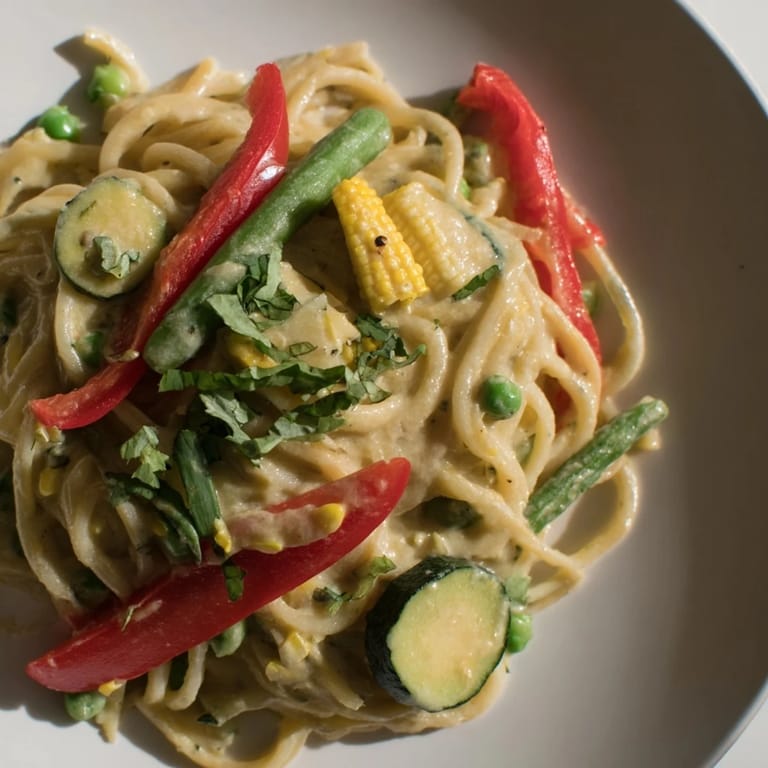
- Stir in the spring onions, cilantro, and a squeeze of fresh lime juice, tasting as you go and adjusting the seasoning to suit your preference. This is your moment to make it yours—more lime if you want brightness, more curry paste if you want heat.
 Save
Save This is the dish I made when I realized my partner actually enjoys cooking with me, not just eating what I cook. We were laughing over the steam rising from the wok, and somehow the simplicity of tossing noodles and vegetables together felt like we were creating something together.
Why This Fusion Works
Thai and Italian cuisines seem like they shouldn't meet, but they do so gracefully here because they both understand the power of aromatic oils and fresh herbs. The pasta becomes a neutral canvas for the assertive curry sauce, while the vegetables add texture and keep everything balanced. It's proof that the best dishes often live where traditions collide.
Making It Your Own
This recipe is flexible by nature, which is why I keep making it—it works with whatever vegetables are in my crisper drawer or whatever protein I'm craving that day. Swap the snap peas for broccoli, add shrimp or firm tofu, or even crumble in some cooked chicken once the sauce is simmering. The structure is strong enough to handle your creativity.
Serving and Pairing Ideas
Serve this immediately while the pasta is still steaming and the vegetables are at their crispest, passing around the lime wedges and extra cilantro so everyone can adjust to their taste. A crisp white wine like Riesling cuts through the richness perfectly, or simply pour cold water with lots of ice if you want something non-alcoholic that still feels refreshing.
- Garnish with roasted cashews or peanuts for a nutty crunch that elevates each bite.
- Add thin slices of fresh red chili if you want to build the heat as you eat rather than in the cooking.
- Keep extra lime wedges on the table—people will use them.
 Save
Save This is the kind of meal that reminds you why you love being in the kitchen, turning a few pantry staples into something that tastes like you've traveled somewhere remarkable. Make it once, and it'll be the recipe you return to again and again.
Kitchen Guide
- → What pasta types work best for this dish?
Linguine or spaghetti hold the curry sauce well, but any long pasta with a smooth surface is suitable.
- → Can I adjust the spice level easily?
Yes, vary the amount of green curry paste or add sliced red chili to taste for a milder or spicier flavor.
- → What vegetables complement the green curry flavor?
Bell pepper, zucchini, snap peas, and baby corn add fresh crunch and sweetness, balancing the creamy curry sauce.
- → How to make this dish vegan?
Ensure the green curry paste contains no shrimp or fish sauce, and use plant-based alternatives as needed.
- → What garnishes enhance the dish?
Lime wedges, extra cilantro, red chili slices, and roasted cashews or peanuts add texture and brightness.