 Save
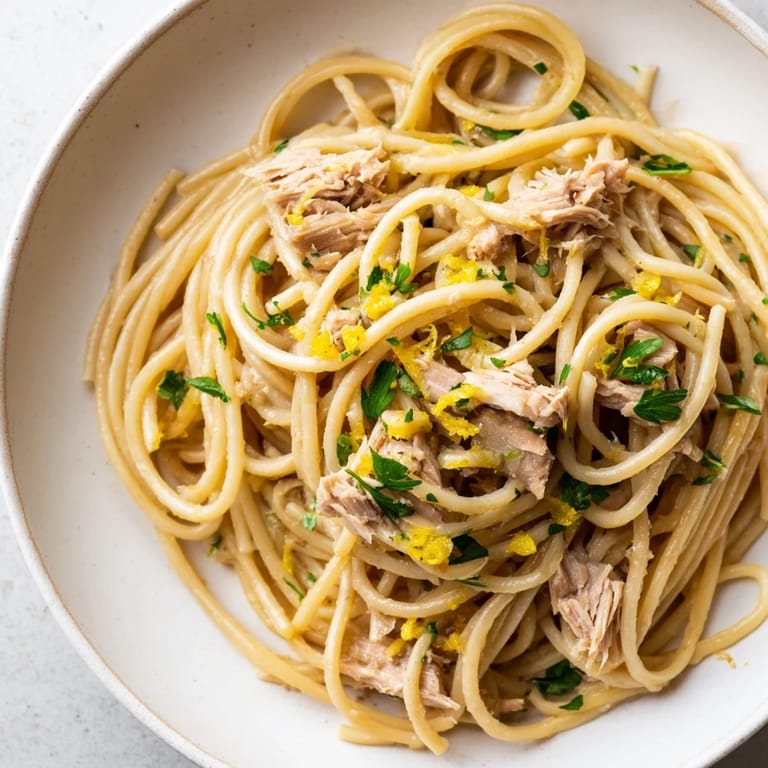
Save I used to think tuna belonged only in sandwiches until a neighbor handed me a jar of good olive oil and told me to stop wasting it on salad. That night, I emptied my pantry and found a can of tuna, half a lemon, and some spaghetti. What came together in under half an hour tasted like something I'd order at a beachside trattoria. The garlic sizzled, the lemon cut through the richness, and suddenly tuna became dinner, not just lunch.
I made this for my sister once after she'd had a long shift at the hospital. She walked in, saw the pasta steaming on the counter, and said it smelled like vacation. We ate it standing up in the kitchen, twirling forks straight from the pan. She didn't ask for the recipe, she just started making it herself every week.
Ingredients
- Spaghetti: Use whatever brand you trust, just don't overcook it or it'll turn to mush when you toss it with the sauce.
- Olive oil: This isn't the time for the fancy stuff, but don't use the flavorless kind either, it carries the garlic and lemon everywhere.
- Garlic cloves: Slice them thin so they soften and sweeten instead of burning, burnt garlic tastes bitter and ruins everything.
- Lemon: Zest it first, then juice it, the zest has all the fragrance and the juice brings the tang.
- Canned tuna in olive oil: The oil-packed kind stays tender and flaky, water-packed tuna gets dry and sad in the pan.
- Crushed red pepper flakes: A pinch wakes everything up without making it spicy, but skip it if heat isn't your thing.
- Fresh parsley: The flat-leaf kind tastes grassy and bright, curly parsley just looks pretty but doesn't do much.
- Pasta cooking water: It's starchy and salty and turns everything into a silky sauce instead of a dry pile of noodles.
Tired of Takeout? 🥡
Get 10 meals you can make faster than delivery arrives. Seriously.
One email. No spam. Unsubscribe anytime.
Instructions
- Boil the spaghetti:
- Bring a big pot of salted water to a rolling boil and cook the spaghetti until it still has a little bite. Before you drain it, scoop out a mugful of that starchy water and set it aside.
- Sauté the garlic:
- Heat the olive oil in a wide skillet over medium heat and add the sliced garlic. Let it sizzle gently for a minute or two until it smells amazing but hasn't turned brown.
- Add the tuna and lemon:
- Stir in the flaked tuna, lemon zest, lemon juice, and red pepper flakes if you're using them. Break up the tuna gently and let everything warm through for a couple of minutes.
- Toss with the pasta:
- Add the drained spaghetti to the skillet and toss it all together. Pour in the reserved pasta water a little at a time until the sauce clings to the noodles without pooling at the bottom.
- Finish and serve:
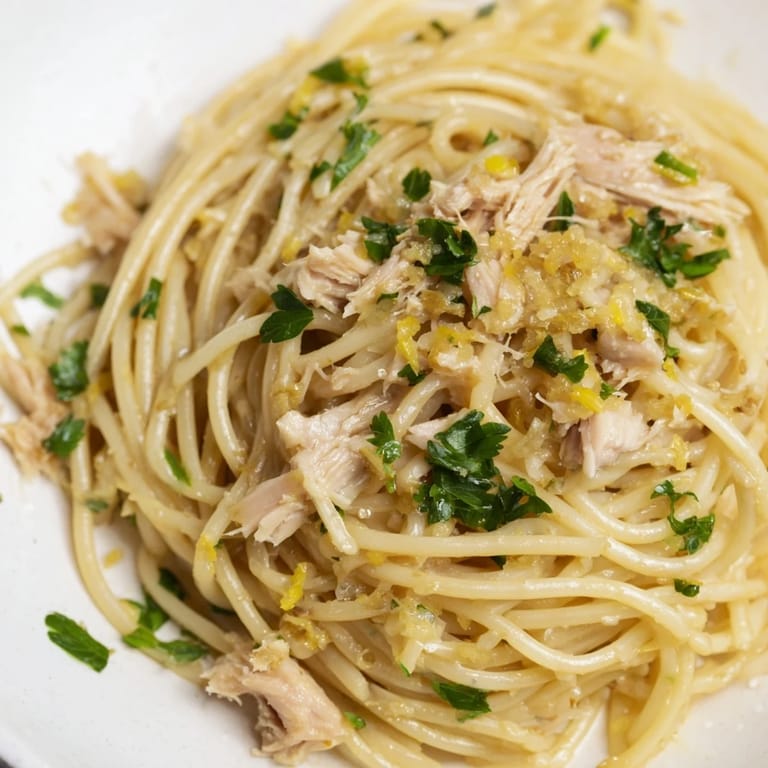
- Stir in the chopped parsley, taste it, and add salt and pepper as needed. Divide it onto plates, sprinkle more parsley on top, and serve with lemon wedges on the side.
 Save
Save One summer evening, I made this for a friend who'd just moved into a new apartment with an empty fridge. We sat on her balcony with bowls in our laps, and she said it felt like the first meal that made the place feel like home. Sometimes the simplest things do the most.
Making It Your Own
I've tossed in capers when I wanted a salty pop, and halved cherry tomatoes when I had them sitting on the counter about to go soft. A handful of arugula stirred in at the end adds a peppery bite, and sometimes I'll grate a little Parmesan over the top even though purists would scold me. This recipe doesn't demand perfection, it just asks you to pay attention and taste as you go.
What to Serve Alongside
A simple green salad with a sharp vinaigrette balances the richness, and crusty bread is perfect for mopping up any sauce left in the bowl. I like a cold glass of Pinot Grigio or Sauvignon Blanc with this, something crisp that doesn't compete with the lemon. If you're feeding kids or don't drink, sparkling water with a squeeze of lime does the same job.
Storage and Leftovers
This is best eaten fresh, but leftovers keep in the fridge for a day or two in a sealed container. The pasta soaks up the sauce as it sits, so when you reheat it, add a splash of water or olive oil to loosen everything back up. I've eaten it cold straight from the fridge standing at the counter more times than I'll admit, and honestly it's still good.
- Reheat gently in a skillet with a little water or oil to bring it back to life.
- Don't freeze it, the texture of the tuna and pasta gets weird and mushy.
- If you're meal prepping, cook the pasta and sauce separately and toss them together when you're ready to eat.
 Save
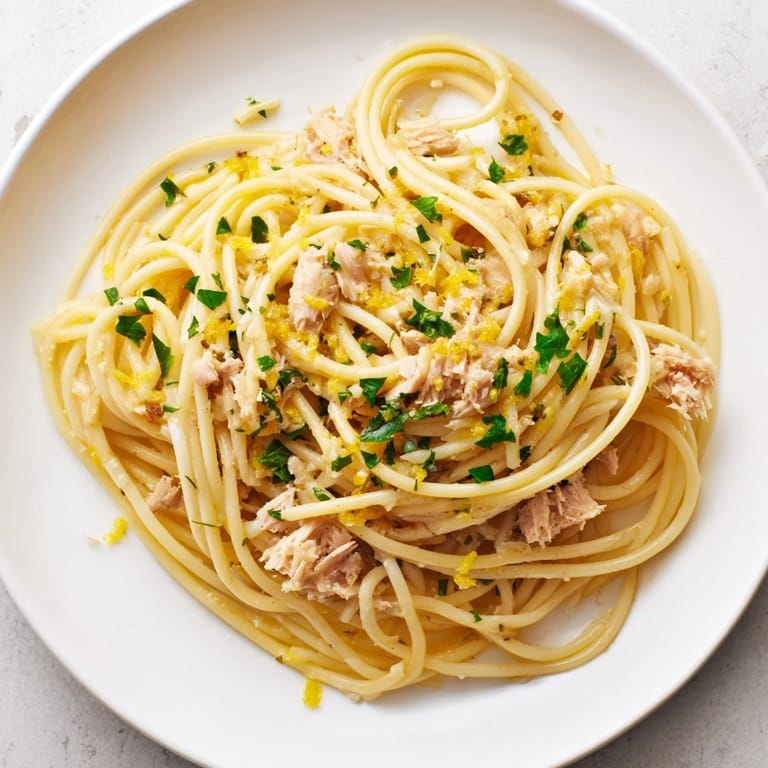
Save This is the kind of meal that proves you don't need a long ingredient list or hours in the kitchen to make something that feels special. Just good pantry staples, a little attention, and maybe someone to share it with.
Kitchen Guide
- → What type of tuna works best for this dish?
Use high-quality tuna packed in olive oil for the richest flavor and moist texture that complements the lemon and garlic.
- → Can I add extra ingredients to enhance the flavor?
Absolutely, try adding capers or cherry tomatoes to the sauce for extra depth and brightness.
- → How do I prevent the garlic from burning?
Cook the garlic over medium heat just until fragrant, about 1–2 minutes, avoiding browning to keep it mellow and aromatic.
- → What is the purpose of reserving pasta cooking water?
The starchy pasta water helps to loosen and bind the sauce to the spaghetti, creating a smooth, well-coated dish.
- → What wine pairs well with this pasta?
A crisp white wine like Pinot Grigio or Sauvignon Blanc enhances the fresh lemon and tuna flavors perfectly.
- → Can this dish be made gluten-free?
Yes, substitute regular spaghetti with gluten-free pasta and check all ingredients to ensure they fit your dietary needs.