 Save
Save The first time I understood that honey could be more than just a sweetener was watching my grandmother drizzle it straight from the jar onto a warm piece of toast, explaining how the heat made it flow like liquid gold. Years later, I found myself in my kitchen on a rainy afternoon, thinking about that moment and wondering what would happen if I built an entire dessert around that magical, mesmerizing quality of honey. The Honey-Drip was born from that curiosity, and the first time I served it, watching someone's face light up as they broke through the cake and discovered that warm pot of honey in the center made all the experimenting worthwhile.
I made this for my neighbor's birthday dinner, and I still remember the kitchen filling with that warm, toasted butter smell as the cakes baked, the anticipation building as I carefully sliced them into thin layers. When I set it on the table and explained how to eat it, the whole room went quiet for a second, and then everyone started laughing and digging in with genuine excitement. That's when I knew this recipe had something special: it wasn't just about the taste, but about creating a moment.
Ingredients
- All-purpose flour: The foundation of your layers; I sift mine to ensure they're tender and not dense.
- Baking powder and baking soda: Work together to give the cake that light, delicate crumb that honey needs to shine without overwhelming it.
- Unsalted butter: Room temperature is non-negotiable here; cold butter won't cream properly and you'll lose that fluffy texture.
- Granulated sugar and honey: The sugar creams with butter for structure, while the honey adds moisture and that distinct floral sweetness that defines the cake.
- Eggs: Each one matters for binding and creating that airy crumb; don't skip or substitute.
- Vanilla extract: Just enough to round out the honey without competing with it.
- Whole milk: Adds richness and keeps the batter the right consistency when alternated with dry ingredients.
- Heavy cream and mascarpone: The cream whips into clouds, while mascarpone adds a subtle tang that balances the honey's sweetness beautifully.
- Liquid honey for serving: This is your showstopper; use the best quality you can find, whether wildflower or acacia, because it's meant to be tasted on its own.
- Toasted almonds: They add crunch and a subtle nuttiness that doesn't fight the honey; toast them yourself to control the flavor.
Tired of Takeout? 🥡
Get 10 meals you can make faster than delivery arrives. Seriously.
One email. No spam. Unsubscribe anytime.
Instructions
- Prep your pans and heat your oven:
- Set the oven to 350°F and prepare two 8-inch round pans with grease and parchment; this extra step prevents sticking and makes removing the delicate layers infinitely easier.
- Build your dry base:
- Whisk flour, baking powder, baking soda, and salt together; this distributes the leavening evenly so the cake rises uniformly and stays tender.
- Cream butter and sugar until fluffy:
- This takes about 3-4 minutes with an electric mixer; you're incorporating air that will make the final cake light, not dense. Stop when it looks like fluffy clouds.
- Incorporate honey, eggs, and vanilla:
- Beat well but don't overwork; you want everything combined and pale, which usually takes another 2-3 minutes. The honey might initially separate, but keep mixing and it'll come together.
- Alternate dry and wet ingredients:
- Start with a third of your dry mixture, then half the milk, repeating until you end with dry; this prevents overmixing, which would create a tough cake instead of a tender one.
- Divide and bake:
- Split the batter evenly between pans and bake 22-25 minutes, testing with a toothpick; you want it just set with a tiny crumb, not completely dry.
- Make your honey cream:
- Whip cold heavy cream to soft peaks, then fold in honey and mascarpone gently; overbeating turns it into butter, so stop as soon as it holds stiff peaks and chill it until you're ready to layer.
- Slice cakes into layers:
- Once completely cool, use a long serrated knife or cake leveler to carefully slice each cake in half horizontally; a rotating cake turntable makes this so much easier and safer.
- Stack and fill:
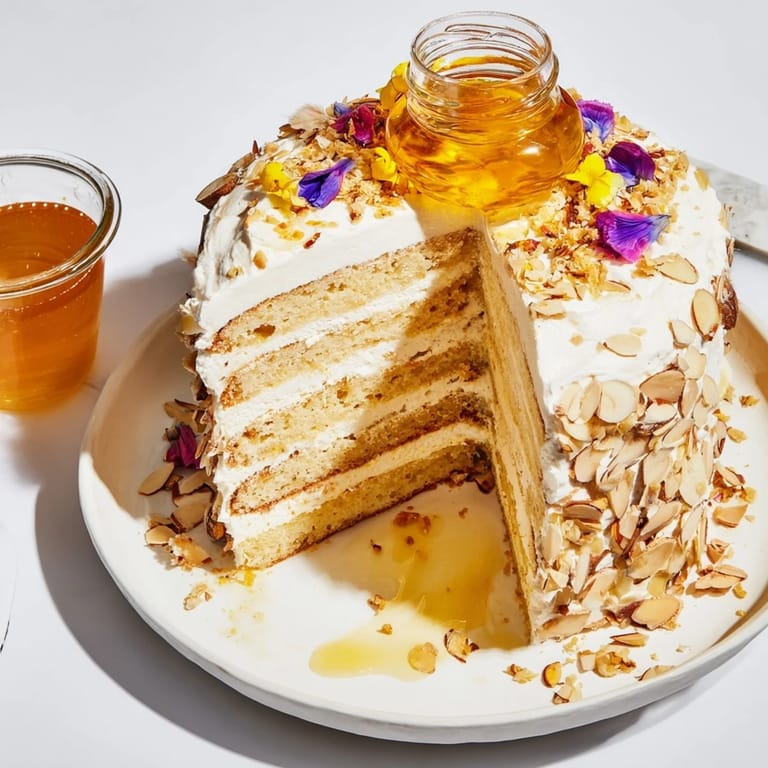
- Layer each slice with honey cream on your serving platter, pressing gently so they don't slide around as you build up the tower.
- Cut the honey well:
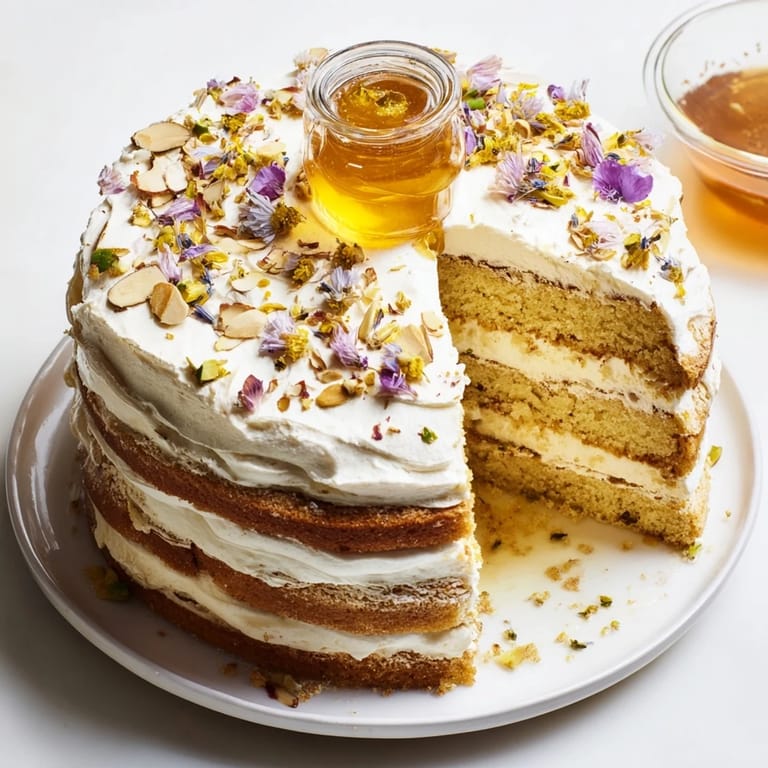
- Using a 3-inch round cutter, carefully push straight down through the center of the stacked cake, twisting gently to remove the circle; take your time here because you don't want cake crumbs falling into where your honey pot will sit.
- Insert honey pot and garnish:
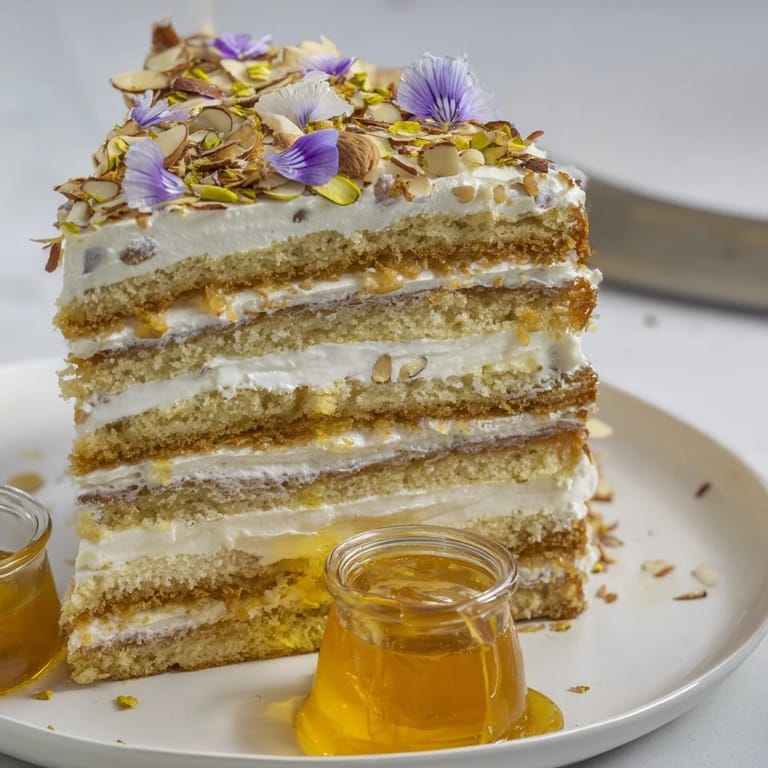
- Place your small glass or ceramic pot in the hole you've created and fill it with your finest honey, then scatter almonds and edible flowers around the top with an extra drizzle for elegance.
 Save
Save There's something almost sacred about watching someone break through the golden cake layers and discover that pool of warm honey waiting in the center, like finding treasure you didn't know you were looking for. That's the moment this dessert truly becomes itself.
Honey: The Heart of This Dessert
Honey isn't just a sweetener in this recipe; it's the entire reason the dish exists. The honey baked into the cake keeps it impossibly moist for days, the honey whipped into the cream adds a subtle floral note that shifts depending on the variety you choose, and the honey in the center pot is the finale that makes this interactive and memorable. I learned early on that the quality of that final honey matters tremendously because it's meant to be tasted purely, without any other competing flavors. Wildflower honey has a complex, almost earthy sweetness, while acacia is delicate and purely sweet, and lavender brings something unexpected and elegant to the table.
Making It Your Own
One of my favorite things about this recipe is how naturally it accepts experimentation without losing its soul. I've made it with orange blossom honey and served it alongside a crisp Moscato, creating something that felt both light and luxurious. Another time, I added a pinch of cardamom to the cake batter after hearing about a Scandinavian honey cake tradition, and the spice added a warmth that surprised everyone in the best way. You can absolutely make it nut-free by omitting the almonds, or even swap them for toasted seeds if you prefer; what matters is that the honey remains the star.
Serving and Pairing Suggestions
The beauty of this dessert is that it works equally well as the grand finale to a formal dinner or as an unexpected treasure at a casual gathering of friends. I've found that serving it with a slightly sweet wine like late-harvest Riesling or Moscato elevates the entire experience, as the wine's slight sweetness echoes the honey without overwhelming it. For a non-alcoholic option, try a delicate tea like chamomile or white tea, which won't compete with the honey's subtle floral notes.
- Always bring the honey pot to room temperature before serving so it flows beautifully for dipping.
- Keep leftover cake covered at room temperature; the honey keeps it fresh and moist for up to three days.
- If you're making this ahead, assemble everything but the final garnish, then add almonds and flowers just before serving for maximum freshness.
 Save
Save This dessert has a way of turning an ordinary evening into something people talk about long after they've finished eating. Make it with the care it deserves, and it will absolutely deliver that magic.
Kitchen Guide
- → What type of honey works best for the honey pot?
Using wildflower or acacia honey is recommended for their mild floral notes and smooth texture, enhancing the dessert's flavor.
- → Can I make the cake layers in advance?
Yes, the cake layers can be baked and cooled ahead of time, then assembled with the honey cream just before serving to maintain freshness.
- → How do I create the hollow center in the cake stack?
Use a 3-inch round cutter to carefully remove the center portion from the stacked layers, creating a space for the honey pot.
- → Are there alternative nuts for garnish?
Toasted almonds provide crunch, but you can substitute with chopped hazelnuts or pecans based on preference or allergies.
- → What beverages pair well with this dessert?
Sweet wines like Moscato or late-harvest Riesling complement the honey notes and creaminess beautifully.
- → Is it possible to omit nuts for allergies?
Yes, simply leave out the almonds for a nut-free version without affecting the main flavors.