 Save
Save There's something about the smell of butter and sourdough hitting your nose at dawn that makes you feel like a proper pastry chef, even if you're standing in your kitchen in pajamas. My first attempt at sourdough croissants came from a moment of stubborn ambition—I'd eaten one at a small Paris café and couldn't stop thinking about that tangy depth beneath the crispy, shattering layers. Years later, when my sourdough starter finally felt reliable enough, I decided to attempt the lamination, chocolate tucked into each triangle like a small edible secret. That first batch taught me patience in ways I didn't expect, and now they're the only croissants I bother making.
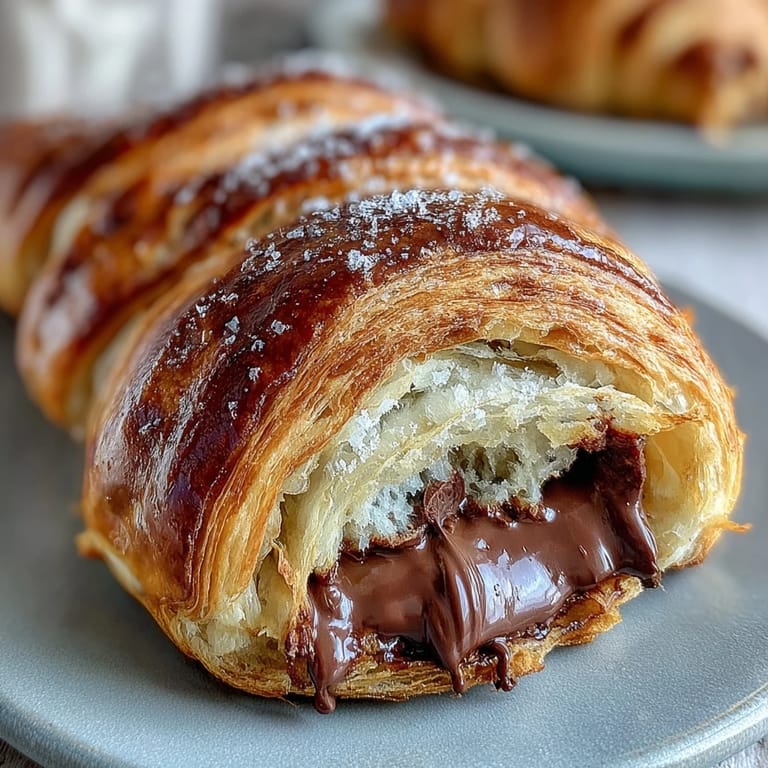
I made these for a friend's birthday breakfast last spring, and watching her face when she bit into that crispy shell and discovered the melted chocolate center—that's when I knew this recipe was worth the hours of chilling and folding. She asked for the recipe before even finishing her first croissant, which felt like the highest compliment I could receive.
Ingredients
- Bread flour (500 g): Use a high-protein flour because it builds structure to support all those butter layers and sourdough's acidic character.
- Active sourdough starter (100 g): Make sure it's fed and bubbly a few hours before mixing; this is where your tangy flavor comes from, so don't skip or weaken it.
- Cold whole milk (220 ml): The cold temperature helps control fermentation and keeps your dough manageable during the long chill overnight.
- Granulated sugar (60 g): Just enough to balance the sourdough's sourness and feed the yeast; too much and your croissants become sweet rolls.
- Fine sea salt (10 g): It sharpens the sourdough tang and strengthens gluten development, so measure carefully.
- Unsalted butter for dough (30 g): This small amount enriches the dough without interfering with your lamination layers later.
- European-style butter (250 g): This is non-negotiable—its higher fat content and lower water create those shattered, paper-thin layers; regular butter will disappoint you.
- High-quality dark chocolate (120 g): At least 60% cocoa solids so the chocolate doesn't melt into nothing and actually tastes like something worthwhile.
- Egg for wash: One large egg mixed with water creates that deep golden shine and slight crispness on top.
Tired of Takeout? 🥡
Get 10 meals you can make faster than delivery arrives. Seriously.
One email. No spam. Unsubscribe anytime.
Instructions
- Mix your dough foundation:
- Combine flour, sourdough starter, cold milk, sugar, salt, and softened butter in a mixer or by hand until everything comes together into a shaggy mass. Knead for 4–5 minutes until the dough feels smooth and slightly elastic—you're building structure that will hold up through all the folding ahead.
- Bulk ferment with intention:
- Oil a bowl, add your dough, cover it, and let it sit at room temperature for 2–3 hours while you perform two stretch-and-folds about an hour apart (gently pull the dough up and fold it over itself). This develops flavor and strength without aggressive kneading, then refrigerate overnight so the dough relaxes and the sourdough deepens.
- Prepare your butter block:
- Place cold European butter between two sheets of parchment paper and pound it with a rolling pin until it's pliable, then roll it into a 20 x 20 cm square. Keep it cold and firm—soft butter will blend into the dough instead of creating distinct layers.
- Laminate with precision:
- Roll your chilled dough into a 30 x 30 cm square on a floured surface, place the butter block in the center, and fold the four corners over to seal it in like an envelope. Roll this package into a 60 x 20 cm rectangle, then fold it into thirds (like folding a letter), chill 30 minutes, and repeat this rolling-and-folding process two more times with chilling between each turn—you're creating dozens of paper-thin butter layers.
- Shape your croissants with chocolate:
- Roll the laminated dough into a 60 x 30 cm rectangle about 4 mm thick, then cut it into 12 long triangles with about a 10 cm base. Place a chocolate baton at the wide end of each triangle and roll tightly toward the pointed tip, sealing as you go.
- Give them time to rise:
- Arrange shaped croissants on parchment-lined baking sheets, cover them loosely with a tea towel, and proof at room temperature for 4–5 hours until they've roughly doubled in size and feel puffy and alive. If your kitchen is chilly, create a warm, draft-free spot (an oven with the light on works).
- Finish with golden color:
- Brush each croissant gently with beaten egg mixed with water, then bake at 200°C for 18–22 minutes until deep golden brown and impossibly crisp. The exterior should sound like glass when you tap it.
- Cool before indulging:
- Transfer to a wire rack and let them rest at least 15 minutes so the interior sets and the chocolate stays contained; eat them slightly warm and watch the chocolate ooze out.
 Save
Save There's a moment on proofing day when you realize these croissants have been living in your kitchen for 24 hours, demanding attention and patience, and suddenly they're puffy and golden and transforming from an idea into something real. That's when the effort finally feels worth it.
The Lamination Game
Lamination is less about following rules perfectly and more about understanding that you're trying to trap butter between layers of dough so steam can separate them during baking. Every time you roll and fold, you're doubling your layer count, and by the end, you'll have created hundreds of delicate sheets stacked impossibly thin. The first time I laminated, I checked the dough what felt like fifty times, convinced I was doing it wrong—turns out repetition and cold temperatures are your only real requirements.
Why Sourdough Here
Regular croissant dough relies on commercial yeast and a short timeline, which gives you a clean, buttery taste and that signature shine. Sourdough croissants take longer, develop a subtle sourness that plays beautifully against dark chocolate, and feel less one-dimensional because the fermentation creates actual depth of flavor. Once you taste the difference, regular croissants start feeling a bit flat.
Timing and Storage Wisdom
These croissants reach peak flavor and crispness the day they're baked, though they'll keep in an airtight container for a day or two if you really want them to. If you find yourself with leftovers, a gentle 10 minutes in a 160°C oven revives them nearly completely, waking up the layers and re-crisping the exterior without drying them out.
- Make the dough the day before you laminate so fermentation deepens and the dough becomes easier to handle.
- Shape your croissants in the evening so they proof overnight in the fridge, giving you a more relaxed baking window the next morning.
- Add a pinch of orange zest to the dough or sprinkle flaky sea salt on top before baking if you want to layer in extra complexity.
 Save
Save Making sourdough croissants is an exercise in trusting your ingredients and your instincts across a long stretch of time. Once you've made them, you'll understand why bakers consider them a final test of patience and skill.
Kitchen Guide
- → What is the purpose of laminating the dough?
Laminating involves folding cold butter into the dough multiple times, creating thin layers that produce a flaky and tender texture after baking.
- → Why is a sourdough starter used in the dough?
The sourdough starter adds natural fermentation, imparting a subtle tang and enhancing the crumb's texture and flavor depth.
- → How should the dark chocolate be prepared for filling?
Use high-quality dark chocolate cut into individual batons or sticks to ensure even distribution and easy rolling inside each croissant.
- → What is the ideal proofing time before baking?
After shaping, croissants should proof at room temperature for 4 to 5 hours until doubled in size and very puffy to achieve lightness.
- → Can orange zest be added to the dough?
Yes, adding orange zest enhances the aroma and adds a subtle citrus note, complementing the chocolate and buttery layers.