 Save
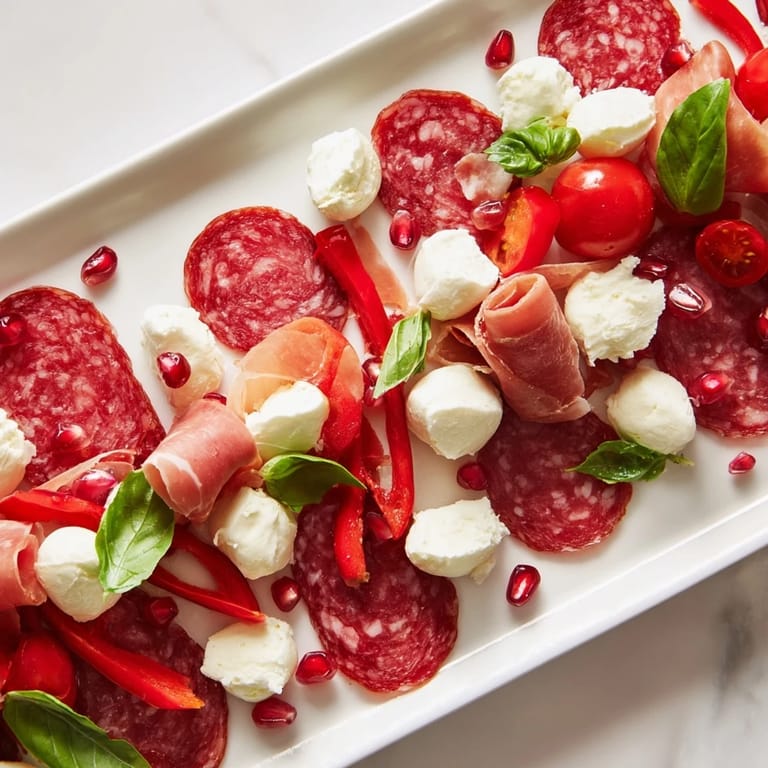
Save I'll never forget the year I decided to turn our holiday charcuterie board into something more than just a platter—something that would make guests smile the moment they walked through the door. It was late November, and I was standing in my kitchen thinking about how to capture that festive spirit in a single dish. That's when the idea struck me: what if I arranged everything into the shape of a candy cane? Red and white, bold and beautiful, unmistakably holiday. My family thought I was being overly ambitious, but the moment that first guest spotted that striped masterpiece, I knew I'd stumbled onto something special.
There was this one Christmas Eve when my sister brought her new boyfriend to our family dinner. I was nervous about impressing him, so I pulled out all the stops with this candy cane board. He took one look at it and said, "Wait, you made this?" And suddenly everyone was gathered around, picking and pairing different combinations, talking and laughing. That board became the centerpiece of the evening—not just of the table, but of the whole gathering. It reminded me that sometimes the most memorable meals aren't the ones that take hours; they're the ones made with intention.
Ingredients
- Mozzarella cheese, 200 g, sliced or small balls: This is your white stripe. I prefer using bocconcini for their delicate texture and the way they catch the light on the board. They're also easier to pick up without making a mess, which is honestly half the appeal at a holiday party.
- Goat cheese, 100 g, optional, sliced or crumbled: If you add this, it brings a subtle tang that makes people pause and say, "What is that flavor?" It's the secret handshake of sophisticated taste.
- Dry-cured salami, 200 g, sliced: This is your bold red statement. Choose a quality salami with good marbling—it's the foundation of your candy cane pattern and deserves attention. The slight cure and spice will anchor everything else.
- Prosciutto, 100 g, optional, rolled: When you roll these thin slices, they create this beautiful, almost architectural element. They add elegance and a delicate saltiness that makes people feel fancy.
- Cherry tomatoes, 100 g, halved: These are your festive punctuation marks. Halving them lets you nestle them into the curves of your design and adds pops of fresh, juicy color.
- Red bell pepper, 1, sliced into strips: Use a sharp knife to create thin, even strips. They'll add sweetness and keep the red theme cohesive while adding a fresh crunch.
- Pomegranate seeds, 50 g: These tiny jewels catch light like nothing else. Save them for the end—they're your finale, scattered like confetti across your creation.
- Grapes, 100 g, green or red: I use whatever looks most vibrant at the market. They add sweetness and provide little moments of refreshment between salty and rich bites.
- Fresh basil or rosemary sprigs: These aren't just garnish. They perfume the entire board and remind everyone that even this showstopper is rooted in fresh, honest ingredients.
- Assorted crackers, 150 g, or gluten-free crackers: Choose a mix—some plain, some seeded. They're the vessel that lets your guests compose their own perfect bites.
- Baguette, 1 small, sliced optional: I include this because it adds another dimension of texture and gives people options. Toasted slightly beforehand makes all the difference.
- Whole-grain mustard or honey, 1 small bowl: Mustard brings a sharp complement to the rich meats; honey adds sweetness. Choose based on your crowd's preferences.
- Cranberry chutney or fig jam, 1 small bowl: This is where you add a hit of complexity. The tartness of cranberry or the deep sweetness of fig makes every bite feel intentional.
Tired of Takeout? 🥡
Get 10 meals you can make faster than delivery arrives. Seriously.
One email. No spam. Unsubscribe anytime.
Instructions
- Start with your canvas:
- Choose a large rectangular or oval board—this is your stage. If you don't have the perfect board, use a large cutting board or even a clean wooden surface. The shape matters less than your confidence in filling it. Wipe it clean and let it be your blank slate.
- Create the candy cane curve:
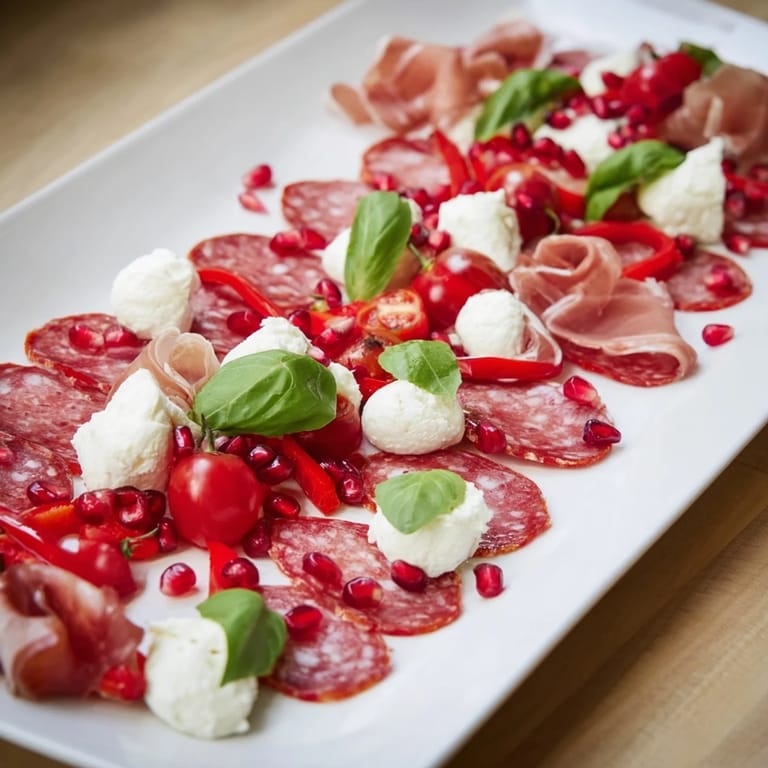
- This is where the magic happens. Lay out your salami and mozzarella in alternating slices, starting at one corner and creating an S-curve that moves toward the center and then back out to the opposite side. Overlap slightly, creating rhythm. Step back often and look at it with fresh eyes. The curve should feel like a graceful movement across the board, not stiff or forced. If a slice isn't right, move it—there's no penalty in this kitchen.
- Deepen the design:
- Now fill in the curves with your goat cheese and rolled prosciutto. This is where you add sophistication and texture variation. The prosciutto rolls create visual interest and break up the pattern just enough to feel intentional.
- Add the red accents:
- Tuck cherry tomato halves and red bell pepper strips into the spaces alongside the red sections of your candy cane. These should feel like deliberate pops of color, not scattered randomly. Think of them as highlighting the stripe rather than filling empty space.
- Scatter the jewels:
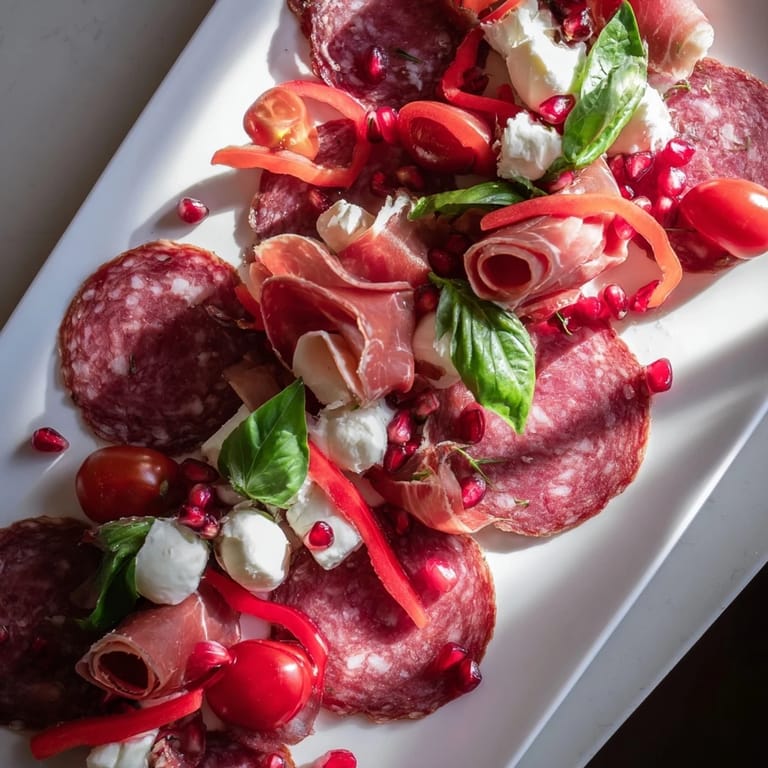
- Add grapes, pomegranate seeds, and fresh herb sprigs around the board. This is the moment where everything becomes three-dimensional. The pomegranate seeds are the finale—use them intentionally, not apologetically. They're luxury made edible.
- Frame with crackers:
- Arrange crackers and baguette slices along the edges or in a separate basket nearby. They're your supporting actors, essential but not fighting for attention. If you're toasting baguette slices, do this just before serving so they're still warm and fragrant.
- Set your dips:
- Place small bowls of mustard and chutney on the board or beside it. Position them where they won't tip and where guests can easily reach them without dismantling your design.
- Final flourish:
- Tuck sprigs of basil or rosemary into the gaps and around the edges. Let them nestle naturally—this isn't about precision, it's about evoking that holiday feeling. Serve immediately while everything is at its best.
 Save
Save I remember one guest—someone I'd never cooked for before—asking me where I'd learned to do this. I realized in that moment that it wasn't about technique or training. It was about caring enough to make something beautiful, about understanding that food shared with others is always about more than just sustenance. This board taught me that fancy doesn't require complexity, and impressive doesn't require stress.
Building Your Personal Signature
This board is a template, not a rule. The first time I made it, I was so focused on getting the pattern perfect that I forgot to add any green. Now I always include fresh elements—arugula, fresh figs when in season, even thinly shaved fennel. The board is yours to reimagine. Maybe you love spicy salami and want to add hot pepper flakes. Maybe you find a beautiful truffle honey at the market and want to swap that in. The confidence comes from understanding that you're the one designing this moment, and your guests will be delighted by whatever thoughtful choices you make.
The Art of Pairing
One thing I've learned is that this board isn't just about the items themselves—it's about the conversation that happens around them. A tangy goat cheese next to a crisp apple creates a dialogue. Salty prosciutto with sweet grapes makes people pause. When you're building your board, think about these little moments of flavor contrast. They're what transform a collection of food into an experience. Position items so guests naturally discover these combinations as they explore.
Making It Yours
I've made this board vegetarian for friends, substituting the salami and prosciutto with roasted red peppers, marinated artichokes, and smoked paprika-dusted goat cheese. I've made it vegan by switching to cashew cheese and adding roasted almonds. I've made it elegant for a dinner party and casual for a movie night. What matters is that you see this not as a rigid recipe but as a framework for generosity.
- White cheddar or Havarti can replace mozzarella if you want a different flavor profile—both have beautiful color and interesting flavor.
- Swap in any cured meat you love: spicy soppressata, mild mortadella, or prosciutto di Parma if you want to get fancy.
- Fresh figs, pears, or dried apricots add elegant sweetness and pair beautifully with cheese—experiment with what moves you.
 Save
Save Every time I make this board, I remember why I love cooking for people. It's not about perfection—it's about invitation, abundance, and the joy of creating something beautiful together. Your candy cane board will become part of someone's holiday memory, I promise you that.
Kitchen Guide
- → What cheeses work best for this board?
Mozzarella offers a mild creamy base while goat cheese adds tanginess. White cheddar or Havarti can be good alternatives.
- → Can this board accommodate dietary restrictions?
Using gluten-free crackers and omitting meats makes this board suitable for gluten-free and vegetarian preferences.
- → How to create the candy cane shape?
Arrange salami and mozzarella slices alternating in an S-shaped curve on a large rectangular or oval board for the signature look.
- → What accompaniments enhance the flavor profile?
Fresh cherry tomatoes, red bell pepper strips, grapes, pomegranate seeds, and fresh herbs add color, texture, and brightness.
- → What dips pair well with this arrangement?
Whole-grain mustard and cranberry chutney or fig jam complement the meats and cheeses perfectly.