 Save
Save There's something about stacking things that makes you feel like you're doing something fancy, even if you're just arranging tomatoes and cheese on a plate. I discovered these towers years ago at a small restaurant in Florence where the chef casually told me the secret was using tomatoes so ripe they're almost soft, and mozzarella so fresh it still had a slight warmth to it. That conversation stuck with me, and now every time I make them, I'm back in that kitchen watching him work with such ease.
I made these for the first time for an unexpected dinner party and nearly panicked when I realized I'd forgotten to buy anything complicated. Then I remembered those stacks from Florence and thought, why not? My guests kept asking for the recipe, convinced there had to be some technique I wasn't telling them, and I loved being able to say it was just about picking the right ingredients and stacking them carefully.
Ingredients
- Fresh ripe tomatoes: This is where everything lives or dies—pick ones that smell sweet and yield slightly to pressure, not hard ones from the supermarket shelf.
- Fresh mozzarella cheese: The softer, fresher kind you find in the deli case, not the rubbery pre-packaged stuff; it should tear rather than slice cleanly.
- Fresh basil leaves: Pick the young tender ones if you can; they have a brighter flavor and won't bruise as easily when you handle them.
- Extra-virgin olive oil: Use one you actually like tasting straight from the bottle, because you'll taste it here more than anywhere else.
- Balsamic glaze: The thick reduction kind, not the thin vinegar; it's the finishing touch that brings everything into focus.
- Sea salt and black pepper: Fine sea salt works better than table salt because it dissolves into the layers rather than sitting on top.
Tired of Takeout? 🥡
Get 10 meals you can make faster than delivery arrives. Seriously.
One email. No spam. Unsubscribe anytime.
Instructions
- Slice your tomatoes and cheese into even rounds:
- Use a sharp serrated knife and aim for about 1 cm thickness—they need to be sturdy enough to stack but thin enough that you can taste everything in each bite. I usually get eight slices from each medium tomato, which gives you enough for four proper pillars.
- Get your basil ready:
- Wash and dry the leaves carefully; wet basil gets dark and bruised easily. Pat them with paper towels and set them aside until you're ready to build.
- Build your pillars from the bottom up:
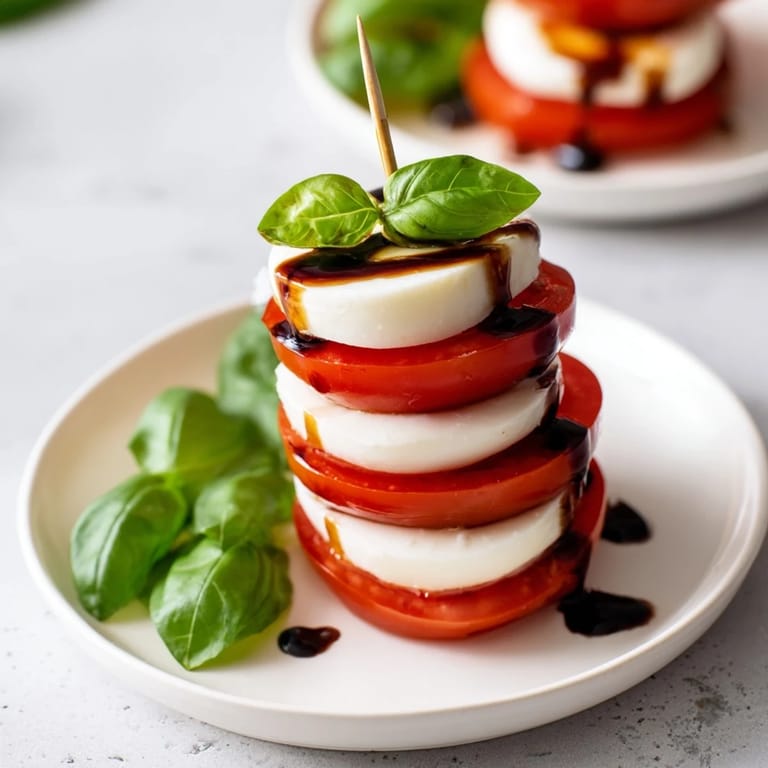
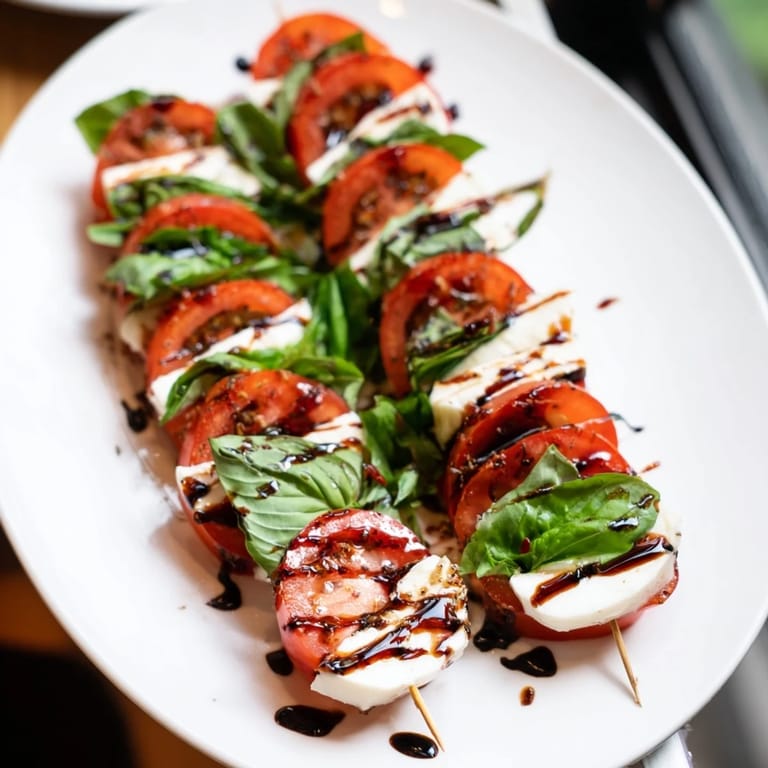
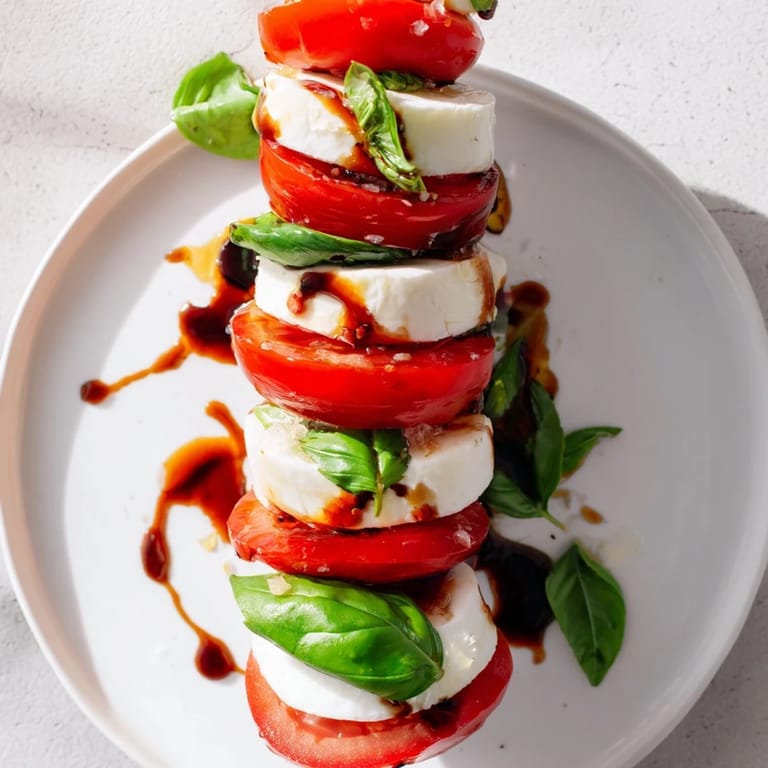
- Start with a tomato slice as your foundation, layer a mozzarella slice on top, then tuck in a basil leaf, then repeat until you've got a three or four layer stack with basil as the crown. Think of it like building a little flavor tower where every layer matters.
- Secure the structure:
- Push a long toothpick or thin bamboo skewer straight down through the center of each stack—this holds everything together while you plate and season. It's the difference between an elegant tower and a delicious pile.
- Add the finishing touches:
- Drizzle olive oil around the base of each pillar and then give a light drizzle of balsamic glaze over the top. Finish with a pinch of sea salt and a crack of fresh pepper.
- Serve right away:
- These are best the moment they're assembled, while the tomato still has that fresh coolness and the mozzarella hasn't warmed up too much.
 Save
Save One night, a friend took a bite and closed their eyes like they were tasting something profound, and told me it reminded them of a garden they'd forgotten about. That's when I realized these aren't really about technique or complexity—they're about capturing a moment when everything tastes like itself, nothing more, nothing less.
Choosing Your Tomatoes
The entire recipe lives on the shoulders of your tomato choice. Hunt for tomatoes that have deep color variation, maybe some fading toward the shoulders, and a slight give when you press them gently. The ones that smell sweet when you hold them to your nose are the winners. Heirloom varieties bring wild colors and unexpected flavor variations—I've had success with Cherokee Purples, Brandywines, and even old San Marzanos that were grown just for this kind of cooking. If it's winter and you can't find proper tomatoes, honestly, wait—this dish doesn't forgive subpar tomatoes.
The Mozzarella Question
Fresh mozzarella and burratta are different animals, though both can work. Fresh mozzarella has a cleaner, more neutral canvas that lets the tomato shine, while burratta brings a creamy richness that leans toward decadence. I default to fresh mozzarella because it's easier to slice and stacks more predictably, but I'll reach for burratta when I'm feeling generous or when someone mentions they've never had it. The key with either is temperature—too cold and it's tough, too warm and it gets greasy. Somewhere between refrigerator cold and room temperature is the sweet spot.
Making It Your Own
This recipe is simple enough that small changes feel like big additions. A light dusting of dried oregano or Calabrian chili flakes brings hidden depth, while a sprinkle of flaky sea salt at the end adds a crunchy surprise. Some people add a thin slice of prosciutto between layers, which transforms it from vegetarian to something more indulgent. The architecture stays the same, but the flavors tell different stories.
- Try micro basil or opal basil if you can find it for a different flavor profile or stunning visual contrast.
- Finish with a tiny pinch of fleur de sel right before serving instead of regular sea salt for a luxury touch.
- Pair with a crisp Pinot Grigio or even a light rosé that echoes the tomato's freshness.
 Save
Save There's something honest about food that doesn't pretend to be more than it is. These tomato towers remind me every time that sometimes the most beautiful thing you can do in a kitchen is simply use great ingredients and let them speak for themselves.
Kitchen Guide
- → What type of tomatoes work best?
Medium ripe tomatoes with firm flesh and vibrant color are ideal, ensuring easy slicing and fresh flavor.
- → Can I substitute mozzarella?
Fresh mozzarella is preferred for its creamy texture, but burrata or bocconcini work well as alternatives.
- → How should the basil be prepared?
Use fresh basil leaves, gently washed and patted dry to maintain their aroma and prevent sogginess.
- → What is the best way to assemble these pillars?
Layer tomato, mozzarella, and basil slices in repeating order, then secure with a toothpick or bamboo skewer for stability.
- → How does the balsamic glaze affect the flavor?
The glaze adds a sweet and tangy richness that complements the mild cheese and fresh tomato beautifully.
- → Any suggestions for seasoning?
Season lightly with sea salt and freshly ground black pepper to enhance the natural flavors without overpowering them.