 Save
Save I discovered this dish quite by accident one evening when I had friends coming over and realized I'd bought ingredients from three different cuisines without a coherent plan. Rather than start over, I decided to cook each component separately and let everyone create their own flavor journey by mixing and matching. That first night, watching people at my table combine Mediterranean eggplant with Asian ginger mushrooms and Middle Eastern chickpeas, something clicked—this wasn't fusion confusion, it was intentional celebration. Now whenever I make The Spice Route, I'm reminded that sometimes the best meals come from embracing the contradictions.
I'll never forget the sound of three skillets sizzling in rhythm at my friend Maya's dinner party, each one releasing its own perfume into the kitchen—the Mediterranean cluster smelling herbal and warm, the Asian cluster sharp with ginger, and the Middle Eastern one fragrant with cumin and cinnamon. When we finally plated everything, it looked like edible geography, and people kept remarking that they'd never experienced flavors this way before. That meal changed how I think about cooking for groups; instead of trying to please everyone with one dish, give them the option to please themselves.
Ingredients
- Extra-virgin olive oil: Use the best quality you can afford for the Mediterranean cluster—it's one of only three ingredients, so it deserves to shine.
- Eggplant: Dicing rather than slicing helps it absorb flavors faster and cook more evenly; aim for roughly half-inch cubes.
- Red bell pepper and zucchini: The bell pepper's sweetness balances the eggplant's earthiness, while zucchini adds lightness.
- Cherry tomatoes: Their natural acidity brightens the whole Mediterranean cluster; halving them releases their juices into the pan.
- Toasted sesame oil: This is concentrated flavor—a little goes far, so don't substitute regular sesame oil.
- Shiitake mushrooms: Their meaty texture makes them the anchor of the Asian cluster; slice them about a quarter-inch thick.
- Snap peas: Keep the heat high so they stay bright and crisp; they'll turn dull if you coddle them.
- Ginger: Fresh ginger adds warmth without the harshness of powdered; if you only have powder, use a quarter teaspoon.
- Chickpeas: Rinsed canned chickpeas work perfectly here; they add protein and earthiness to the Middle Eastern cluster.
- Bulgur or quinoa: Bulgur cooks faster and has a nuttier flavor, while quinoa is lighter and naturally gluten-free.
- Ground spices (cumin, coriander, cinnamon): Toast them briefly in the hot oil before adding other ingredients to unlock their warmth.
- Fresh herbs: Parsley and mint should be chopped just before serving so they keep their brightness.
Tired of Takeout? 🥡
Get 10 meals you can make faster than delivery arrives. Seriously.
One email. No spam. Unsubscribe anytime.
Instructions
- Mise en place with intention:
- Line up your three skillets and arrange each cluster's ingredients in separate groupings on your counter. This sounds fussy, but it's the difference between cooking smoothly and scrambling mid-sauté.
- Build the Mediterranean warmth:
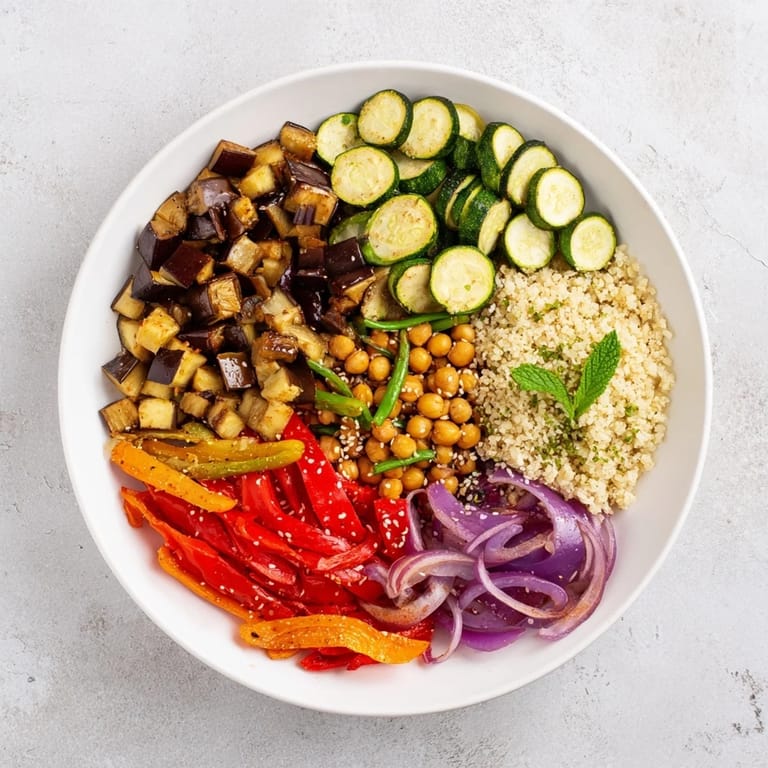
- Heat your olive oil until it shimmers, then add the eggplant first—it needs the most time. The oil should smell fruity and alive. Once the eggplant begins to soften and caramelize at the edges, add the peppers, zucchini, and tomatoes, letting everything cook together until the vegetables are tender but still have some character, about 8–10 minutes total.
- Wake up the Asian cluster:
- Toasted sesame oil heats differently than olive oil—it burns easily, so watch carefully. Add mushrooms first and let them release their moisture, then introduce the snap peas and carrots. Everything should cook quickly and stay vibrant; the whole cluster takes about 6–7 minutes from pan to plate.
- Toast and layer the Middle Eastern flavors:
- The cumin and coriander should bloom for just 30 seconds in hot oil before the onion joins the pan. This releases their essential oils and deepens their warmth. Once the onion softens, add the chickpeas and grains, cooking gently so everything melds without breaking down.
- Season and adjust:
- Each cluster is seasoned independently, so taste as you go. The Mediterranean needs salt and pepper; the Asian cluster gets brightness from the vinegar; the Middle Eastern becomes complete with lemon juice and fresh herbs.
- The moment of presentation:
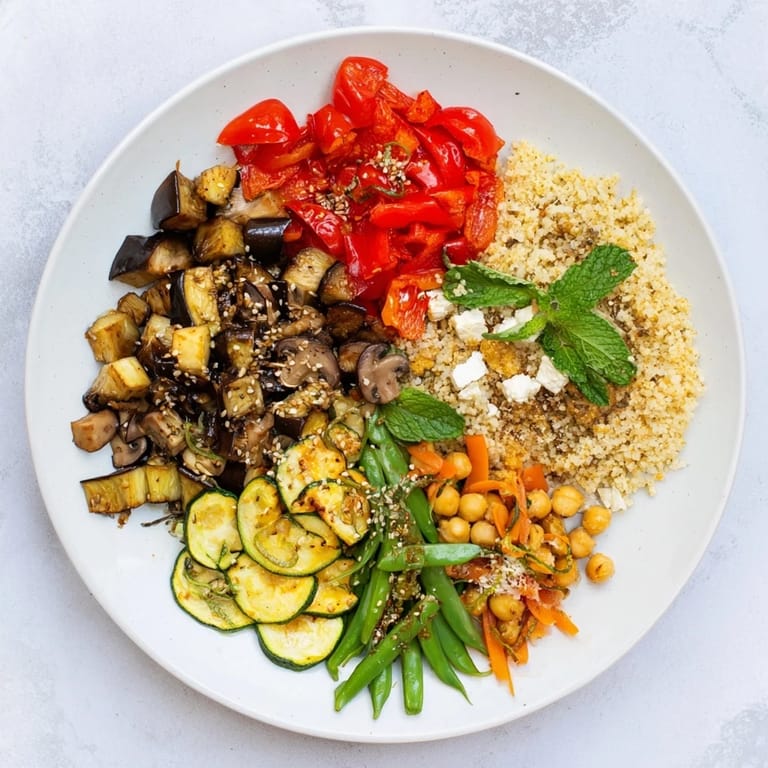
- Plate the three clusters side by side—they look more striking when separated than jumbled together. The individual flavors remain distinct until someone decides to create their own combination.
 Save
Save There was a moment during that first dinner when my usually picky friend Sarah filled her plate with equal parts of all three clusters and took a bite, her face shifting from skepticism to genuine delight. She said, "This isn't one dish—it's a conversation." That's when I understood The Spice Route wasn't about fusion technique; it was about trust and curiosity at the table.
Cooking in Parallel
The beauty of this recipe is that you're not juggling one complicated pan; you're orchestrating three simple ones. Start timing everything so the Mediterranean cluster, which takes the longest, finishes around the same time as the others. If you're nervous about multitasking, prep absolutely everything first and arrange it within arm's reach. Once you've done this once, it becomes almost meditative—your hands know where to go, and the kitchen fills with three distinct aromas that somehow complement each other.
Customizing Without Losing the Spirit
This recipe begs for improvisation. If you don't have shiitake mushrooms, use cremini or oyster mushrooms; they'll shift the flavor but keep the essence. If chickpeas don't speak to you, try white beans or lentils in the Middle Eastern cluster. The structure is forgiving as long as you respect the spice balance within each cluster. I've made versions with grilled chicken in the Mediterranean section and crispy tofu in the Asian section, and both felt true to the original.
Making It a Celebration
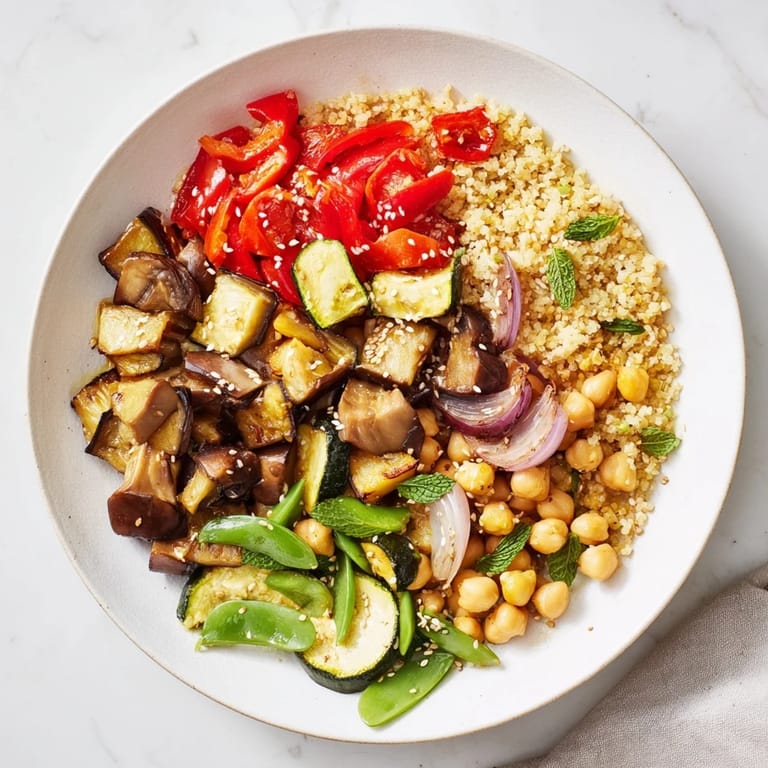
Serve this dish family-style on a large platter with everyone reaching across the table, mixing and tasting, discovering combinations. Flatbread or steamed rice becomes an edible vehicle for exploration rather than a side dish. Wine matters here too—a crisp Sauvignon Blanc cuts through the richness and brings out the herbs, while a light Pinot Noir complements the deeper spices without overwhelming the vegetables.
- Encourage guests to taste each cluster alone before mixing them, so they experience the full range of flavors.
- Set out the feta, sesame seeds, and fresh herbs as a final flourish so people can customize their own plate.
- This dish reheats beautifully; store each cluster separately and gently warm them in a low oven if making ahead.
 Save
Save Every time I make The Spice Route, I'm reminded that the best meals aren't the ones that play it safe—they're the ones that bring different worlds together and trust people to make sense of them. This dish does that beautifully.
Kitchen Guide
- → How are the flavor clusters cooked?
Each cluster is sautéed separately using distinct oils and spices to highlight its unique regional ingredients and aromas.
- → Can this dish accommodate different dietary preferences?
Yes, it can be tailored by omitting feta for a vegan option or adding grilled proteins like chicken, tofu, or lamb for extra protein.
- → What grains are used in the Middle Eastern cluster?
Bulgur is commonly used, but quinoa can be substituted for a gluten-free alternative.
- → What garnishes complement the clusters?
Crumpled feta, toasted sesame seeds, and fresh mint or cilantro leaves provide added texture and freshness.
- → What wines pair well with this dish?
A crisp Sauvignon Blanc or a light-bodied Pinot Noir balances the aromatic and diverse flavors perfectly.
- → How should the dish be served?
The three flavor clusters are arranged side by side, encouraging diners to mix and match components for varied taste combinations.