 Save
Save I was arranging appetizers for a dinner party when my friend burst into the kitchen asking if I had anything that would "stop people in their tracks." That's when I remembered a moment months earlier, standing in a farmer's market surrounded by rainbow carrots and vivid beets, thinking about how color could tell a story on a plate. The Neon Night was born from that impulse, and watching guests gather around the black board before anyone even sat down taught me something: food doesn't just feed you, sometimes it speaks first.
I made this for my sister's birthday potluck, and she kept circling back to it between conversations, loading her plate higher each time. What struck me wasn't the compliments, but how the colors seemed to lift everyone's mood—something about vibrancy and playfulness served together changes the energy of a gathering.
Ingredients
- Mini cucumbers: Their thin skin softens quickly in brine, absorbing flavor completely—slice them on a slight bias so they catch light on the board.
- Rainbow carrots: The bias cut isn't fancy, it's practical; it exposes more surface area for pickling and makes them visually pop.
- Radishes: These stay crisp and give you that peppery snap that keeps things interesting—don't skip them.
- Red onion: The sharpness mellows beautifully in vinegar, becoming almost sweet, which is why thin slicing matters.
- White vinegar: Clean and bright; it lets the natural colors sing without competing.
- Sugar and salt: The balance between these two is where the magic happens—taste as you go and adjust to your preference.
- Mustard seeds and peppercorns: Toast them lightly in the pan before adding liquid if you want deeper flavor; a small move that changes everything.
- Eggs: Boil them to exactly 8-9 minutes for that perfect jammy yolk that contrasts with the firm white.
- Cooked beet: The earthiness anchors all that brightness—use one that's already roasted if you're short on time.
- Apple cider vinegar: Slightly sweeter than white vinegar, it deepens the beet color and adds warmth to the eggs.
- Fresh berries and fruits: Buy them the day before or morning-of; the whole point is that jewel-like moment right before they start to soften.
- Microgreens or edible flowers: These aren't decoration, they're the final flavor note—peppery greens or delicate flowers both work, choose what feels right.
Tired of Takeout? 🥡
Get 10 meals you can make faster than delivery arrives. Seriously.
One email. No spam. Unsubscribe anytime.
Instructions
- Build your pickling brine:
- Combine vinegar, water, sugar, salt, mustard seeds, and peppercorns in a saucepan and bring to a simmer, letting the heat dissolve everything into a cohesive liquid that smells sharp and promising. You'll know it's ready when the sugar grains disappear and the steam carries that bright vinegar scent.
- Pickle the vegetables:
- Slice cucumbers, carrots, radishes, and red onion, then place them in a heatproof container and pour the hot brine over top—this is the moment they start drinking in all that flavor. Let them cool to room temperature, then refrigerate for at least two hours, though overnight is when they truly become something special.
- Hard boil and chill the eggs:
- Place eggs in cold water, bring to a rolling boil, then set a timer for 8-9 minutes so the yolk stays just tender inside that cooked white. Plunge them immediately into ice water to stop the cooking, then peel gently under running water, feeling the membrane separate as you work.
- Create the beet-dyed magic:
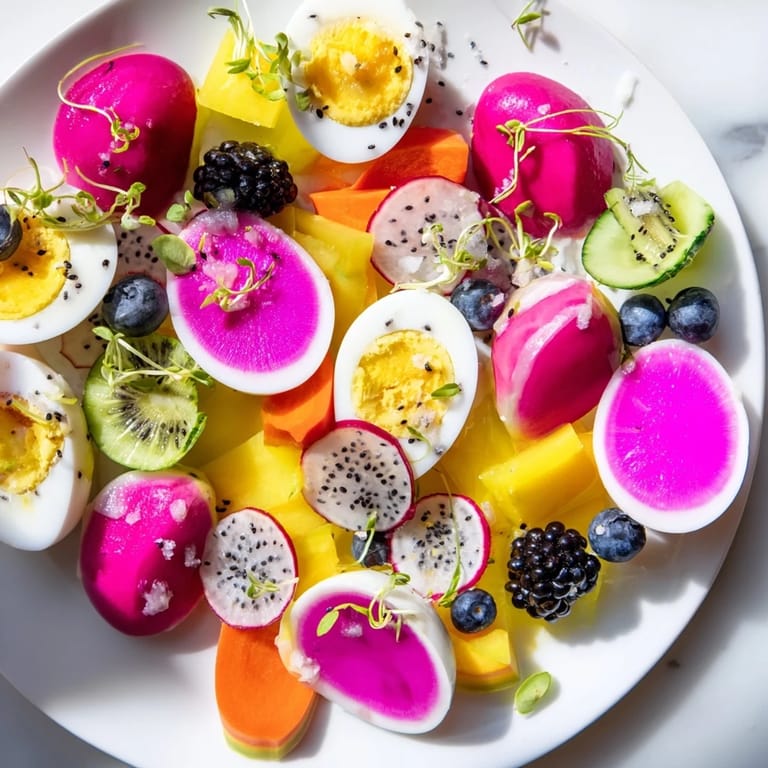
- Combine sliced beet, apple cider vinegar, water, sugar, and salt in a jar, then add your peeled eggs and let them sit in the refrigerator. Check them after an hour or two, and watch as the pale whites gradually blush pink, then deepen to ruby over the next few hours.
- Arrange on the black board:
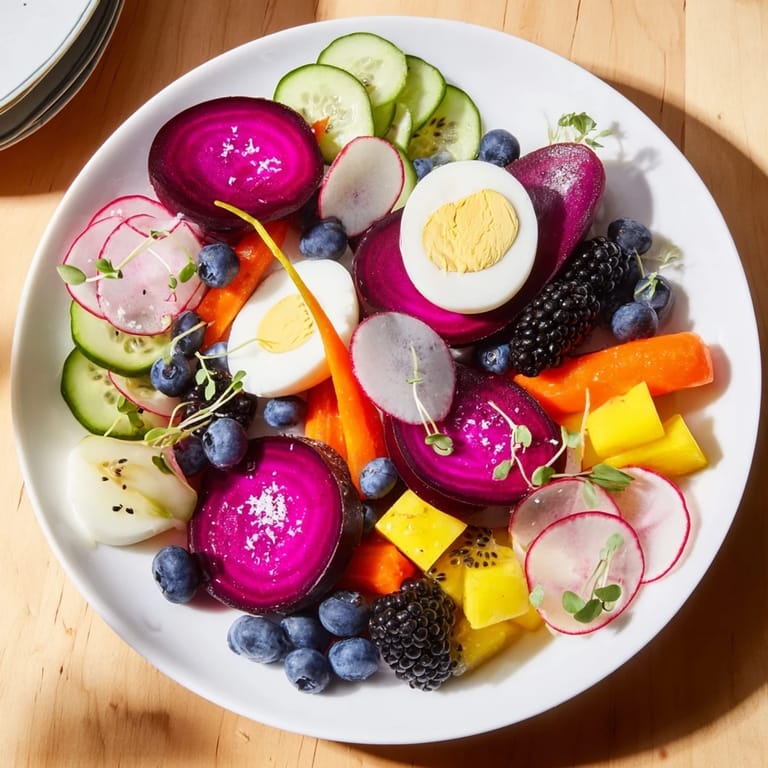
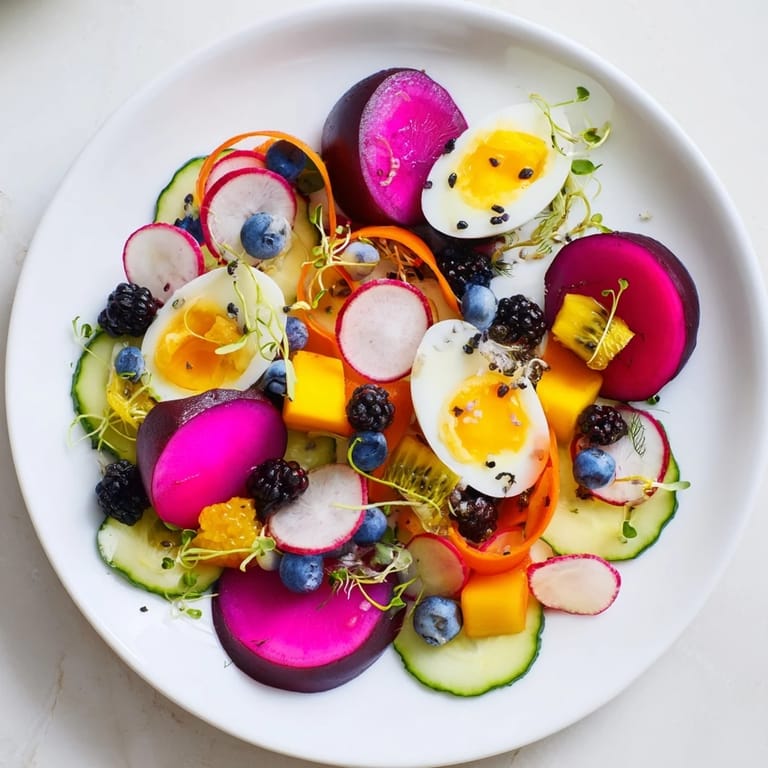
- Halve or slice your beet-dyed eggs so the color shows, then nestle them among the pickled vegetables and fresh fruits in clusters of color rather than straight lines—think garden abundance, not geometry. The contrast between the dark board and all that brightness is exactly the point.
- Finish and serve:
- Scatter microgreens or edible flowers across the top, finish with a pinch of flaky sea salt, and chill until people are ready to eat. The cold temperature keeps everything crisp and makes the colors feel even more vibrant.
 Save
Save There's something about presenting food this way that changes how people experience it—they actually pause, look, and talk about what they see before they eat. That moment of recognition, before the fork touches down, feels almost more important than the taste itself.
The Art of Color Layering
Color theory on a plate isn't about being precious or overthinking it. I learned this by accident, staring at a board of pickled vegetables under different kitchen lights, noticing how gold carrots sang next to magenta radishes, and how the jewel tones of berries grounded everything. The black board is essential, not optional—it's the canvas that makes every color twice as vivid and every contrast sharp. Arrangement matters less than ensuring no two similar colors sit directly touching, which means planning your placement loosely before you start, like sketching before painting.
Timing and Make-Ahead Logic
This is a recipe designed for cooks who have other things to do. The pickles need two hours minimum but thrive overnight, the beet eggs need two hours minimum but can sit for days deepening in color, and the fresh fruit is the only element that needs last-minute attention. What I've learned is to do the pickling the day before or early morning, then assemble everything cold right before guests arrive—this way you're calm and present instead of in the kitchen as people show up. The whole apparatus of preparation dissolves into simplicity once you understand that timing isn't about rushing, it's about spacing tasks so nothing overlaps.
Variations and Personal Touches
I've made this a dozen times and never quite the same way twice. Some iterations call for turmeric in the brine for golden vegetables, or purple cabbage juice for a blue-tinted liquid that stains everything softly. The fruits can change entirely—stone fruits, citrus, pomegranate seeds all work beautifully. The principle underneath matters more than the specifics: bright vegetables, colorful eggs, fresh fruits, dramatic contrast. Once you understand what makes it sing, you can improvise freely, which is when cooking stops being a task and becomes play.
- Try adding a teaspoon of turmeric to the pickling brine for a warm yellow hue that deepens with time.
- Swap any fruits for what's seasonal and fresh—the less time between the farmer's market and your plate, the better.
- If you're making this vegan, simply double the pickled vegetables and add toasted nuts for protein and texture.
 Save
Save Making this dish taught me that showing up for people doesn't always mean exhausting yourself in the kitchen—sometimes it means putting thought and color on a plate and letting that speak. This is the recipe I reach for when I want people to feel genuinely delighted without me being frazzled.
Kitchen Guide
- → How long should the vegetables marinate for best flavor?
Marinate the vegetables for at least 2 hours, but overnight refrigeration enhances the flavors and texture.
- → What gives the eggs their vibrant color?
Beet slices combined with vinegar and water infuse the boiled eggs with a rich, natural magenta shade.
- → Can other fruits be used instead of the ones listed?
Yes, feel free to substitute or add seasonal fresh fruits to complement the platter’s colors and flavors.
- → Is it necessary to use a black serving board?
While not essential, a black board provides dramatic contrast that enhances the vibrant colors of the ingredients.
- → How can this platter be made vegan?
Omit the beet-dyed eggs and increase the variety of pickled vegetables to maintain color and texture balance.
- → Are there any allergens to be aware of?
This dish contains eggs and is gluten- and dairy-free. Always check vinegar and packaged ingredients for hidden allergens.