 Save
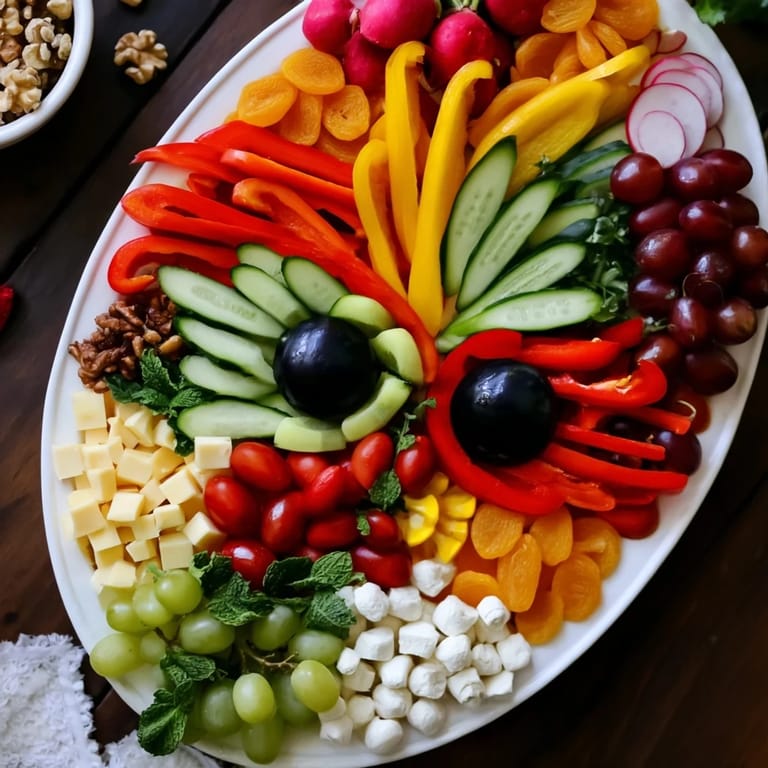
Save I'll never forget the first time I created The Masquerade Mask for a New Year's Eve gathering at my apartment. I was searching for something that felt both elegant and playful, something that would spark conversation the moment guests walked in. As I arranged those vibrant vegetables and cheeses on a large board, slowly fanning them out like feathered plumes, it clicked—this wasn't just an appetizer, it was wearable art. My friends arrived, and their eyes lit up instantly. That night taught me that food can be theater, and sometimes the most memorable dishes are the ones that make people smile before they even taste them.
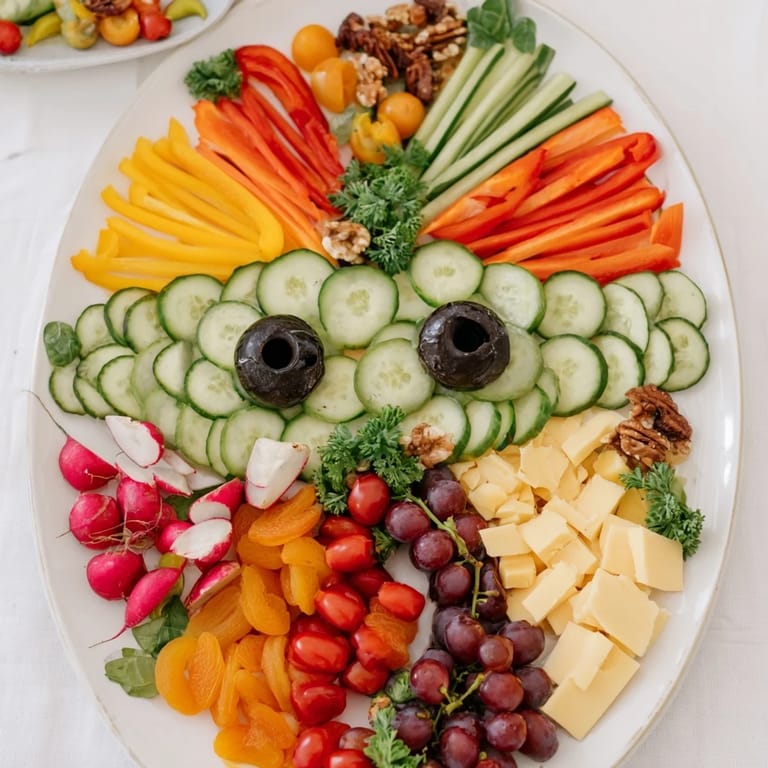
I remember standing in my kitchen at 6 PM on December 31st, hands moving with surprising confidence as I sliced cucumbers paper-thin and arranged them in perfect arcs. My partner came in wondering what the commotion was about, and when they saw the mask taking shape—all those jewel-toned peppers, emerald grapes, and golden cheese cubes forming something almost too beautiful to eat—they actually gasped. That moment, knowing I'd created something that transcended the ordinary, made all those tiny knife cuts completely worth it.
Ingredients
- Large green or black olives (pitted) or small cheese cubes: These become the soul of your mask, the mysterious eyes that draw everyone's gaze. I learned to pit my own olives after buying pre-pitted ones that had lost all their character—fresh makes an enormous difference.
- Cucumber slices: Their cool, watery crispness is your foundation. Slice them thin and uniform so they fan beautifully; a mandoline is your friend here, though a steady hand and sharp knife work just as well.
- Colorful bell pepper strips (red, yellow, orange): These are your mask's most vibrant plumage. Choose peppers that feel heavy for their size—they'll be crispest and sweetest.
- Cherry tomatoes, halved: Their glossy surfaces catch the light like jewels. Halving them lengthwise, rather than crosswise, gives you a more elegant presentation.
- Red radish slices: Don't underestimate these peppery beauties; they add bite and that gorgeous coral-pink color that photographs like a dream.
- Baby carrots, halved lengthwise: Their natural sweetness balances the savory cheese perfectly. The orange creates warmth against the cool greens.
- Seedless grapes (red or green): These offer bursts of juice and a slightly sweet grace note. I choose red for this particular mask because they echo the festive energy of New Year's.
- Assorted cheeses, cubed: Mix textures—sharp cheddar, creamy gouda, nutty Swiss. Each cube is a tiny flavor story.
- Mini mozzarella balls: Delicate and mild, they act like little pearls scattered throughout, adding creaminess without overpowering.
- Nuts (walnuts, almonds, or pistachios): A hidden textural secret that transforms this from pretty to genuinely crave-worthy. Pistachios add the most festive green.
- Dried fruits (apricots, cranberries, or figs): These concentrate flavor and sweetness. I learned to chop larger pieces so they don't get lost in the arrangement.
- Crackers or breadsticks (optional): A gentle textural bridge for those who want substance alongside the fresh ingredients.
- Fresh herbs (parsley, basil, dill) and edible flowers: These final flourishes are where your mask becomes truly luxe. The herbs add herbaceous freshness; the flowers transform it from appetizer to art installation.
Tired of Takeout? 🥡
Get 10 meals you can make faster than delivery arrives. Seriously.
One email. No spam. Unsubscribe anytime.
Instructions
- Set the stage:
- Choose a large oval or rectangular serving board—this is your canvas. Clean it completely and let it dry; water droplets will make your beautiful arrangement slide around. I use a wooden board because it feels warm and festive, but marble or ceramic work equally well.
- Create the mysterious eyes:
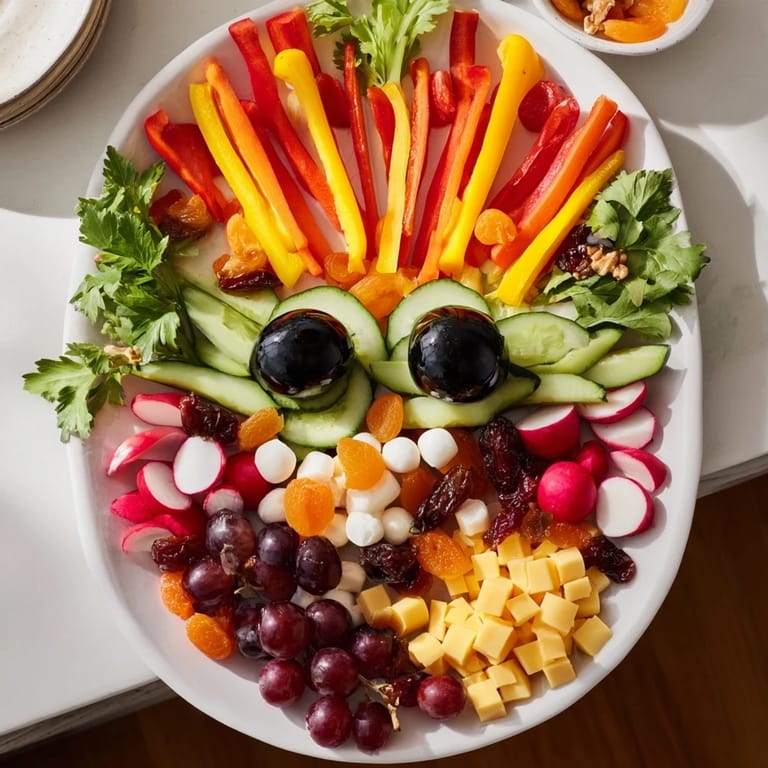
- Place your two olives or cheese cubes near the center-top of the board, spaced apart horizontally about 3-4 inches. These are the eyes of your mask, the focal point everything else will radiate from. Step back and look at them; they should feel balanced and alluring.
- Begin the fan:
- Starting just above and around those eyes, begin arranging your vegetables in elegant, symmetrical arcs. Imagine you're creating the feathered edges of an ornate Venetian mask. Fan your cucumber slices first, overlapping them slightly like shingles on a roof. Let them curve upward and outward from the eye openings, creating that distinctive mask silhouette.
- Add dimension with pepper:
- Tuck your bell pepper strips into the spaces between cucumbers, fanning them in the same direction. The colors should feel natural, not forced—let reds, yellows, and oranges mingle organically, as if nature herself arranged them.
- Scatter the jewels:
- Distribute cherry tomatoes, radish slices, and baby carrots throughout, continuing that symmetrical arc pattern. Every element should feel intentional, part of the mask's ornamental design. The deep reds and bright oranges will begin to give your mask real richness.
- Weave in cheese and mozzarella:
- Tuck cheese cubes and mini mozzarella balls among the vegetables, creating pockets of creamy richness. These aren't scattered randomly—place them to enhance the mask's contours and fill gaps with elegance.
- Treasure the spaces:
- Now comes the part that feels less like cooking and more like decoration: scatter nuts and dried fruits in the remaining gaps. These are your mask's hidden jewels. A pistachio nestled against a tomato, a dried apricot catching light beside a cheese cube—this is where personality emerges.
- Add the flourish:
- If using crackers or breadsticks, arrange them at the lower edge or sides of the board, creating a subtle frame. Finally, scatter fresh herbs and edible flowers as your signature. Let a basil leaf rest artfully here, a delicate flower petal there. This is the moment your appetizer becomes undeniably special.
- Unveil:
- Step back. Admire. Breathe. Serve immediately while everything is crisp and vibrant.
 Save
Save There's something almost magical about watching a room of people come together around this mask. I watched my grandmother, who usually stands apart from festive chaos, carefully select pieces—first a pistachio, then a small slice of cucumber, then a ball of mozzarella. She wasn't just eating; she was participating in something beautiful. That's when I understood that The Masquerade Mask isn't really about the appetizer at all. It's about creating a moment where food becomes permission to play, to celebrate, to be a little theatrical and a lot joyful.
The Art of the Arrangement
Creating this platter taught me that presentation isn't superficial—it actually makes food taste better. When something is beautiful, we slow down. We notice flavors we might have rushed past. We take smaller bites and savor them. I learned to think in terms of color balance: if one side has too much red, I add yellow or green to the other. I think about height variation, letting some elements stack while others lie flat. The mask shape isn't rigid either; if your board is smaller, create a more compact mask. If it's huge, let it sprawl luxuriously. The principles remain the same: symmetry, color harmony, and that clear focal point where the eyes gaze back at your guests.
Making It Your Own
The beauty of The Masquerade Mask is that it adapts to what you have and who you're serving. For my vegan friend, I've created a version using marinated tofu cubes instead of cheese, and honestly, nobody missed the dairy. For guests who eat fish, I've arranged smoked salmon among the vegetables like feathered accents. I've made spring versions with asparagus tips and peas, autumn versions with roasted beets and candied nuts, summer versions with peaches and burrata. Each season, each guest list, each moment in time gets its own mask. The ingredients are flexible, but the magic—that theatrical presentation, that moment of 'wow'—that stays constant.
Serving Suggestions & Company
Pair this mask with dips that complement without competing: hummus whispers rather than shouts, herbed cream cheese adds richness without stealing the show, and a simple balsamic reduction offers sophisticated depth. I've learned that The Masquerade Mask lives best when it's the star of the first hour—when people are arriving, mingling, and still have appetite for play. Once heavier foods arrive, it becomes an afterthought. So position it front and center, give it the hero's entrance it deserves.
- Arrange your platter 30 minutes before guests arrive so it's already stunning when they walk in
- If your event spans hours, keep backup ingredients refrigerated and gently refresh the platter halfway through—remove any vegetables that have lost crispness and replace with fresh ones
- Remember that half the joy is watching people choose; don't predetermine bites or do anything that removes agency from your guests
 Save
Save Every time I create The Masquerade Mask, I'm reminded that the best recipes are the ones that give us permission to slow down and celebrate. This isn't food that demands to be consumed quickly; it's food that invites lingering, choosing, savoring. Make this for your next celebration.
Kitchen Guide
- → What ingredients form the "eye openings" on the platter?
Two large olives or small cubes of firm cheese such as cheddar or gouda create the eye openings, adding focal points to the design.
- → How can I adapt this platter for a vegan diet?
Simply omit the cheeses and replace them with marinated tofu cubes for a flavorful, vegan-friendly option.
- → What fresh herbs work best for garnish?
Parsley, basil, and dill are ideal for garnishing, offering fresh aroma and enhancing the visual appeal.
- → Are there suggestions for non-vegetarian additions?
Cooked shrimp, smoked salmon, or cured meats can be added to diversify the platter for non-vegetarian guests.
- → Can crackers or breadsticks be included?
Yes, crackers or breadsticks may be added at the edges or sides to provide extra crunch and complement the fresh ingredients.
- → How long does the platter preparation take?
Preparation takes about 20 minutes with no cooking needed, making it a quick and easy festive option.