 Save
Save The first time I assembled this bowl, I wasn't following a recipe at all—just staring into my fridge after a long week, holding leftover salmon and a chicken thigh I'd marinated that morning. I cooked both in the same pan, piled everything over rice with whatever vegetables looked decent, and drizzled soy sauce mixed with a little vinegar on top. It tasted better than I expected, and I've been making versions of it ever since.
I made this for my neighbor once when she mentioned craving something light but filling. She watched me place an ice cube on the rice before microwaving and laughed, thinking I was joking. When I pulled it out and the steam rose perfectly, she took a photo and texted it to her sister. Now she makes these bowls every Sunday and swears by the ice cube hack.
Ingredients
- Skinless salmon fillets: I use wild-caught when I can find it on sale, the flavor is cleaner and it doesn't fall apart as easily in the pan.
- Boneless, skinless chicken thighs: Thighs stay juicier than breasts and soak up the marinade better, plus they cook in about the same time as the salmon.
- Soy sauce: I keep low-sodium on hand because you can always add salt, but you can't take it back once the marinade is too salty.
- Mirin: This adds a subtle sweetness that balances the soy, if you don't have it, a tiny splash of sugar and water works in a pinch.
- Sake: Dry white wine is fine here, I've used both and honestly can't tell much difference after everything is cooked.
- Sesame oil: A little goes a long way, too much and the whole bowl tastes like toasted seeds instead of letting the proteins shine.
- Honey: Helps the chicken get a light caramelized edge without burning, and it smooths out the sharpness of the soy.
- Japanese short-grain rice: The texture is stickier and holds up better under toppings, rinse it well or it clumps together in a weird way.
- Avocado: I slice it right before serving so it doesn't brown, and I always buy one that's just slightly firm so it doesn't turn to mush.
- Cucumber: I use a mandoline to get thin, even slices, but a sharp knife works if you go slow and keep your fingers clear.
- Carrot: Julienned carrots add crunch and a pop of color, I sometimes use a peeler to make ribbons instead if I'm feeling lazy.
- Scallions: Both the white and green parts go in, I slice them thin and soak them in cold water for a minute to mellow the bite.
- Toasted sesame seeds: I toast them myself in a dry pan for about two minutes, they smell nutty and taste way better than the pre-toasted ones.
- Nori: I skip this sometimes, but when I remember to add it, the little strips give a nice oceanic hint that ties everything together.
- Rice vinegar: This brightens the sauce and cuts through the richness of the avocado and proteins without tasting sour.
- Ice cubes: I laughed the first time I read about this trick, but now I always keep a few extra in the freezer just for reheating rice bowls.
Tired of Takeout? 🥡
Get 10 meals you can make faster than delivery arrives. Seriously.
One email. No spam. Unsubscribe anytime.
Instructions
- Rinse and cook the rice:
- Run cold water over the rice in a fine-mesh strainer, swishing it around until the water runs clear instead of cloudy. Cook it with 2 1/2 cups of water in your rice cooker or a covered saucepan on low heat, then let it sit covered for ten minutes after it's done so the grains finish steaming and turn fluffy.
- Prepare the marinade:
- Whisk the soy sauce, mirin, sake, sesame oil, and honey together in a small bowl until the honey dissolves completely. Split the marinade into two shallow dishes, one for the salmon and one for the chicken, and let the proteins sit for at least ten minutes while you prep everything else.
- Cook the chicken:
- Heat a nonstick skillet over medium heat without any oil, the marinade has enough fat to keep things from sticking. Lay the chicken thighs flat and cook them for four to five minutes on each side until they're golden brown and the internal temperature hits 165 degrees, then move them to a cutting board to rest before slicing.
- Cook the salmon:
- Use the same pan without wiping it out, the leftover marinade and chicken bits will flavor the salmon. Cook the fillets for two to three minutes per side, just until they turn opaque and flake gently when you press them with a fork, then remove them and break them into large chunks.
- Slice the vegetables:
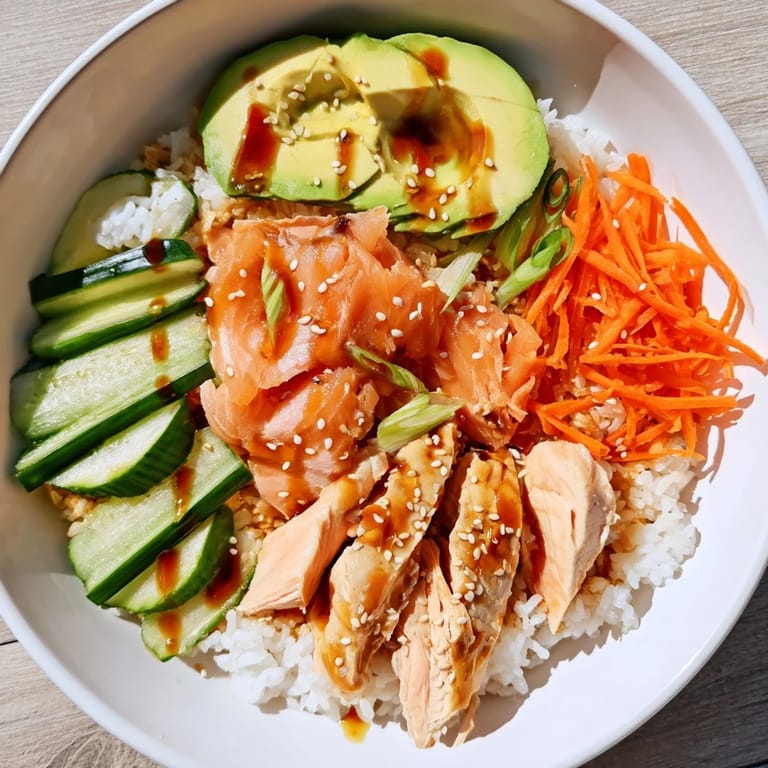
- While the proteins rest, slice the avocado, cucumber, and carrot, and chop the scallions into thin rings. I like to arrange everything on a plate so I can grab it quickly when I'm assembling the bowls.
- Make the sauce:
- Whisk the soy sauce, rice vinegar, sesame oil, and sugar together in a small bowl until the sugar dissolves. Taste it and adjust if you want it sweeter or saltier, it should be balanced and not too strong.
- Assemble the bowls:
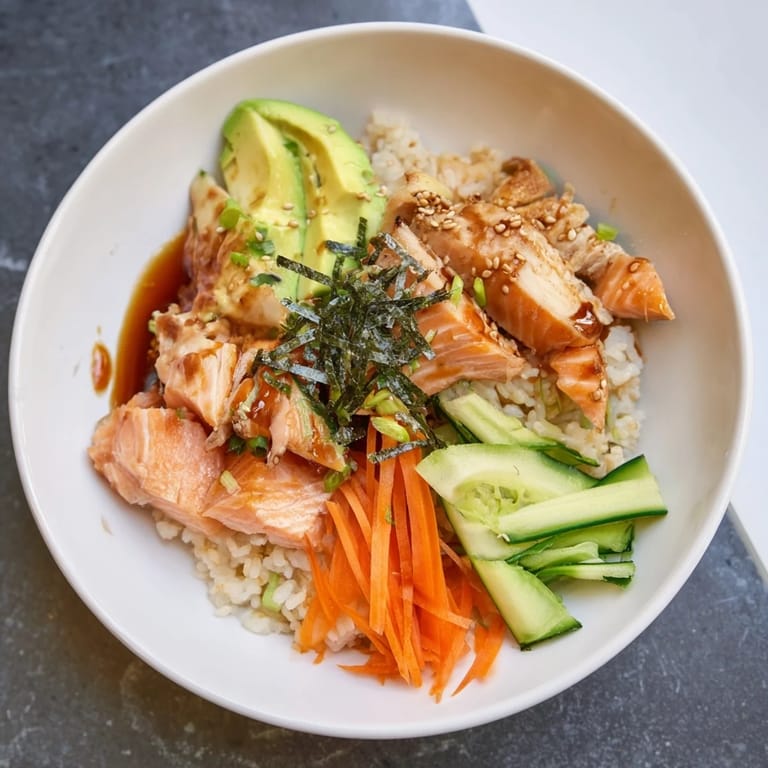
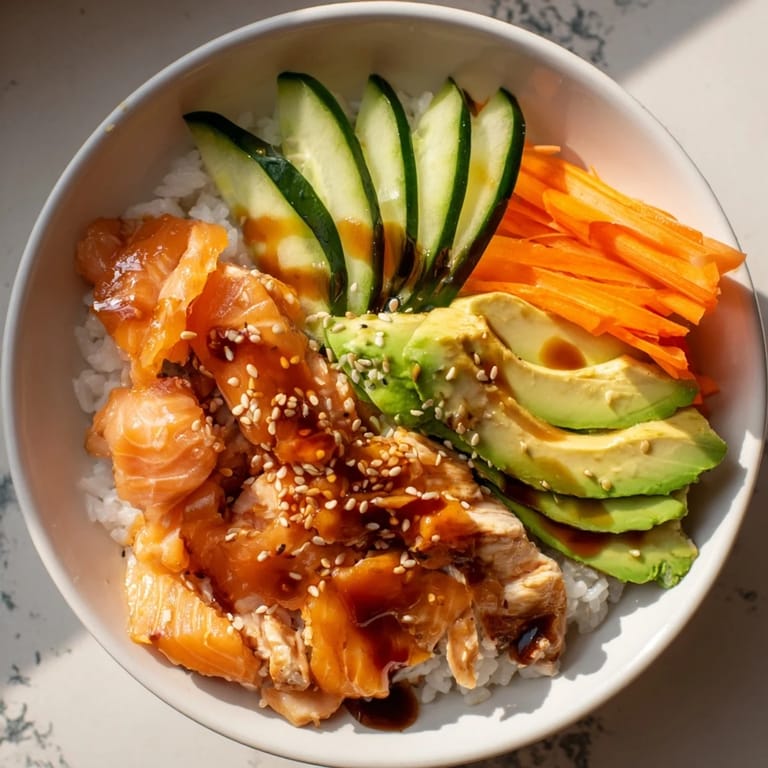
- Divide the rice among four bowls, then arrange the chicken, salmon, avocado, cucumber, carrot, and scallions on top in sections so each bowl looks colorful and inviting. Drizzle the sauce over everything, then sprinkle sesame seeds and nori strips on top.
- Use the ice cube hack for reheating:
- If you're reheating a pre-assembled bowl, place one ice cube in the center of the rice, cover the bowl with a microwave-safe lid or damp paper towel, and microwave on high for one to two minutes. The ice melts slowly and steams the rice from the inside, keeping it moist and fluffy instead of dry and hard.
 Save
Save One night I made this for my brother and his girlfriend, and halfway through eating, she asked if I could teach her the ice cube trick because she always threw out leftover rice. We reheated a bowl together the next day and she couldn't believe how soft and warm it came out. Now she texts me photos of her own versions with tofu and edamame, and I love seeing how she's made it her own.
Swaps and Variations
I've swapped the avocado for steamed edamame or roasted broccoli when I want something a little less rich, and both work really well. If you're not into fish, you can skip the salmon and double the chicken, or use crispy tofu for a vegetarian version. I've also tried this with brown rice instead of white, it takes longer to cook but adds a nutty flavor and more chew.
Serving Suggestions
I like to serve this with a small dish of pickled ginger on the side, it cuts through the richness and adds a sharp, clean bite between forkfuls. A drizzle of sriracha or chili oil is great if you want some heat, and a cup of green tea or a light sake makes it feel like a complete meal. Sometimes I add a soft-boiled egg on top, the yolk runs into the rice and makes everything even more luxurious.
Storage and Make-Ahead Tips
I prep the proteins and vegetables on Sunday and store them separately in the fridge, then I assemble bowls throughout the week when I need lunch or a quick dinner. The rice keeps for up to four days in an airtight container, and the ice cube trick works perfectly for reheating without drying it out. The avocado browns quickly, so I slice it fresh each time or squeeze a little lemon juice on it to keep it green.
- Store cooked chicken and salmon in separate containers so the flavors don't mix and you can use them in different dishes if you want.
- Keep the sauce in a small jar in the fridge and shake it before drizzling, it stays good for about a week.
- If you're meal-prepping, don't add the avocado or scallions until you're ready to eat or they'll get soggy and lose their texture.
 Save
Save This bowl has become my go-to when I want something that feels special but doesn't take all night to make. I hope you try the ice cube trick at least once, it sounds silly but it works, and it might just change the way you think about leftovers.
Kitchen Guide
- → How does the ice cube help when reheating rice?
Placing an ice cube in the rice while microwaving slowly releases steam, preventing dryness and keeping the rice moist and fluffy.
- → Can I substitute the chicken or salmon with other proteins?
Yes, tofu or edamame can replace the chicken and salmon for a vegetarian-friendly option without losing the dish's balance.
- → What is the purpose of mirin and sake in the marinade?
Mirin adds subtle sweetness while sake tenderizes and enhances the overall umami flavor of the proteins.
- → Is it essential to use Japanese short-grain rice?
Japanese short-grain rice is preferred for its sticky and tender texture, complementing the bowl’s flavors well, but other medium-grain rice can be used.
- → Can I prepare the components ahead of time?
Yes, proteins, rice, and vegetables can be prepped in advance, making assembly quick and simple when ready to serve.
- → What vegetables work best as toppings?
Fresh avocado, cucumber, julienned carrots, and sliced scallions provide a crisp, refreshing contrast and balance of textures.