 Save
Save I'll never forget the first time I created a charcuterie board that made everyone stop mid-conversation. It was for a New Year's Eve dinner, and I wanted something that felt less like a casual snack and more like edible art. That's when I discovered the magic of the gilded edge—arranging everything along the perimeter of an elegant board, leaving that dramatic center empty. The moment guests laid eyes on it, there was this collective pause, a sharp intake of breath. It wasn't just about the food; it was about the presentation, the intention, the way premium ingredients could tell a story of celebration and sophistication.
I remember my sister asking if she could take a photo before we started eating. We stood there for ten minutes, adjusting angles, because the board was too beautiful to immediately devour. That's when I knew this arrangement style was something special—when the presentation becomes part of the experience itself, when people hesitate before breaking into it because they want to preserve the moment just a little longer.
Ingredients
- Triple-cream Brie, 120 g, cut into slim wedges: This is your creamy anchor. The triple-cream richness melts on the tongue and pairs beautifully with the crisp crackers. Cut it into elegant wedges rather than chunks—the shape matters when you're building something this refined.
- Aged Manchego, 120 g, sliced: This Spanish cheese brings a nutty, slightly caramel note that feels luxurious without being pretentious. Slice it thin enough to drape slightly when you place it, which adds to the sophistication.
- Blue cheese, 100 g, crumbled or sliced: The bold flavor here creates contrast. A little goes a long way, so don't be shy with placement—its striking appearance and taste make it a visual and flavor anchor.
- Goat cheese, 100 g, formed into small rounds: These little rounds feel intentional, like you've thought through every detail. Their creamy tartness offers a refreshing counterpoint to the richer cheeses.
- Prosciutto, 100 g, folded into ribbons: The silky texture and salty depth make this essential. Fold it loosely so it catches the light and creates visual movement along the board's edge.
- Thinly sliced salami, 120 g: Choose a quality salami with good marbling. These thin rounds should overlap slightly, creating depth and color variation that draws the eye around the board.
- Coppa or bresaola, 100 g: Pick one or alternate them. Coppa brings a peppery spice, while bresaola offers a delicate, almost wine-like flavor. Either creates that luxurious Italian touch.
- Red grapes, 1 small bunch: These jewel-like fruits provide color contrast and natural sweetness. Keep them in small clusters rather than separating them—it feels more intentional.
- Green grapes, 1 small bunch: The color palette wouldn't be complete without these. They offer visual interest and a crisp, refreshing bite between savory elements.
- Pear, 1 ripe, thinly sliced: Slice just before serving to prevent browning. The delicate sweetness of pear is sophisticated and pairs especially well with blue cheese and aged cheeses.
- Apple, 1 crisp, thinly sliced: I prefer Honeycrisp or Granny Smith for their tartness. Slice just before assembling, and the slight tartness cuts through the richness beautifully.
- Dried apricots, 1 small handful: These little bursts of concentrated sweetness and chewiness create textural variety. They're also visually distinct, adding warmth to the color palette.
- Marcona almonds, 1/4 cup: These Spanish almonds are buttery and feel more luxurious than regular almonds. Toast them lightly if you want extra flavor, but honestly, they're perfect as-is.
- Salted pistachios, 1/4 cup: The vivid green color is stunning on a board, and the salty-creamy flavor adds dimension. Use the roasted and salted variety for maximum impact.
- Castelvetrano olives, 1/4 cup: These mild, buttery green olives are the refined choice here. They're less briny than other varieties, which keeps the board's overall flavor balanced and elegant.
- Cornichons, 1/4 cup: These tiny pickled cucumbers offer a tangy, crunchy element that refreshes the palate. Keep them in a small bowl at the perimeter for easy access.
- Fig jam or quince paste, 1/4 cup: This is your sweet-savory bridge. The fig jam feels more approachable and pairs beautifully with blue cheese, while quince paste is slightly more sophisticated. Choose based on your preference.
- Honeycomb or honey drizzle: If you can find honeycomb, it's absolutely worth it for texture and visual interest. If not, a quality honey in a small bowl works perfectly. The golden color ties the whole board together.
- Baguette, 1, thinly sliced and lightly toasted: Toasting gives it structure so it doesn't collapse under the weight of cheese and charcuterie. Slice thin but not papery—you want substance.
- Assorted crackers, 1 box: Vary your cracker shapes and textures. I like combining thin, delicate ones with heartier options. This gives guests choices and adds visual variety to the board's edge.
Tired of Takeout? 🥡
Get 10 meals you can make faster than delivery arrives. Seriously.
One email. No spam. Unsubscribe anytime.
Instructions
- Choose your canvas:
- Find a large, beautiful board with a prominent rim—this is crucial. The rim is where all the magic happens. A wooden board with interesting grain, marble with striking veining, or even a slate board all work beautifully. The board itself is part of the presentation, so choose something that makes you happy to look at. The size should be at least 18 inches across so you have plenty of room to arrange everything along the perimeter without crowding.
- Arrange with intention:
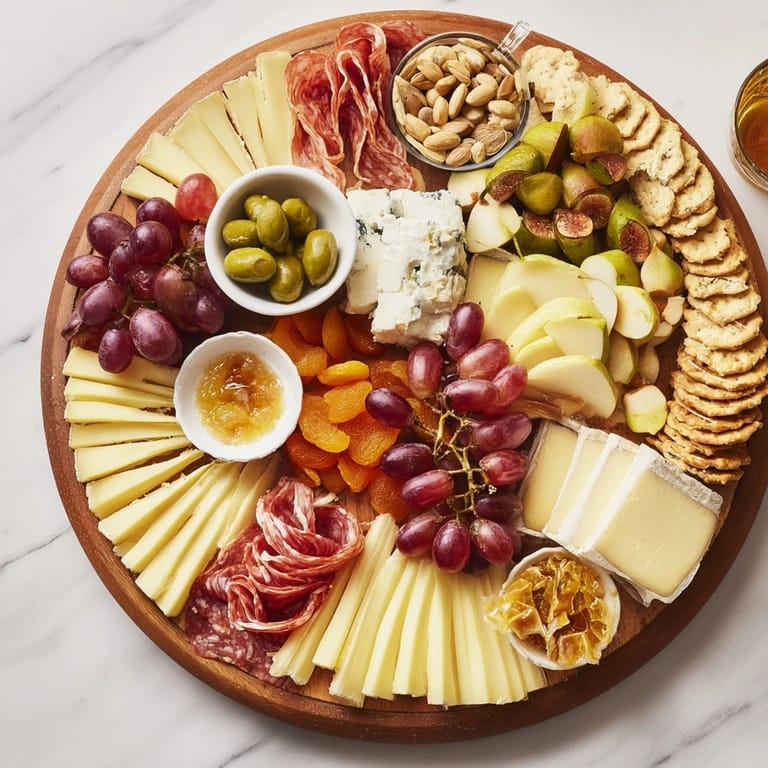
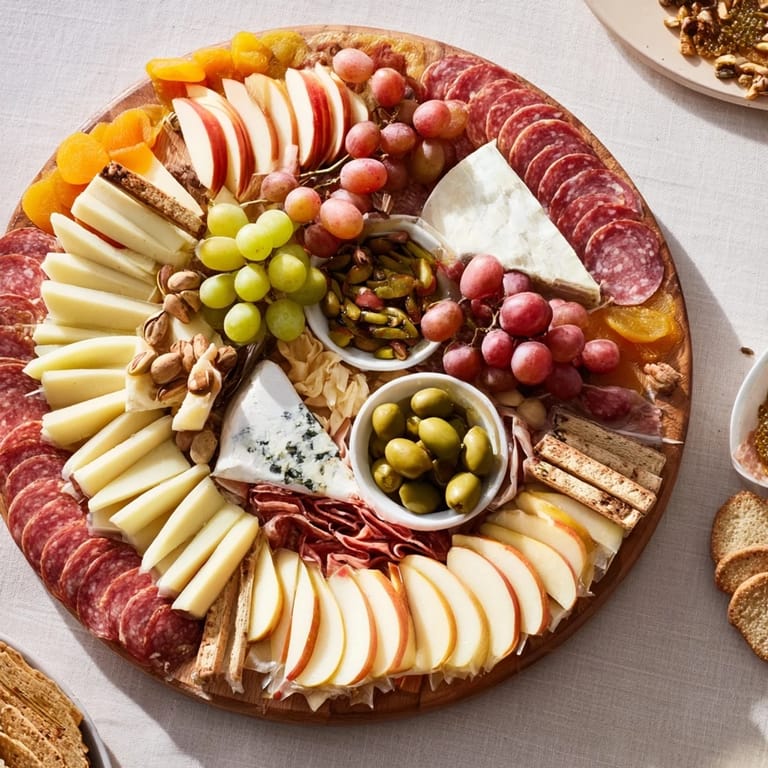
- Start with the cheeses, placing them in their wedges and slices at strategic points around the rim. Picture the board like a clock face and position each cheese variety at different hours. Then fold your charcuterie—the prosciutto in loose ribbons, the salami in overlapping rounds, the coppa or bresaola fanned slightly. Nestle these between and around the cheeses. This isn't random; you're creating visual rhythm and ensuring every inch of the rim feels deliberate and beautiful.
- Layer in the fruits:
- Your fresh fruits come next. Position grape clusters so they cascade slightly, creating height and dimension. Fan your pear and apple slices, and scatter dried apricots in small clusters. Fruits soften the presentation and add delicate color that balances the deeper tones of the charcuterie and aged cheeses. They should feel organic, not military in their precision.
- Nestle the nuts and accompaniments:
- Almonds and pistachios add crunch and visual interest. Scatter them in small piles along the rim, leaving just enough space for the olives and cornichons. These elements fill in gaps and create texture variety. If you're including honeycomb, break it into smaller pieces and distribute it strategically—its golden color will catch the light beautifully.
- Place small bowls at the edge:
- Set small ramekins or bowls directly on the board's perimeter for the jam, honey, and cornichons. This keeps everything within the established rim design while making it easy for guests to access these finishing touches. The bowls should feel like natural extensions of the arrangement, not afterthoughts.
- Crown it with crackers and bread:
- Finally, arrange your toasted baguette slices and assorted crackers around the rim. Lean some against the cheeses slightly for height and visual interest. The crackers fill final gaps and complete the presentation. Stand back, look at the whole board, and make adjustments until it feels harmonious—like every element is exactly where it should be.
- Leave the center dramatically empty:
- This is the signature move. That empty center draws the eye inward and then back out to the rim, creating a visual journey. It's what makes this board different. Don't be tempted to fill it. The emptiness is the point; it's intentional, sophisticated, and creates the impact that makes people pause.
- Serve immediately:
- Bring the board to the table with cheese knives and small tongs. Everything should be at room temperature for optimal flavor, so assemble just before serving. Watch as people's faces light up. Provide small plates so guests can actually enjoy everything without the awkwardness of eating directly over the board. Place napkins nearby—there will be more of them needed than you'd expect.
 Save
Save I watched my grandmother pick up a piece of that Manchego during that New Year's Eve dinner, pair it with a fig jam-topped cracker, and close her eyes for just a moment. When she opened them again, she smiled at me in a way that said everything about why I'd spent those 25 minutes arranging. Food is memory, and presentation is the frame that holds those memories. That board became part of her story that night, and that's why I keep making it.
The Art of Board Selection
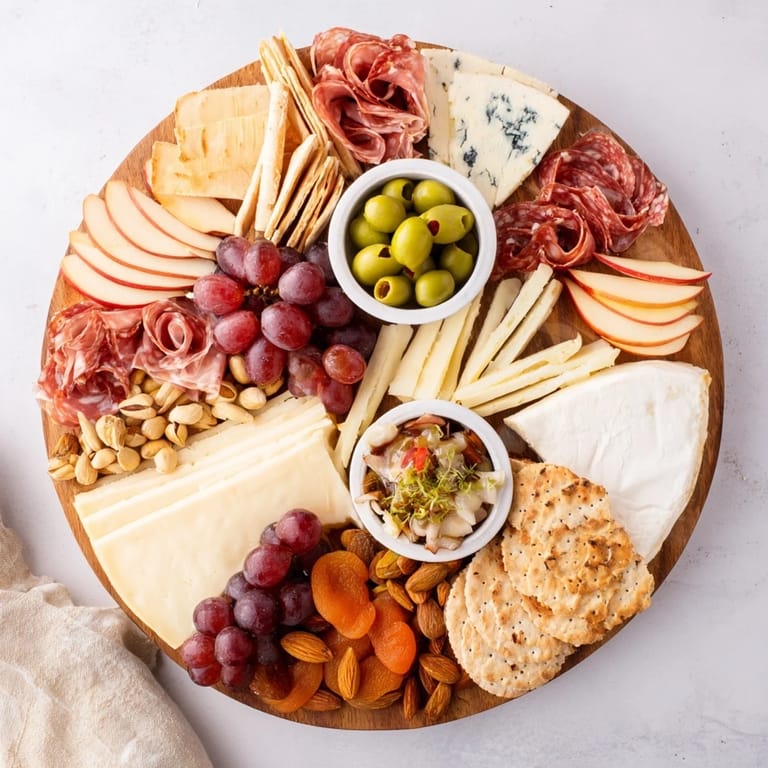
I've learned that the board itself deserves as much consideration as the food. A wooden board with character brings warmth, a marble board brings elegance, and a slate board brings drama. I have a favorite marble board with soft gray veining that makes everything on it look like it belongs in a museum. The shape matters too—round boards create continuity, oval boards feel more formal. Pick a board that makes you want to fill it, that feels substantial and beautiful when it's empty, because that's what you're going to see when you first place it on the table. The rim should be at least 1.5 inches wide so your ingredients have somewhere to live. I learned this after trying to use a delicate server tray that looked elegant but was too narrow to actually accommodate everything beautifully.
Timing and Temperature
The magic of this board is that there's no cooking and minimal last-minute stress. I assemble it in the 30 minutes just before guests arrive, which gives the cheeses time to soften to room temperature while keeping everything fresh. All the components can be prepped ahead—cheeses can be cut, fruits can be sliced and tossed with lemon juice, nuts can be arranged in little bowls, crackers can be toasted that morning. I keep a checklist because I've definitely forgotten to toast the baguette or arrange the bowls before getting caught up in other entertaining tasks. The beauty of this board is that it's entirely on your timeline. You're not worrying about something finishing in the oven or sauce breaking at the last minute. You're simply creating something beautiful, which is somehow both easier and more satisfying.
Pairing and Customization
I always tell people that this board is endlessly adaptable while maintaining its elegance. For vegetarian guests, I add marinated artichoke hearts, roasted red peppers, and extra cheeses without missing the charcuterie at all. I've added edible gold leaf dusted on some of the nuts for extra festivity during the holidays. The key is maintaining that visual balance and not overcrowding. If you want a more casual version, swap some of the premium cheeses for more playful ones—just make sure whatever you choose still feels intentional and beautiful. For beverages, I almost always pair this with Champagne or sparkling wine, but a crisp Sauvignon Blanc or even a light Pinot Noir works beautifully. The board's sophistication deserves a drink that's equally thoughtful.
- Always taste your cheeses before the party—a surprise hard piece of plastic wrapping has ruined elegant moments more than once
- Keep the board at a slight angle if your table isn't perfectly level, so nothing rolls unexpectedly across the surface
- Have small plates nearby even though people will be tempted to eat directly from the board—they'll appreciate having a place to gather their selections
 Save
Save This board isn't just food; it's a moment. Every time I make it, I'm recreating that feeling of creating something that makes people stop and simply appreciate the beauty of thoughtfulness. That's why this recipe will always have a place at my table.
Kitchen Guide
- → How do I arrange the items on the board?
Arrange cheeses, charcuterie, fruits, nuts, and accompaniments exclusively along the board's outer rim, alternating colors and textures for an appealing display.
- → Can I make a vegetarian version?
Yes, omit charcuterie and add marinated artichoke hearts, roasted peppers, or extra cheeses for a vegetarian-friendly option.
- → What types of cheeses work best?
A mix of creamy Brie, aged Manchego, blue cheese, and goat cheese provides a variety of textures and flavors.
- → How should I serve this board?
Serve immediately at room temperature with cheese knives and tongs; include small bowls for jam, honey, and olives along the perimeter.
- → What beverages pair well with this selection?
Champagne, sparkling wine, or a crisp Sauvignon Blanc complement the rich flavors beautifully.