 Save
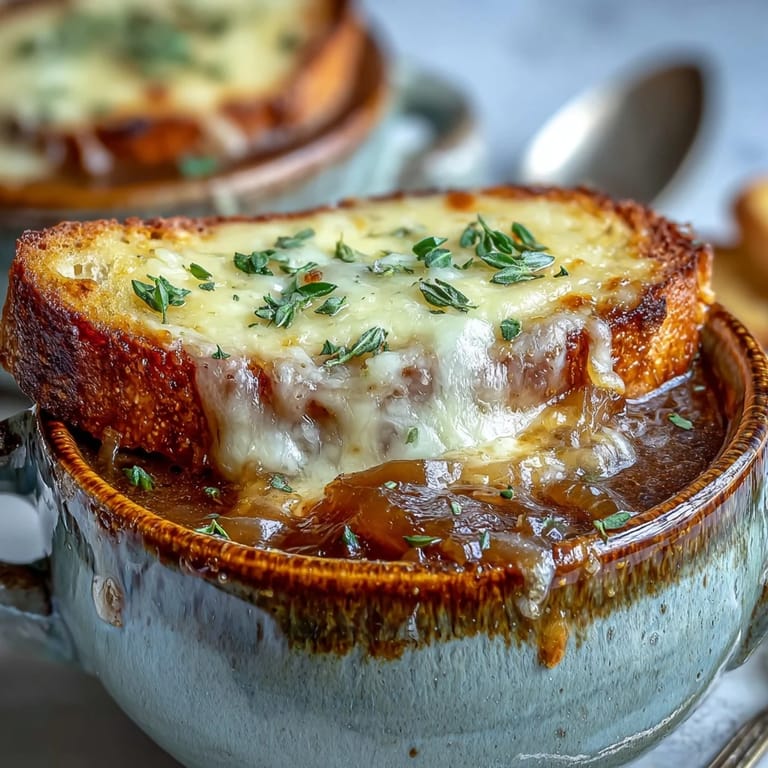
Save A few winters ago, I found myself standing in my kitchen at dusk, the kind of evening where the cold seeps in under the doors and you desperately want something warm in your hands. I had three yellow onions, a half-empty bottle of white wine, and absolutely no plan beyond that. What emerged, hours later, was a pot of French onion soup so silky and golden it felt like I'd uncovered a secret that had been hiding in my pantry all along. That night, it became clear why this humble dish has sustained people through centuries of winters.
I remember bringing this to a potluck years ago, completely nervous about how it would travel. My friend Sarah had to reheat it in her oven, and when she called me the next day, she said her whole kitchen smelled like a French restaurant for hours. That's when I understood: this isn't just soup, it's an experience that lingers.
Ingredients
- Yellow onions (3 large, thinly sliced): The backbone of everything—their natural sugars are what create that deep mahogany color and sweet complexity, so don't skimp on quality or slice thickness.
- Unsalted butter and olive oil (1 tablespoon each): Together they prevent burning and add richness; butter alone would scorch during the long caramelization.
- Garlic (2 cloves, minced): Added after the onions soften to avoid bitterness, this just whispers in the background rather than shouting.
- Sugar and salt (1 teaspoon and 1/2 teaspoon): The sugar jumpstarts caramelization and balances the wine's acidity, while salt draws moisture from the onions and speeds the process.
- All-purpose flour (2 tablespoons): A light thickener that creates body without heaviness—stir it in immediately or it clumps.
- Dry white wine (1/2 cup): Use something you'd actually drink; cheap wine tastes cheap in the finished soup and its acidity cuts through the richness beautifully.
- Beef or vegetable stock (1.2 liters or 5 cups): The foundation—homemade is ideal, but quality store-bought works; avoid anything too salty or it drowns out the onion flavor.
- Fresh thyme and bay leaf: These simmer gently and perfume the broth without overpowering it, then come out before serving.
- French baguette (4 slices, 1 inch thick): Must be sturdy enough not to disintegrate in the soup; day-old bread actually works better than fresh.
- Gruyère cheese (120 g or about 1 cup, grated): This is non-negotiable for authentic flavor—it melts to silky pools with a subtle nuttiness that Cheddar or mild cheeses can't replicate.
Tired of Takeout? 🥡
Get 10 meals you can make faster than delivery arrives. Seriously.
One email. No spam. Unsubscribe anytime.
Instructions
- Heat your fat and begin the onions:
- Pour the butter and oil into your pot over medium heat and let them get friendly for a minute. Add your sliced onions and coat them thoroughly with the fat—they should glisten and look almost luxurious, not dry or strained.
- Coax out the color and sweetness:
- Now comes the part that can't be rushed: stir those onions every few minutes as they soften, gradually turning from white to pale gold to amber to deep mahogany. This takes 35-40 minutes, and around the 20-minute mark, sprinkle in the sugar and salt to help the process along. You'll know you're done when they smell like caramelized honey and look almost jam-like in their richness.
- Build flavor with aromatics:
- Add your minced garlic and cook just until fragrant, about 1 minute—any longer and it turns bitter. Then dust in the flour, stirring constantly for 2 minutes; this cooks out the raw taste and begins thickening your future broth.
- Deglaze and build the base:
- Pour in your white wine, immediately scraping the bottom of the pot with your wooden spoon to release all those dark, flavorful browned bits stuck there. You'll hear them scrape free and see the wine bubble up—that's all flavor being rescued.
- Simmer toward completion:
- Add your stock along with the thyme and bay leaf, bring the whole thing to a gentle simmer, then lower the heat and let it bubble softly uncovered for 20-25 minutes. The flavors will marry and mellow, the broth will deepen in color, and your kitchen will smell like an actual French restaurant. Fish out the thyme sprigs and bay leaf with a spoon, then taste and season with freshly ground black pepper and additional salt if needed.
- Toast your bread:
- While the soup simmers, turn on your oven broiler and let it preheat. Arrange baguette slices on a baking sheet, brush both sides with olive oil until they're gleaming, then broil them 3-4 inches from the heat for about 1-2 minutes per side until they're golden and just starting to show flecks of darker brown.
- Assemble and finish:
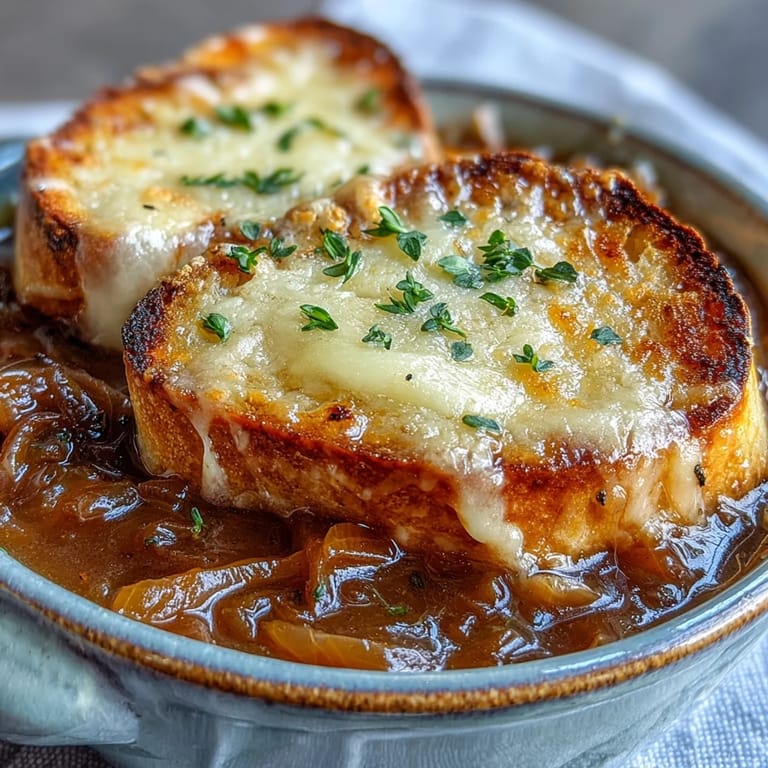
- Ladle your soup into oven-safe bowls—ceramic works beautifully for this moment. Top each with a warm toasted baguette slice, then pile on the grated Gruyère with a generous hand; this isn't the time to be shy with cheese.
- Melt into magic:
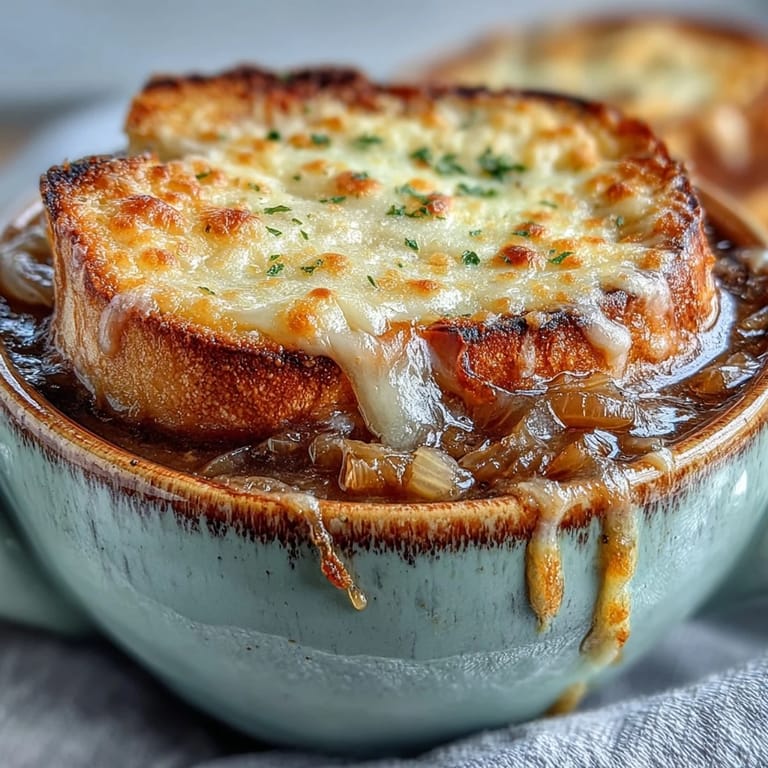
- Place your filled bowls on a baking sheet and broil them 2-3 minutes until the cheese melts into a bubbly, golden-brown sea. Watch them closely because the line between melted perfection and overcooked is about 30 seconds, and you want to catch that moment when the cheese is still moving slightly in the bowl.
 Save
Save Last winter, my partner made this on a night when we'd both had difficult days. Watching that cheese bubble and turn golden in the oven felt almost ceremonial, and when we poured it into bowls and those strands of melted Gruyère stretched with each spoonful, something shifted. Comfort food stopped being just food and became a language we both understood.
The Caramelization Secret
Caramelization isn't actually browning—it's the Maillard reaction combined with the onions' natural sugars cooking down into deeper, more complex compounds. The reason this takes 35-40 minutes isn't laziness; it's chemistry. I once tried to speed it up by raising the heat to high, and within minutes the bottom was nearly black while the tops were barely soft. Now I set a timer, stir regularly, and actually find the rhythm meditative—it's the one cooking task where rushing is literally impossible.
Wine Matters More Than You'd Think
The wine does two crucial things: it cuts through the soup's richness with acidity and adds a subtle flavor complexity that separates this from onion broth. I learned this the hard way when I substituted apple juice to avoid opening a bottle, thinking the sweetness was similar to wine's. It wasn't similar at all—the soup became cloying and one-dimensional. Now I always have a decent white wine open; whatever you don't use in the soup is perfect sipped slowly while you eat a bowl.
Variations and Variations Worth Trying
Once you've made this version a few times, your instincts will guide you toward personalization. Some people add a splash of brandy or sherry with the wine for deeper complexity, which absolutely transforms the flavor profile into something richer and more sophisticated. Others experiment with different cheeses—Emmental is milder and melts even more smoothly, while Comté adds a nuttiness that's quite lovely if you prefer something less sharp. The base recipe is sturdy enough to handle these tweaks without falling apart.
- A teaspoon of Dijon mustard stirred into the base adds subtle tang and depth without announcing itself.
- Fresh thyme can be replaced with a combination of dried herbs, though you'll want to use slightly less since dried herbs are more concentrated.
- If you make this vegetarian, use vegetable stock but don't apologize—the caramelized onions are genuinely the star, not whatever stock you choose.
 Save
Save There's something almost holy about serving this soup, the way people's faces soften when they taste it and realize they're experiencing something genuinely nourishing. This isn't fancy food trying to impress—it's honest, warm cooking that asks very little and gives everything.
Kitchen Guide
- → How long does it take to caramelize onions properly?
Allow 35-40 minutes over medium heat, stirring frequently. The onions should turn deep golden brown and develop a sweet, concentrated flavor.
- → Can I make this soup in advance?
Absolutely. The base actually improves after 1-2 days in the refrigerator. Add the bread and cheese just before serving.
- → What cheese works best for the topping?
Gruyère is traditional for its nutty flavor and excellent melting properties. Emmental or Comté make excellent alternatives.
- → Why add flour to the soup?
Flour helps lightly thicken the broth and creates a richer body. It also helps the cheese topping adhere better to the bread.
- → What type of onions should I use?
Yellow onions are ideal for their balanced sweetness and flavor. Red onions can be used but may yield a slightly different taste profile.
- → Can I freeze the soup base?
Yes, freeze the cooled soup base without the bread and cheese for up to 3 months. Thaw overnight and reheat before adding toppings.